
Via Ferrata Santnerpass: An Iconic Climb in the Rosengarten/ Catinaccio
If you’re looking for a via ferrata that combines dramatic scenery, moderate challenge, and unforgettable views — Via Ferrata Santnerpass is a gem in the Rosengarten / Catinaccio area. It’s steeper than Gran Cir in places, but still accessible to those with little scrambling/height experience, and the vistas at the top make it absolutely worthwhile.
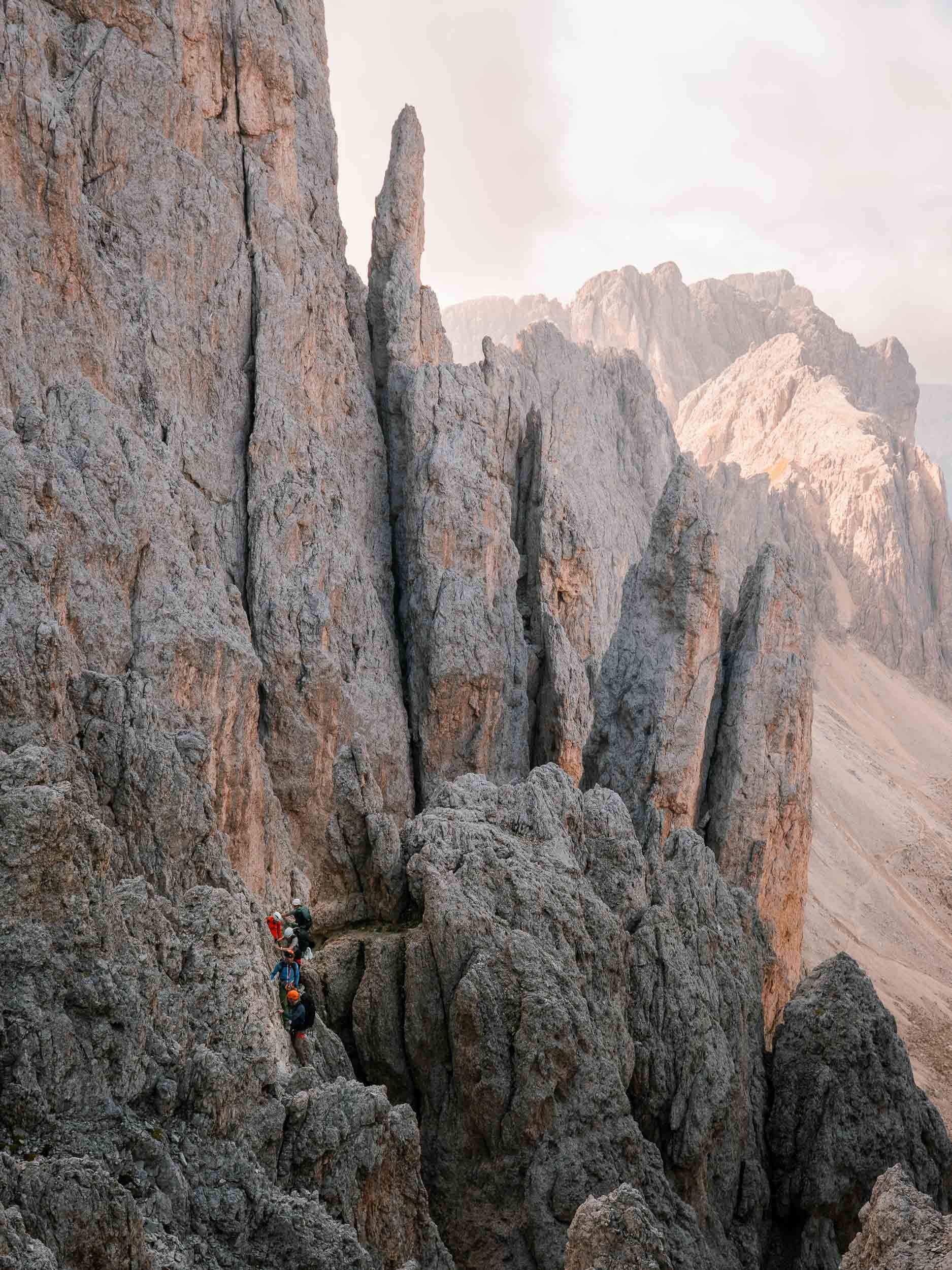
This route links Val di Tires / Val d’Ega and the classic Vajolet / Gartl valleys of the Catinaccio massif. Its mix of ladders, cables, short climbing sections, and walking through rocky gullies offers a varied experience.
Below you’ll find key stats, how to reach it, what gear to bring, route description, nearby hikes, and tips to make your trip smooth and enjoyable.
Overview & Stats
Location: Rosengarten / Catinaccio range, South Tyrol, northern Italy
Starting Point: Rifugio Fronza alle Coronelle (Kölner Hütte) — accessible by lift from Frommer Alm
Elevation Gain: Around 400 m from Rifugio Fronza to Santner Pass
Summit Elevation: ~2,734 m (Rifugio Santner)
Duration: Around 2–2.5 hours to the top, 1.5 hours to descend
Difficulty: B to B/C (moderate) — suitable for experienced hikers or beginners with a guide
Route Type: Mixed terrain — cables, ladders, rocky gullies, and exposed walking sections
Best Season: June to October, when the route is free of snow and ice
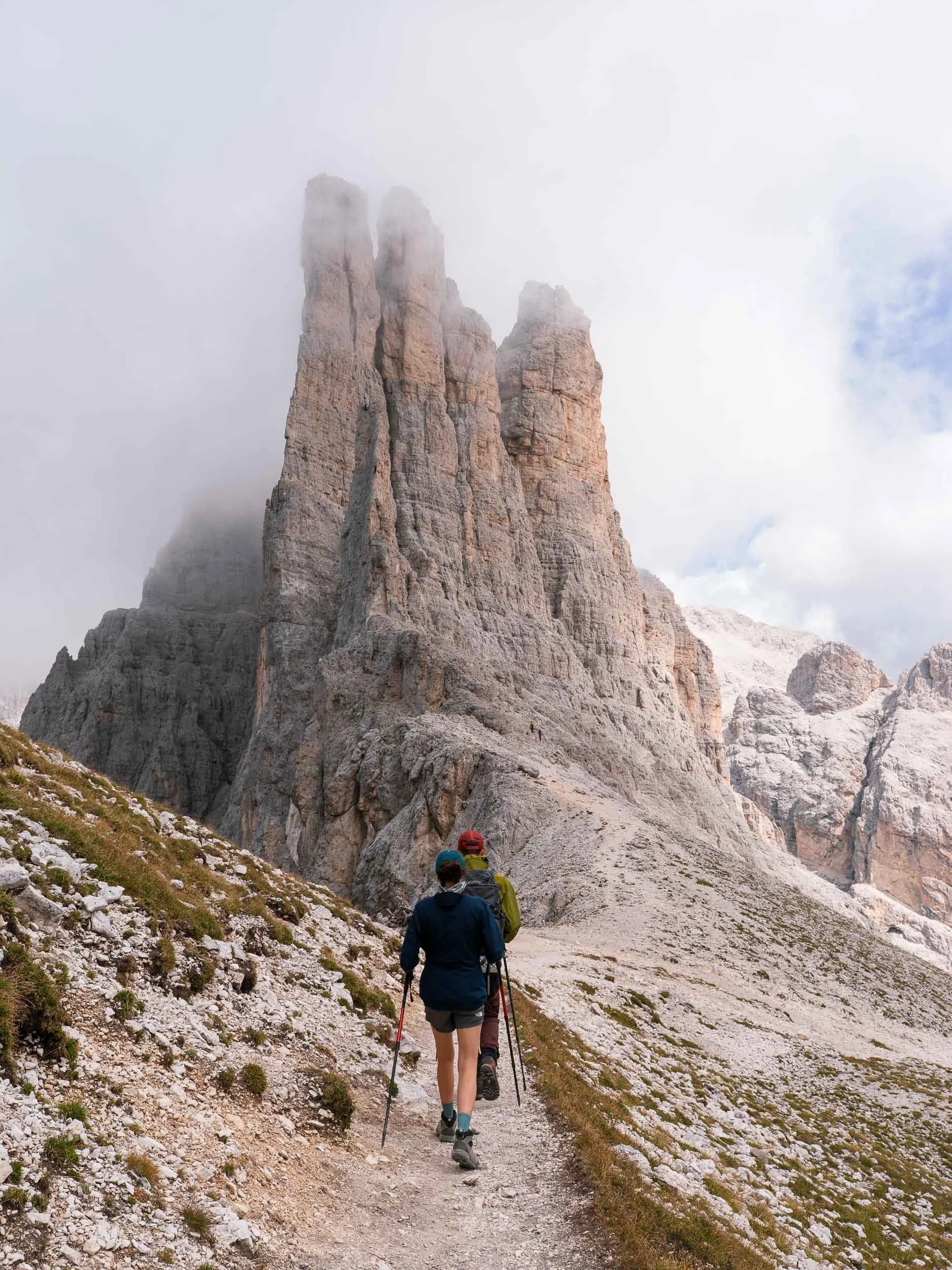
Highlights: Views of the Vajolet Towers, the Catinaccio peaks, and panoramic Dolomite landscapes from the Santner Pass
Map: See the full trail route and elevation profile on AllTrails.
** Sign up to AllTrails+ with code “vivchow30” to get 30% off today! **
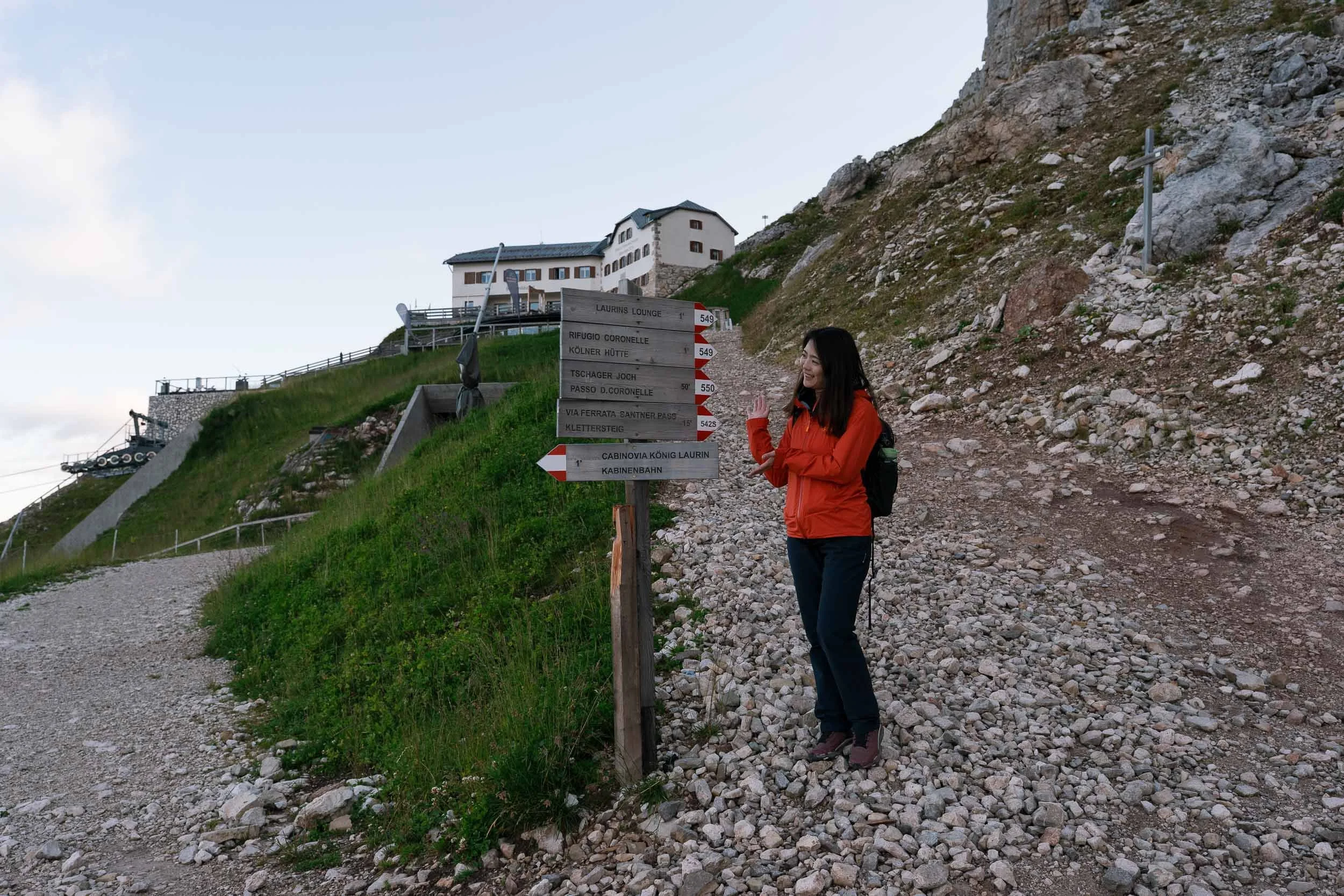
This is where the hike starts - Rifugio Fronza alle Coronelle (Kölner Hütte) / Laurin II chairlift station. Follow path 542S
Why You’ll Love It
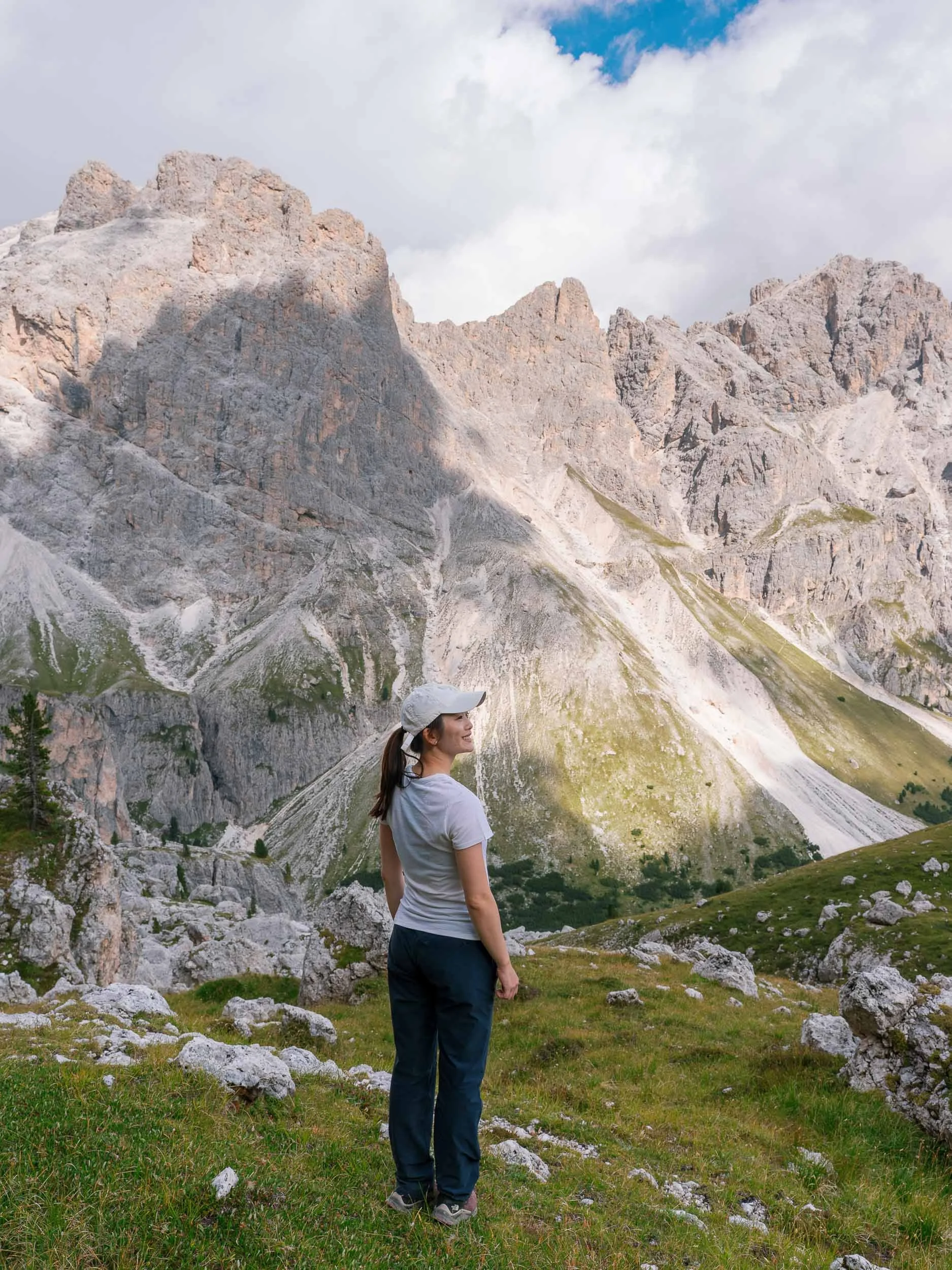
The Santnerpass Via Ferrata is pure Dolomite drama from start to finish. You’ll climb through narrow gullies, traverse ledges, and ascend ladders that open onto spectacular views of the Vajolet Towers and the surrounding Catinaccio peaks.
It’s the kind of route that offers variety every step of the way — a mix of climbing, scrambling, and short walking sections — all set against a backdrop of jagged cliffs and glowing orange rock. The exposure is thrilling but never overwhelming, making it a fantastic choice for those looking to step up from beginner ferratas like Gran Cir.
At the top, you’ll reach the Santner Pass (2,734 m) and Rifugio Santner, where you can relax on the terrace with one of the best panoramic views in the Dolomites. If you’re lucky enough to be there at sunrise or sunset, the peaks light up in warm alpenglow — an unforgettable sight.
This is a popular route, especially in peak season, so it’s best to start early to avoid crowds. The path can get narrow in places, and overtaking on the ferrata can be tricky due to limited footholds.
How to Get There
From Val di Fassa
Drive to Passo Costalunga (Karerpass), then follow signs to Malga Frommer Alm, where you’ll find parking. From there, take the Laurin II chairlift to Rifugio Fronza alle Coronelle (Kölner Hütte) at 2,339 m. You can also hike up from Frommer Alm if you prefer — it takes about 1 hour and 15 minutes.
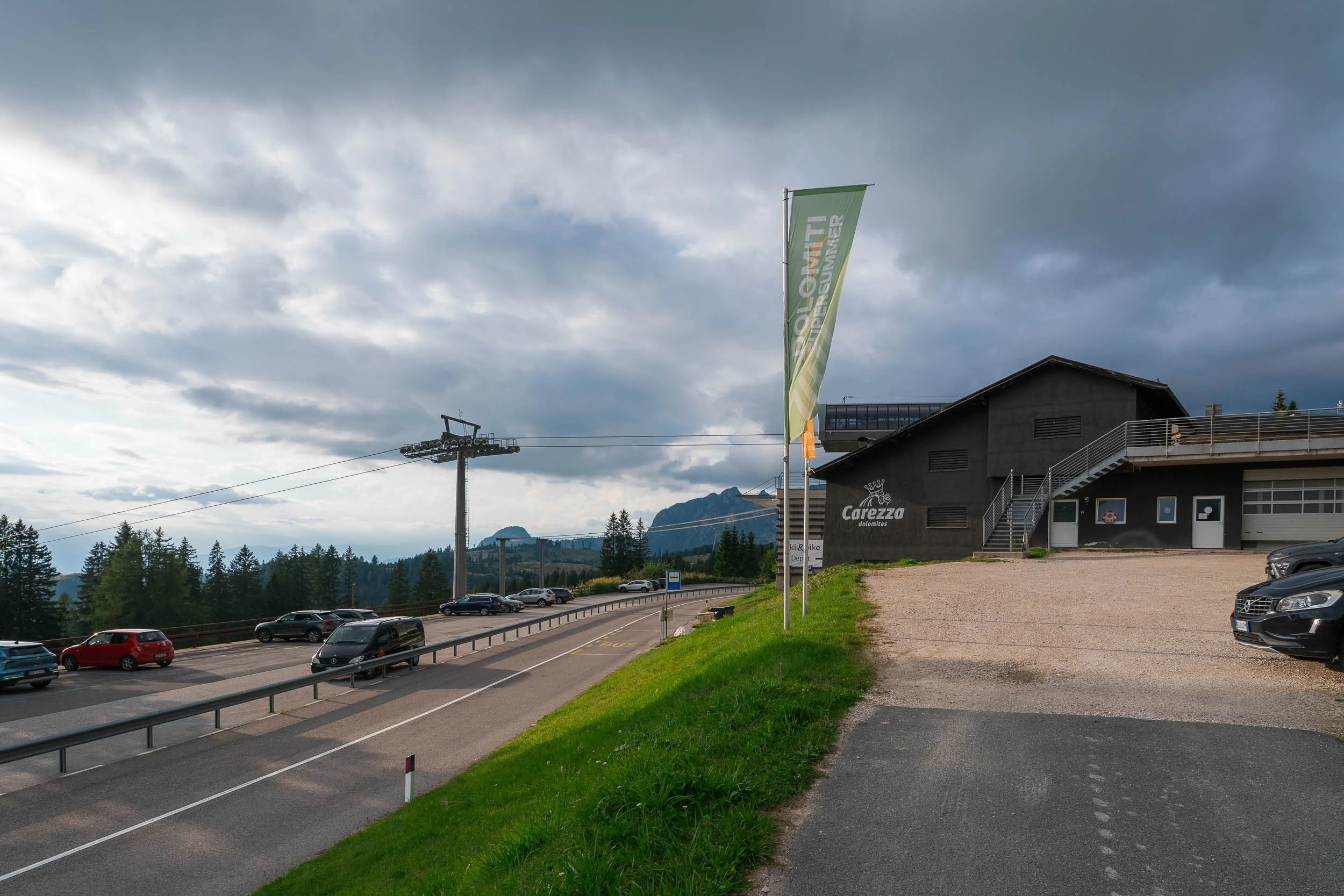
Parking lot at the base of the Laurin chiairlift station adjacent to Malga Frommer Alm
From Val di Tires or Val d’Ega
Follow the road up toward the Rosengarten cable car stations near Nova Levante / Welschnofen. Park at Frommer Alm and take the same Laurin lift to the starting point.
By Bus
During summer, the Südtirol Mobil network connects Val di Fassa, Val di Tires, and Val d’Ega with Frommer Alm. Buses are frequent in high season — check the Südtirol Mobil website
Route Description
The route begins directly behind Rifugio Fronza alle Coronelle (Kölner Hütte, 2,339 m). Follow path no. 550, and after a short but steep scramble — with a few cables to assist — you’ll reach a fork. Take the left turn following signs for Via Ferrata Passo Santner (trail no. 542S).
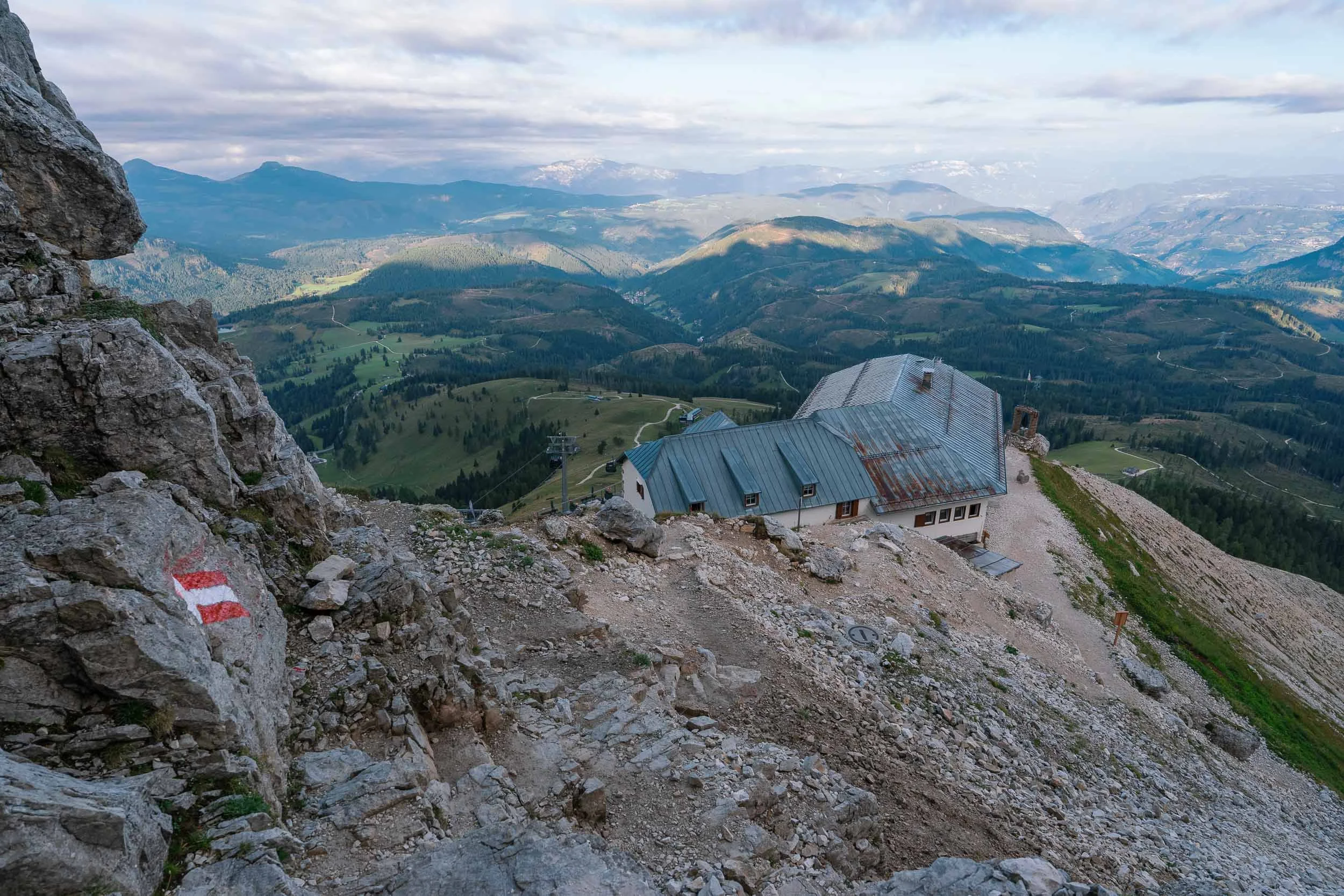
Follow path 542S, the via ferrata section starts once you have past Kölner Hütte
From here, the trail traverses below the impressive western wall of the Rosengarten / Catinaccio Group, giving you a clear view of the line you’ll be climbing. After about 15 minutes of mostly flat walking, the path begins to ascend again, and that’s where the fun really begins.
The Via Ferrata Santnerpass is well-marked and designed to flow naturally through the terrain. Cables are installed on all the more technical sections, with ladders and metal pegs helping on steeper rock faces. While it’s considered a beginner-friendly ferrata, it still feels exciting and rewarding, with a good balance of security and exposure.
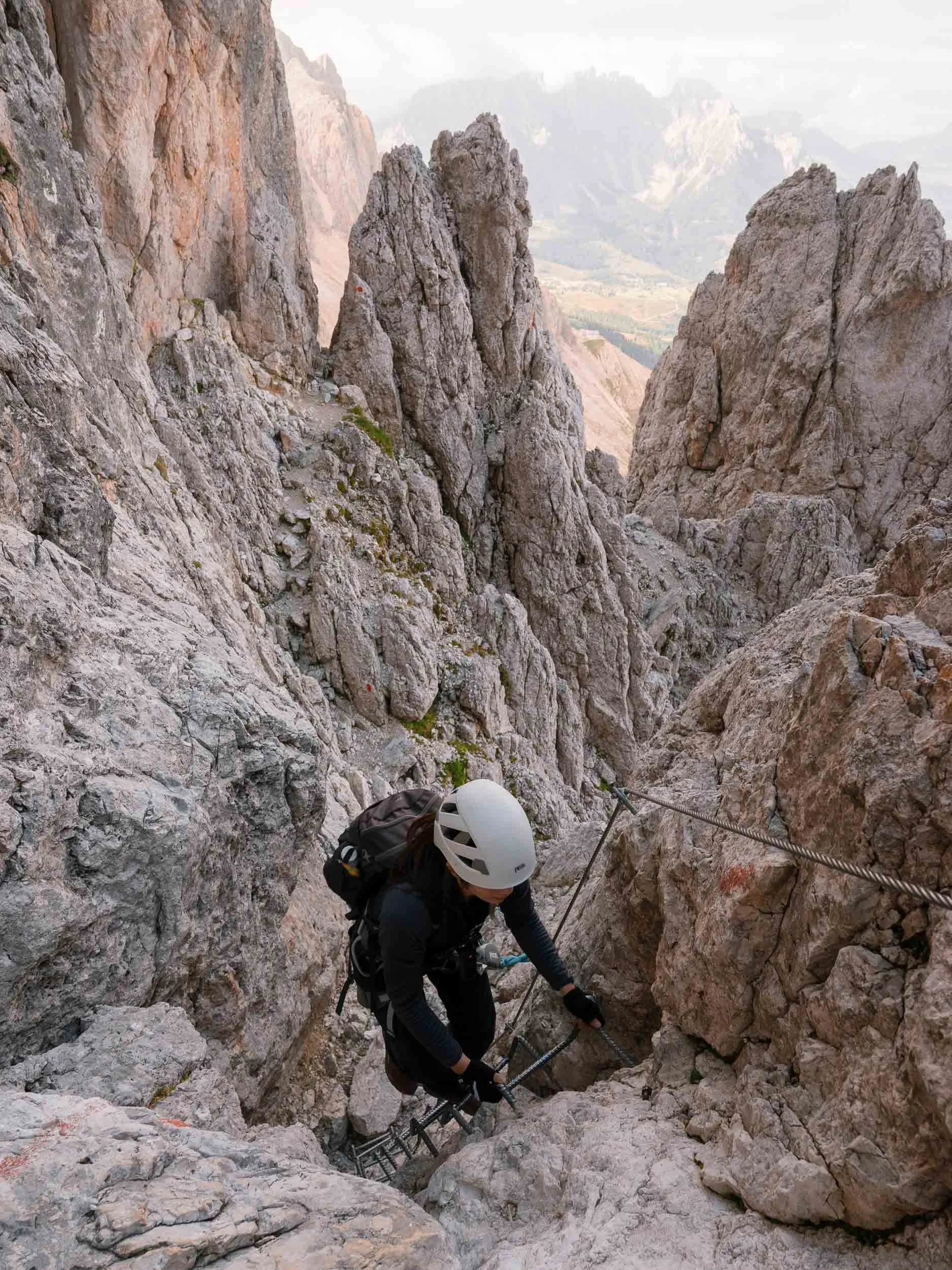
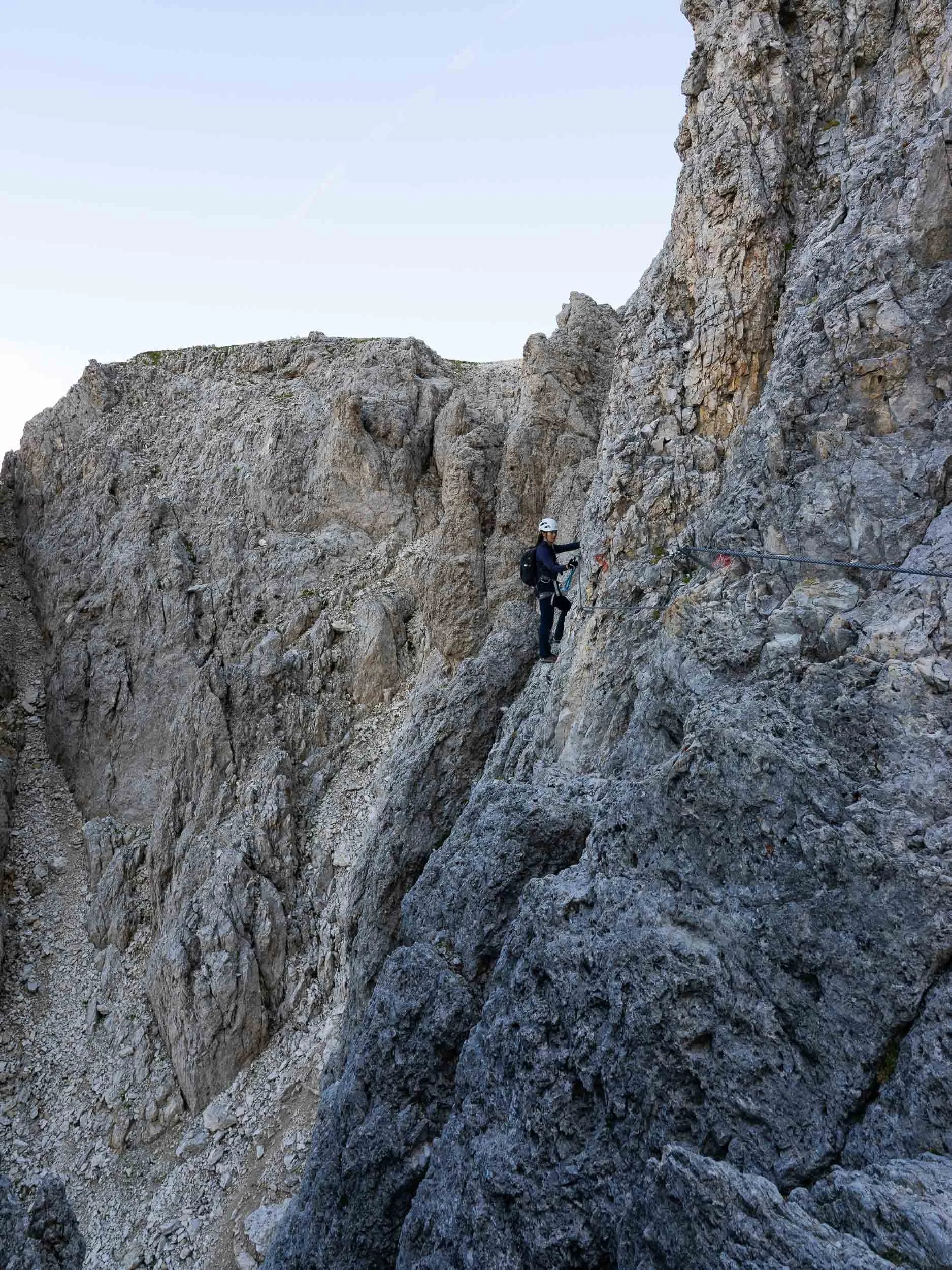
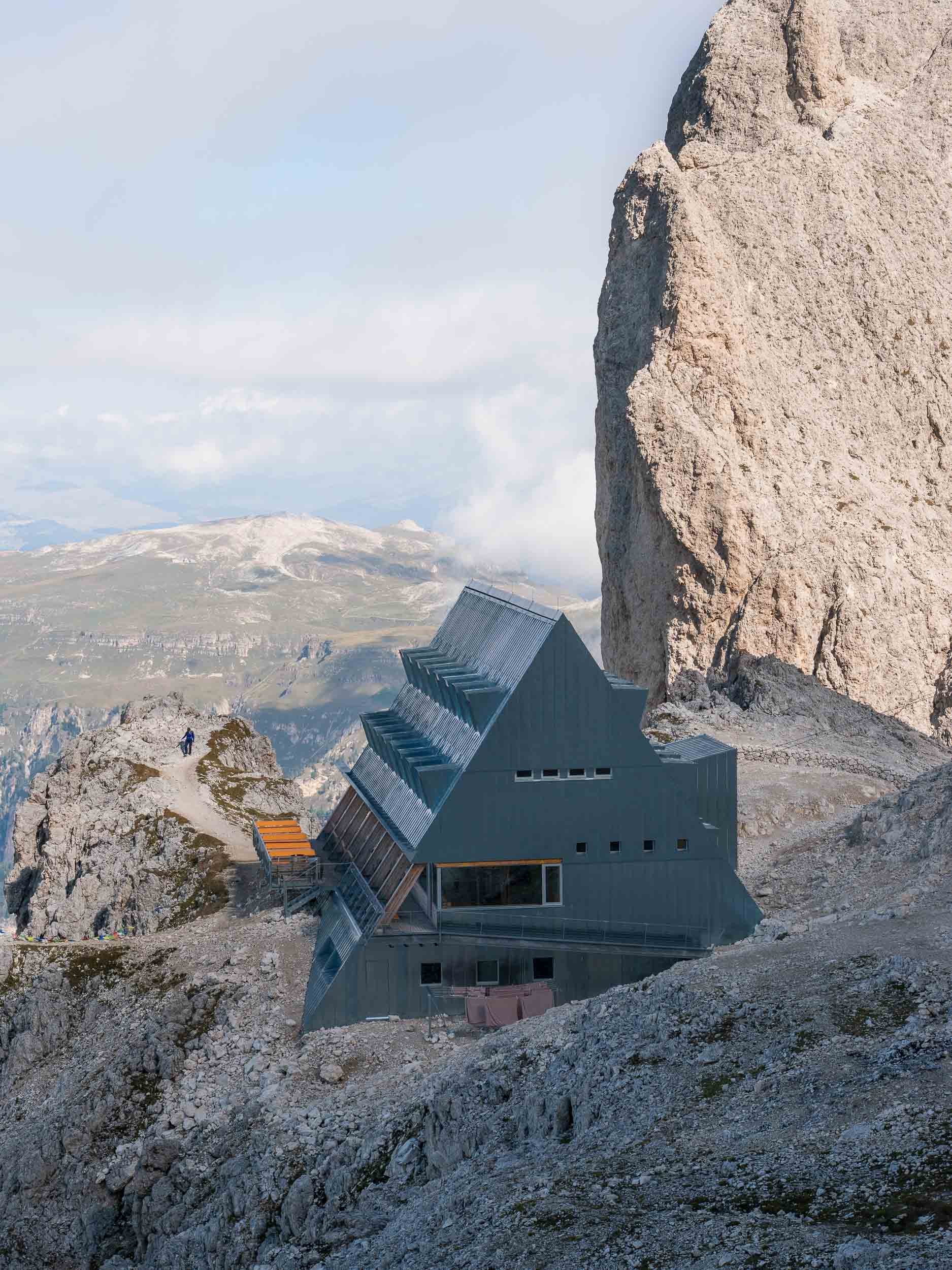
Expect around 2 to 2.5 hours of total climbing time to reach the Santner Pass (2,734 m), where you’ll be greeted by the newly built Rifugio Passo Santner. The hut sits perfectly on the saddle, offering panoramic views of the Vajolet Towers and the surrounding Catinaccio peaks — the perfect spot to rest and soak it all in.
If you’re coming from Frommer Alm (1,743 m), you can take the König Laurin II chairlift up to Rifugio Kölner, or hike this section in about 1 hour and 15 minutes. From the hut, follow the route eastward (trail no. 550) over a rocky outcrop before reaching the boulder plateau and turning left onto trail no. 542 toward the via ferrata entrance at the base of the southwest wall.
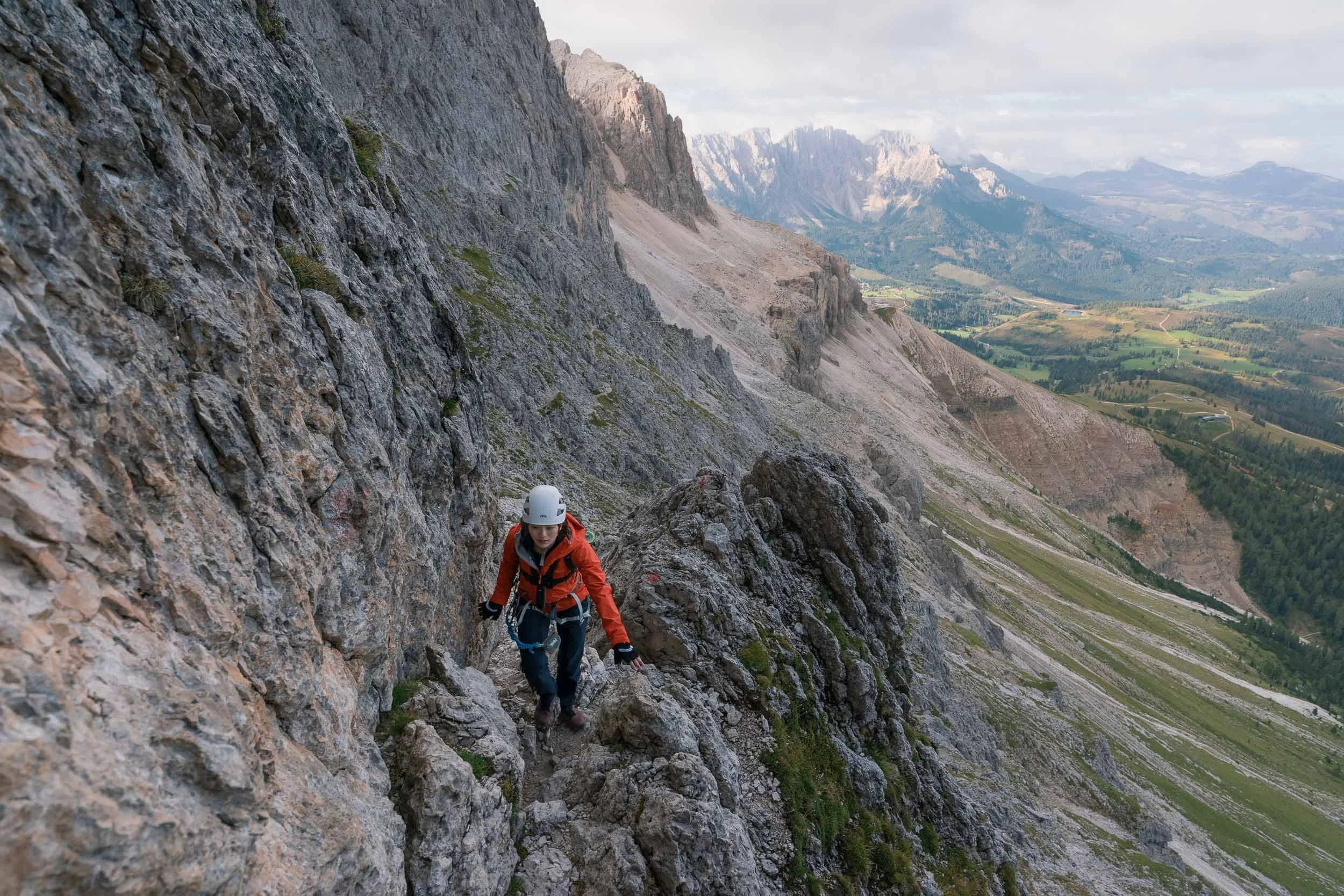
Remember to look back, the best view is behind you!
Though this ferrata is one of the Dolomites’ classic routes, it’s still accessible to confident hikers with basic climbing skills. You’ll need proper via ferrata gear (harness, helmet, and lanyard are essential), good footwear, and a steady head for heights. Always follow the marked route carefully — there are a few spots where the gullies can be confusing.
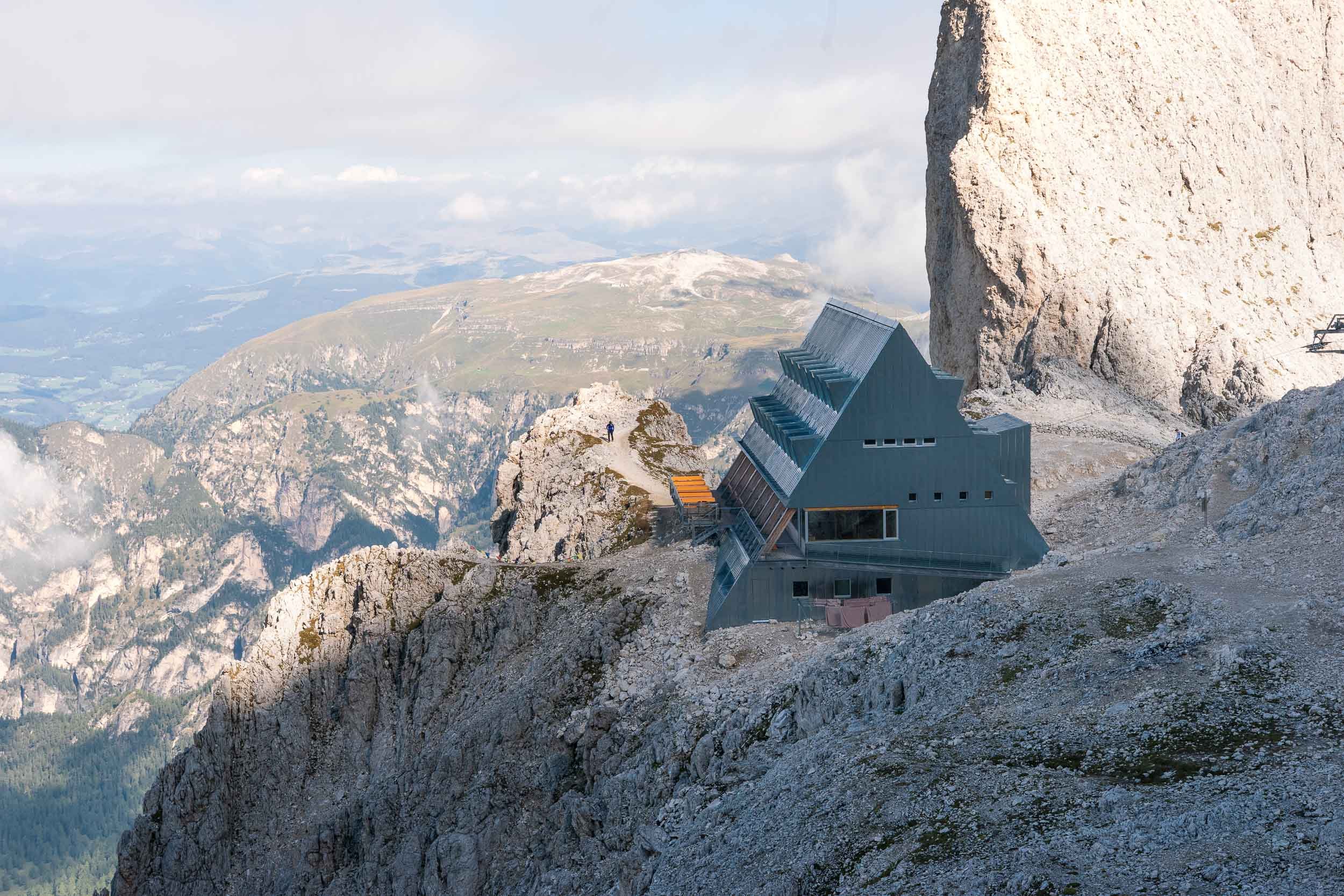
At the top, you’ll emerge directly beside Rifugio Santner, where breathtaking views await.
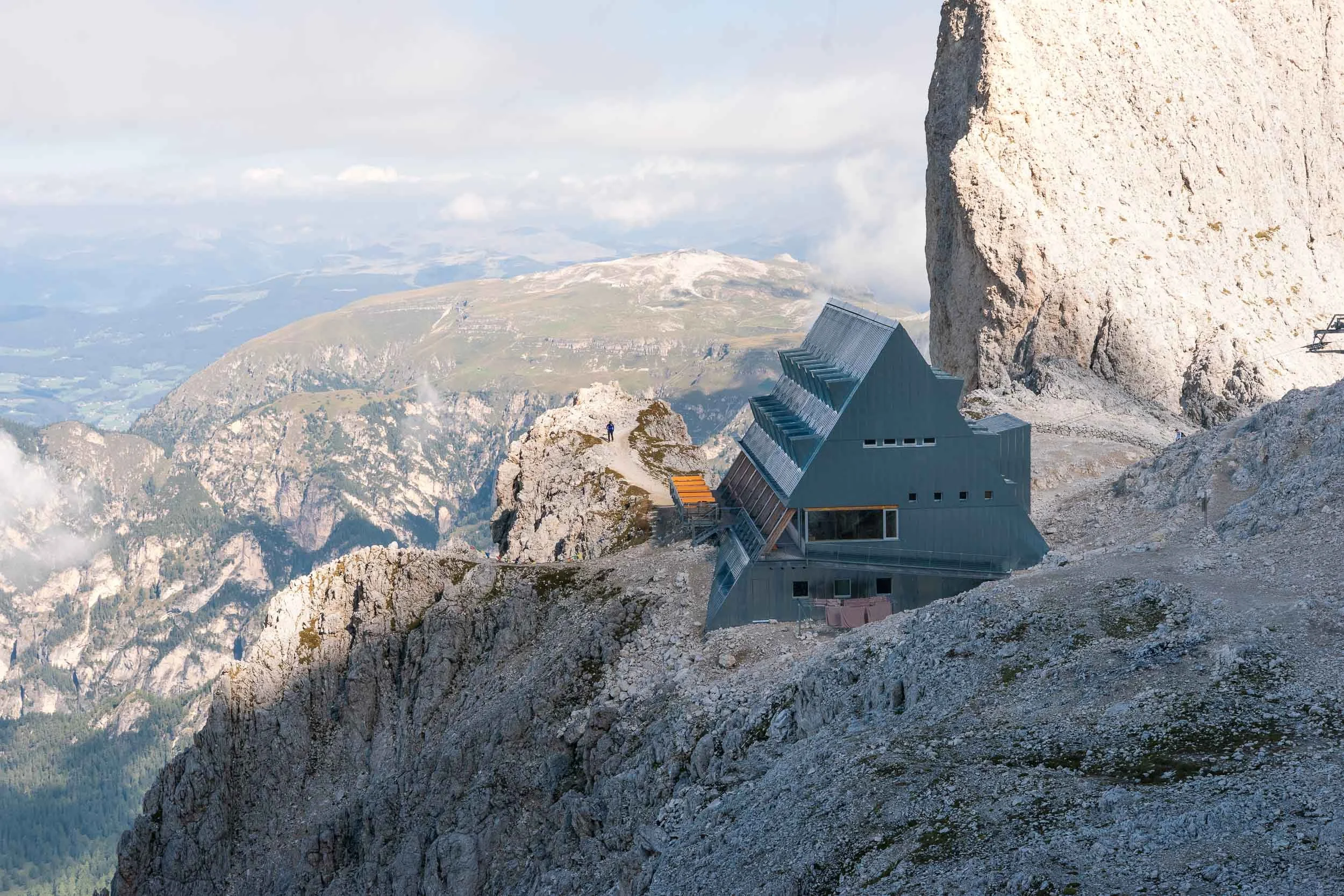
Your reward for making it to the top, stunning view of the Rifugio Passo Santner
Weather & Conditions
Best time: June–October, when snow and ice have melted.
The Ice Gully section can remain icy or wet even in summer — bring gloves and sturdy boots.
Avoid climbing during or after rain, as the cables and rock become slippery.
Start early to make the most of daylight and avoid afternoon thunderstorms.
Gear Checklist
Bring the same essentials as for any alpine via ferrata:
⛓️ Via ferrata set (harness + lanyard with energy absorber)
🪖 Helmet
🧤 Gloves (for cables and rock)
🥾 Hiking or approach shoes with good grip
🧥 Warm & windproof layers — it can get chilly at the pass
💧 Water and snacks
🕶️ Sunscreen & sunglasses
💡 Headtorch if starting early or descending late
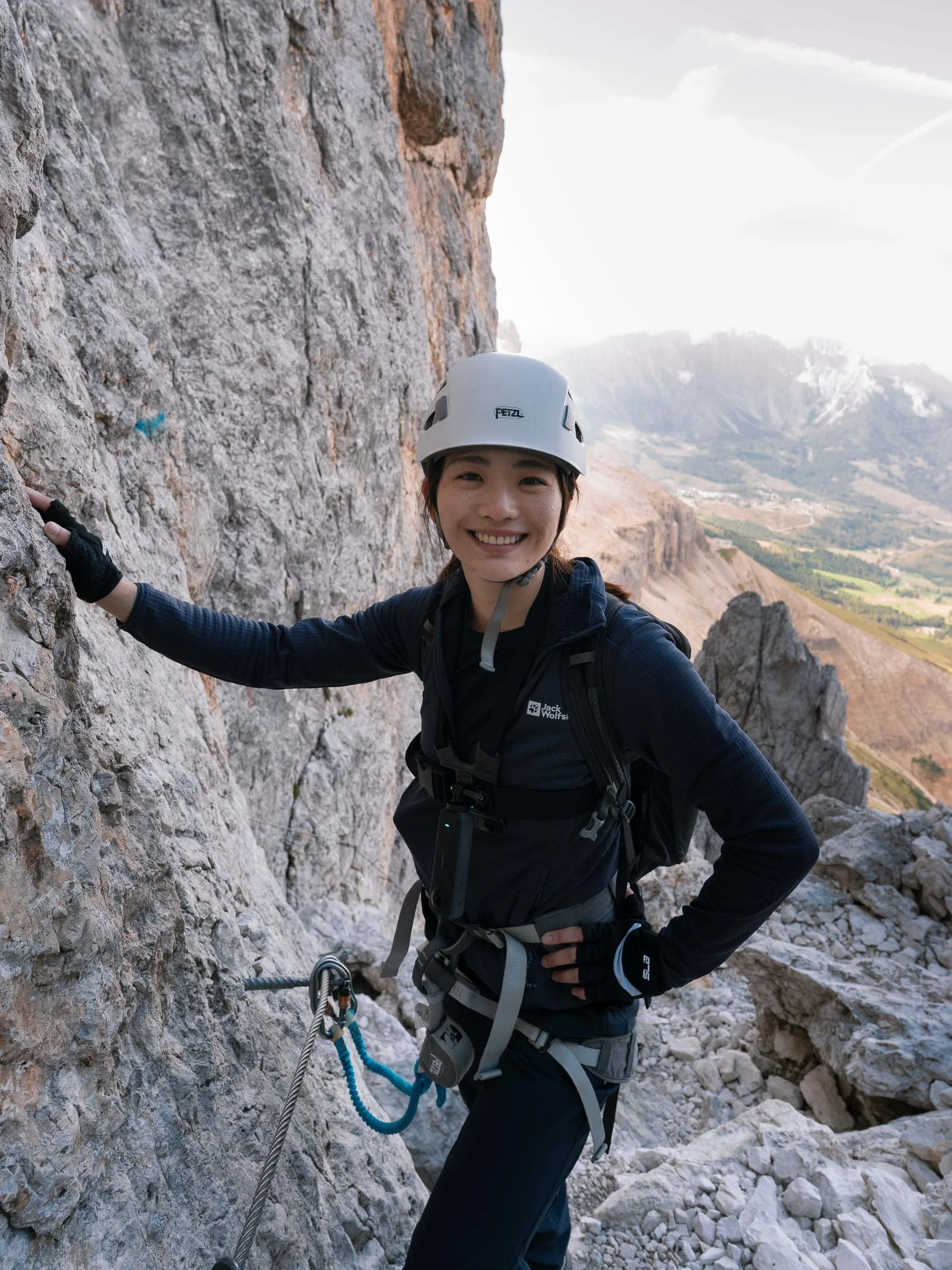
Where to Rent Via Ferrata Gear
You can rent a full via ferrata set (harness, helmet, and lanyard) from local outdoor shops in the area:
Sport Laurin (Selva di Val Gardena) – This is where we rented our gear! Friendly staff and well-maintained equipment. €18 per day.
Intersport Val Gardena (Selva di Val Gardena) – centrally located with high-quality via ferrata and hiking gear. €25 per day.
Tips for First-Time Via Ferrata Climbers
Start early — this is a popular route and can get crowded.
Avoid descending the same way — the ferrata is narrow, and passing other climbers can be difficult.
Always clip in on exposed sections and move one carabiner at a time.
Use your legs more than your arms to conserve energy.
Bring extra layers — weather can change quickly at altitude.
If it’s your first time, consider hiring a local mountain guide.
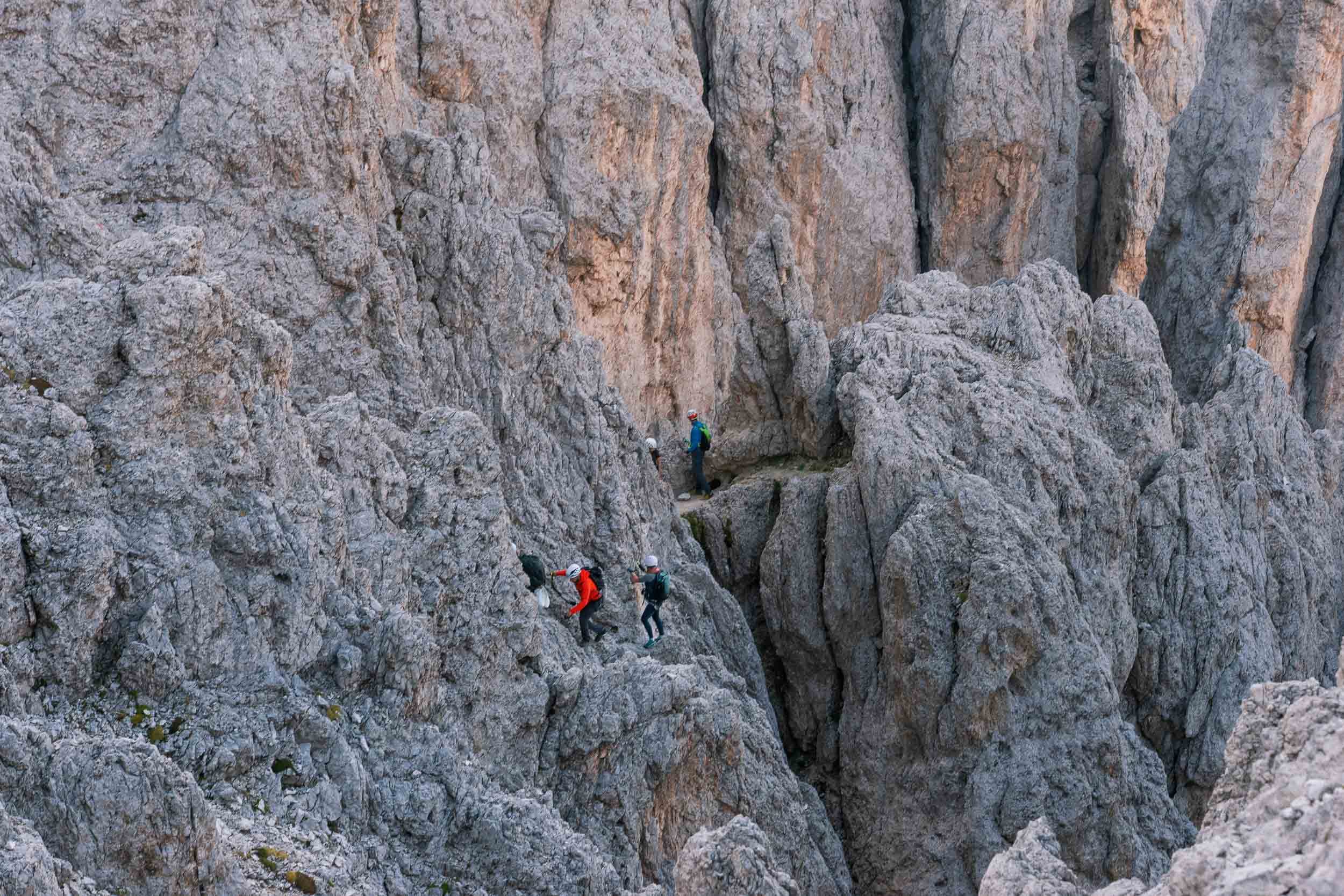
Local mountain guide with a group doing the same route on the day
Where to Stay Nearby
You have a few excellent options depending on whether you want to start early, stay in the mountains, or base yourself in the valley:
Rifugio Santner – perched right at the top of the pass, perfect for sunrise or sunset stays.
Rifugio Re Alberto (Gartlhütte) – below Santner, ideal for those completing the loop.
Rifugio Fronza alle Coronelle / Kölner Hütte – right at the starting point, excellent for early-morning starts.
Frommer Alm area – it’s also possible to stay around Frommer Alm and either hike up or take the Laurin II cable car to the starting point.
If you prefer to stay lower down, Vigo di Fassa, Nova Levante, and Tires all make convenient valley bases with a range of hotels and restaurants.
Other Hikes & Via Ferratas Nearby
If you’re exploring the Rosengarten area, don’t miss:
Vajolet Towers Hike – a Dolomites must-do for stunning spire views.
Via Ferrata Masarè – shorter, scenic, and ideal as a warm-up.
Rosengarten Traverse – a full-day hike linking several rifugios across the range.
Final Thoughts
Via Ferrata Santnerpass is one of the most rewarding climbs in the Dolomites — a perfect mix of vertical fun, mountain history, and stunning scenery. It’s challenging enough to feel adventurous but safe enough for fit hikers with basic via ferrata gear and a bit of confidence.
Standing at the Santner Pass, surrounded by the soaring spires of the Catinaccio, you’ll understand why this ferrata is considered a Dolomite classic. Whether it’s your first moderate climb or a bucket-list route on your alpine journey, Santnerpass delivers unforgettable views and a true sense of accomplishment.
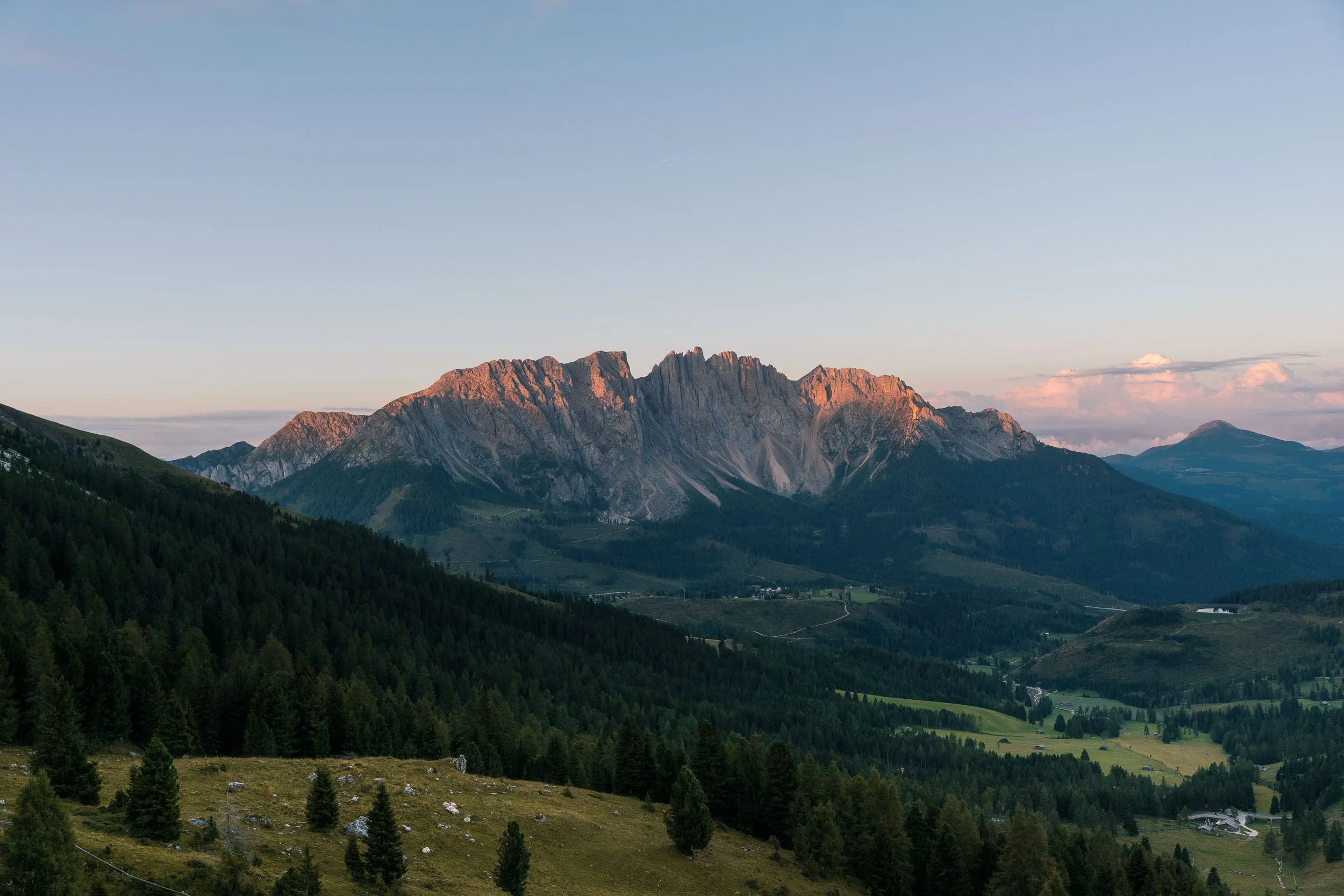
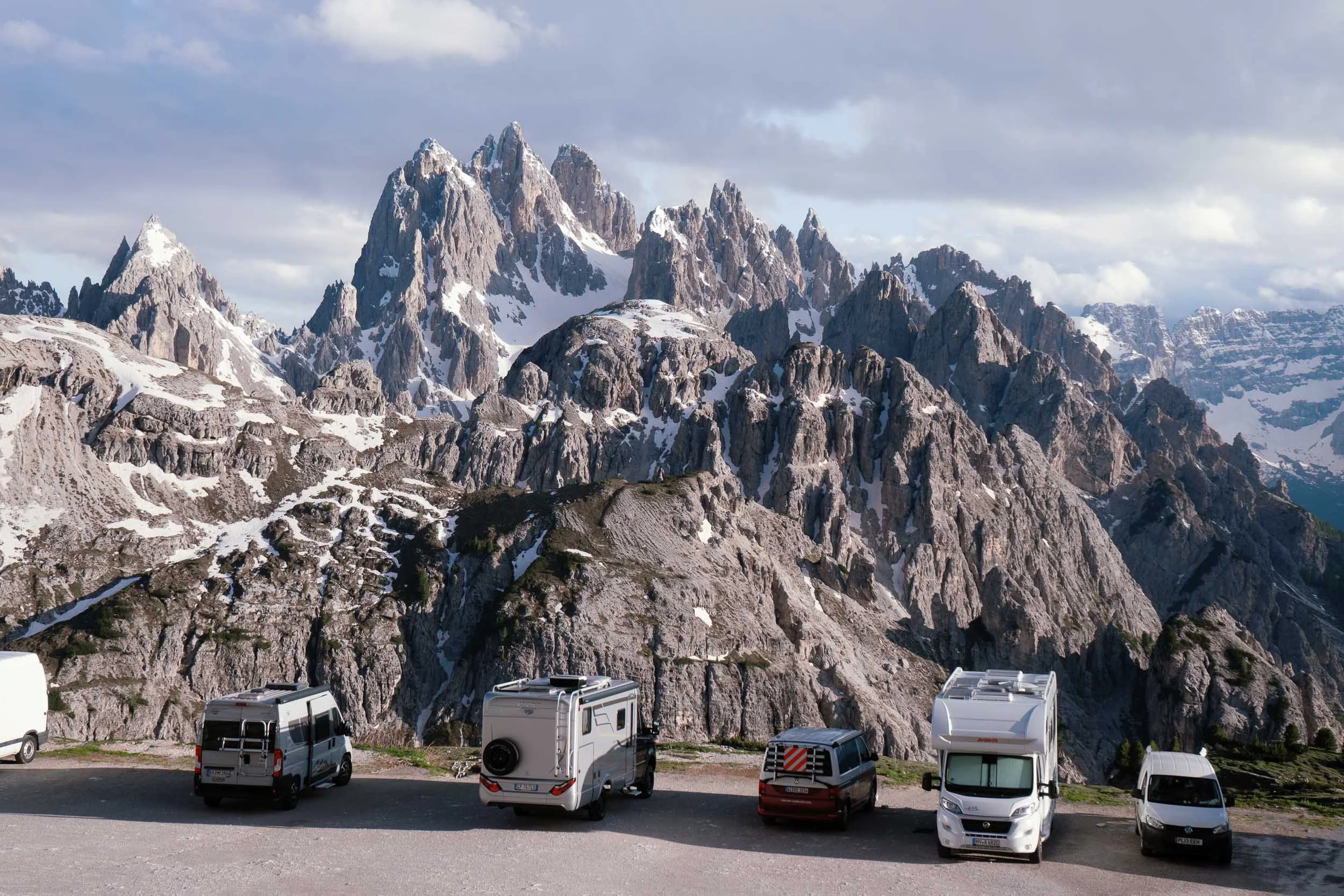
Early bird hikers will be rewarded with a stunning sunrise view over the Dolomites mountain range

Support Our Adventures!
Hi there! If you found our guides helpful, please consider using our affiliate links below when booking your next trip. It comes at no extra cost to you, but it helps us keep creating these resources. Thank you so much for your support!
Flights & Hotels: Book your stay with Trip.com
Car Rentals: Find the best rates via Discover Cars
Alltrails: Sign up with vivchow30 here to get 30% off today!
Have a specific question about your upcoming trek? Drop us an email or send a DM to @vivchowvals we’d love to help!
If you’ve enjoyed our content, you can treat us to a ‘virtual’ coffee here.
