
2026 Dolomites Hut Booking Guide for the Alta Via 1
The Alta Via 1 (AV1) is a long-distance trekking route in the Dolomites that typically takes between 6 and 11 days to complete. It’s one of the most popular routes in the region, offering the perfect way to experience both the stunning mountain scenery and the area’s rich WWI history. Each day, you’ll hike through a different mountain group, each with its own distinct and mesmerising views.
The trail is non-technical, with many route variants and proximity to nearby towns, making it an ideal trek for both beginners and experienced hikers who want to enjoy the Dolomites at different paces or lengths.
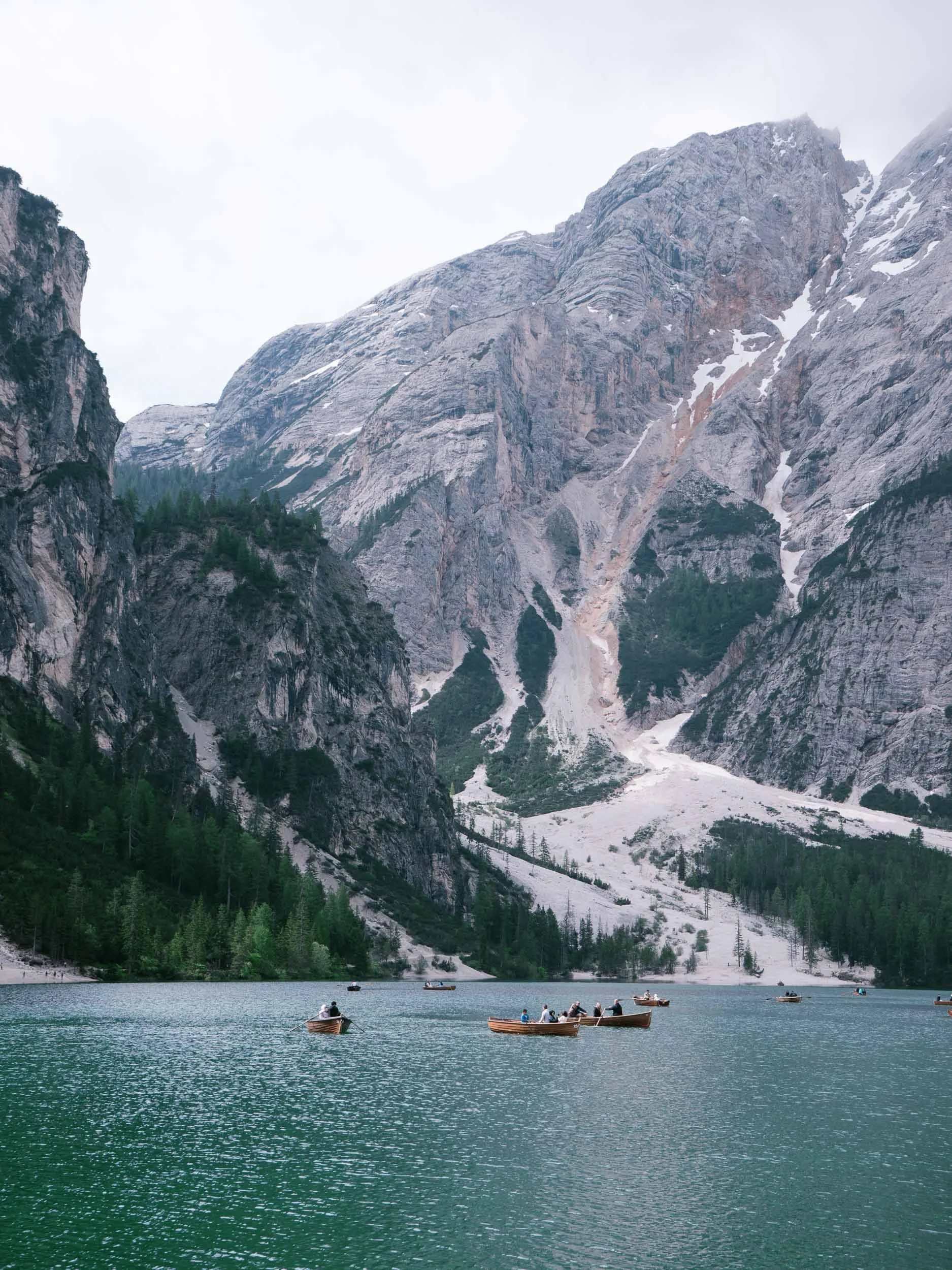
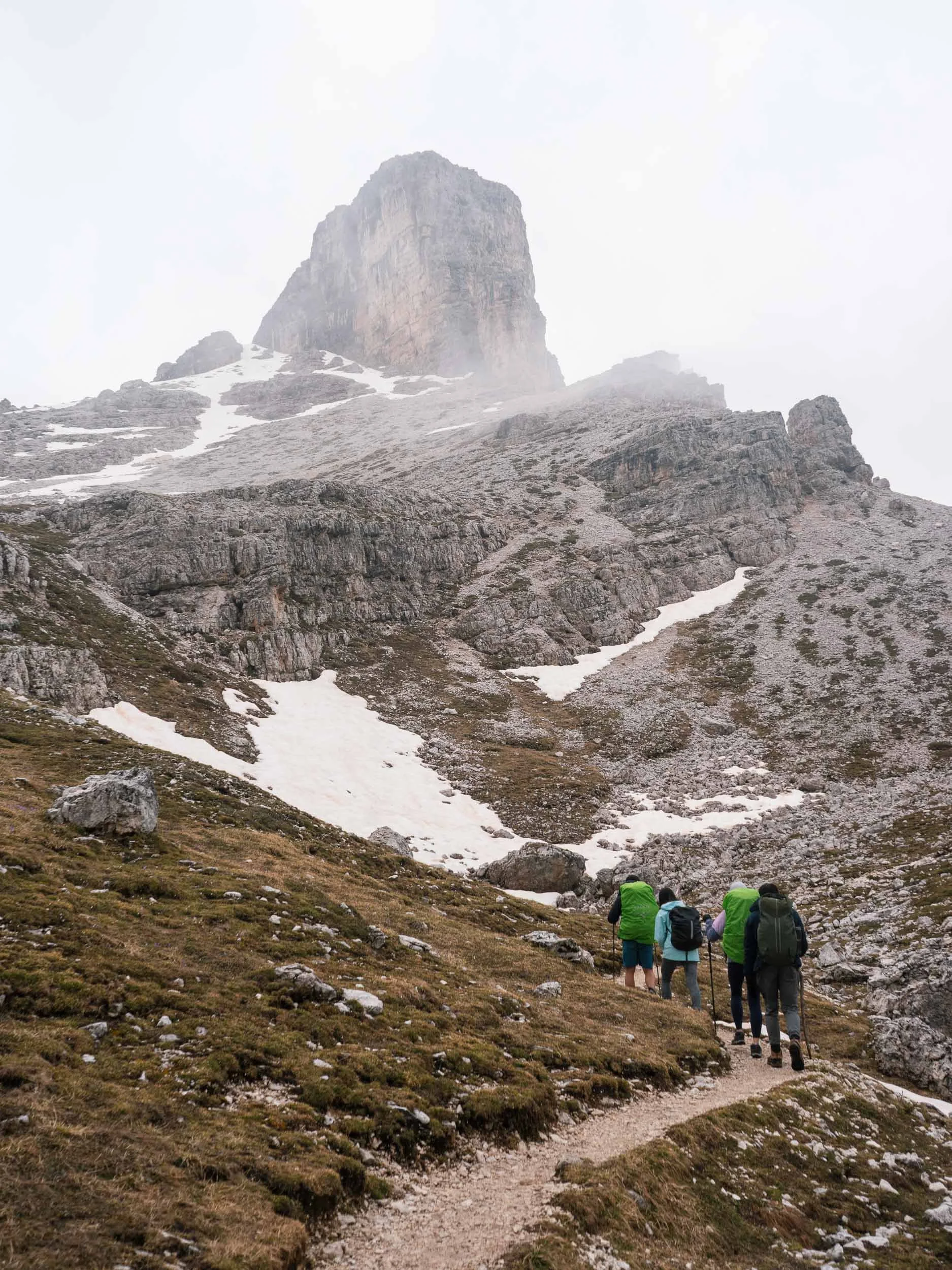
However, planning the trek can be daunting and confusing. With no centralised booking system, varying reservation processes, and limited hut availability, it’s easy to see why some hikers feel overwhelmed. But with a bit of preparation and flexibility, you can absolutely make your dream trek a reality!
This AV1 Hut Booking Guide includes all the huts along the official AV1 route, plus alternative rifugios nearby in case your preferred ones are full — a total of 38 huts. It also covers variant routes (including via ferratas), alternative itineraries for shorter treks, and exit points along the trail — perfect if you’re short on time or want extra flexibility during your hike. Inside, you’ll find all the details you need to efficiently plan your trek and secure your huts before it’s too late.
If you’re looking for a step-by-step guide on planning your hut-to-hut hiking trip, check out our other blog post here.
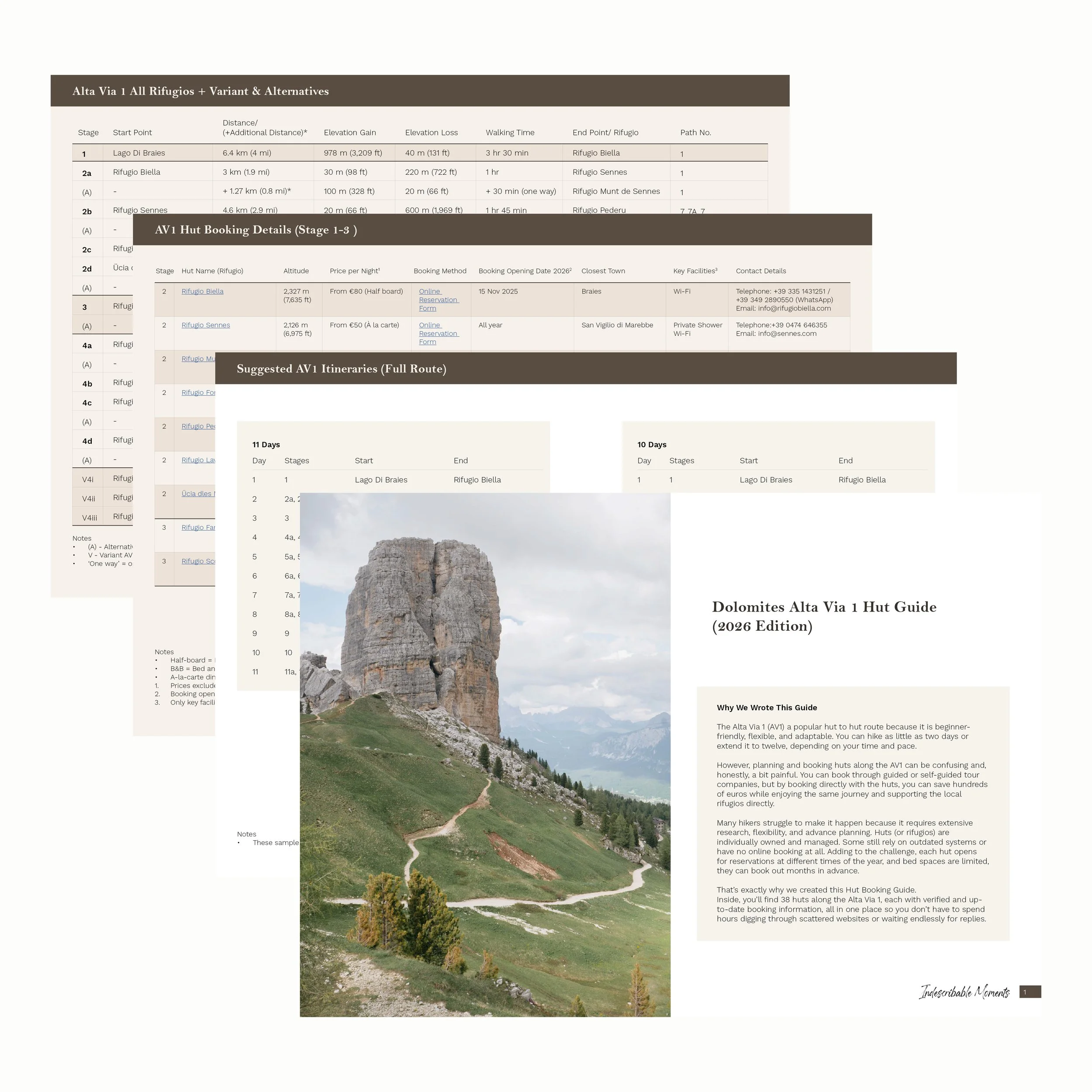
Preview of our AV1 hut booking guide
What You'll Find in This Guide:
1. A List of All Huts Along the AV1 Route + Alteratives
We’ve compiled a full list of rifugios and the nearby huts along the official Alta Via 1 trail, so you can plan your hike from start to finish. Each hut offers a unique place to rest, recover, and enjoy hearty meals, all while surrounded by the stunning beauty of the Dolomites. This list will allow you to map out your trek in detail, including estimated hiking times between huts.
2. Booking Methods
Each rifugio has different booking systems. Some can be booked online through their official websites, while others may require you to send an email or give them a call. In this guide, you'll find detailed instructions on how to reserve your spot in each hut, ensuring you secure your place early - especially crucial during the peak hiking season.
3. Estimated Cost Per Night
Generally, you can expect to pay around €60-110 per night, depending on whether you choose dorm-style accommodations or private rooms, and whether you opt for a half-board (including dinner and breakfast) or just a bed. Having these costs outlined helps you create a realistic budget for your multi-day trek.
4. Closest Town
Knowing the nearest towns to each rifugio can be a lifesaver. Whether you’re looking for alternative starting or finishing points, or if you need to exit the trail for any reason, this information helps you stay flexible. Nearby towns also provide opportunities for restocking supplies, adjusting your route, or simply soaking in some local culture before or after your trek.
5. Meals
The Italians arguably have some of the best food in the world — and the AV1 is no exception. Most rifugios offer half-board (dinner and breakfast included), while a few provide only bed and breakfast.
We’ve detailed which rifugios offer half-board options so you can plan your budget and bring extra cash for any à la carte meals. Choosing the half-board option also means you won’t need to carry much food with you, letting you enjoy the trail (and the meals) with a lighter pack and a fuller stomach.
6. When Booking Opens
Most rifugios open their bookings in January, but some huts allow you to reserve your stay as early as October of the previous year. Being aware of these timelines is critical to ensuring you get your preferred dates, especially if you're trekking in the busy summer season. Don’t miss out by waiting too long to secure your spot!
Why This Guide Will Save You Hours of Research
We’ve spent countless hours compiling this guide so that you don’t have to. The Alta Via 1 is a well-loved trail, but finding reliable, up-to-date information about rifugios, pricing, and booking details can be challenging. This guide includes everything you need to efficiently plan your trek and take the hassle out of organizing accommodations along the way.
By using this guide, you’ll:
Save hours of research time
Streamline your planning process
Avoid the frustration of juggling multiple websites and emails
Have peace of mind knowing your accommodations are taken care of well in advance
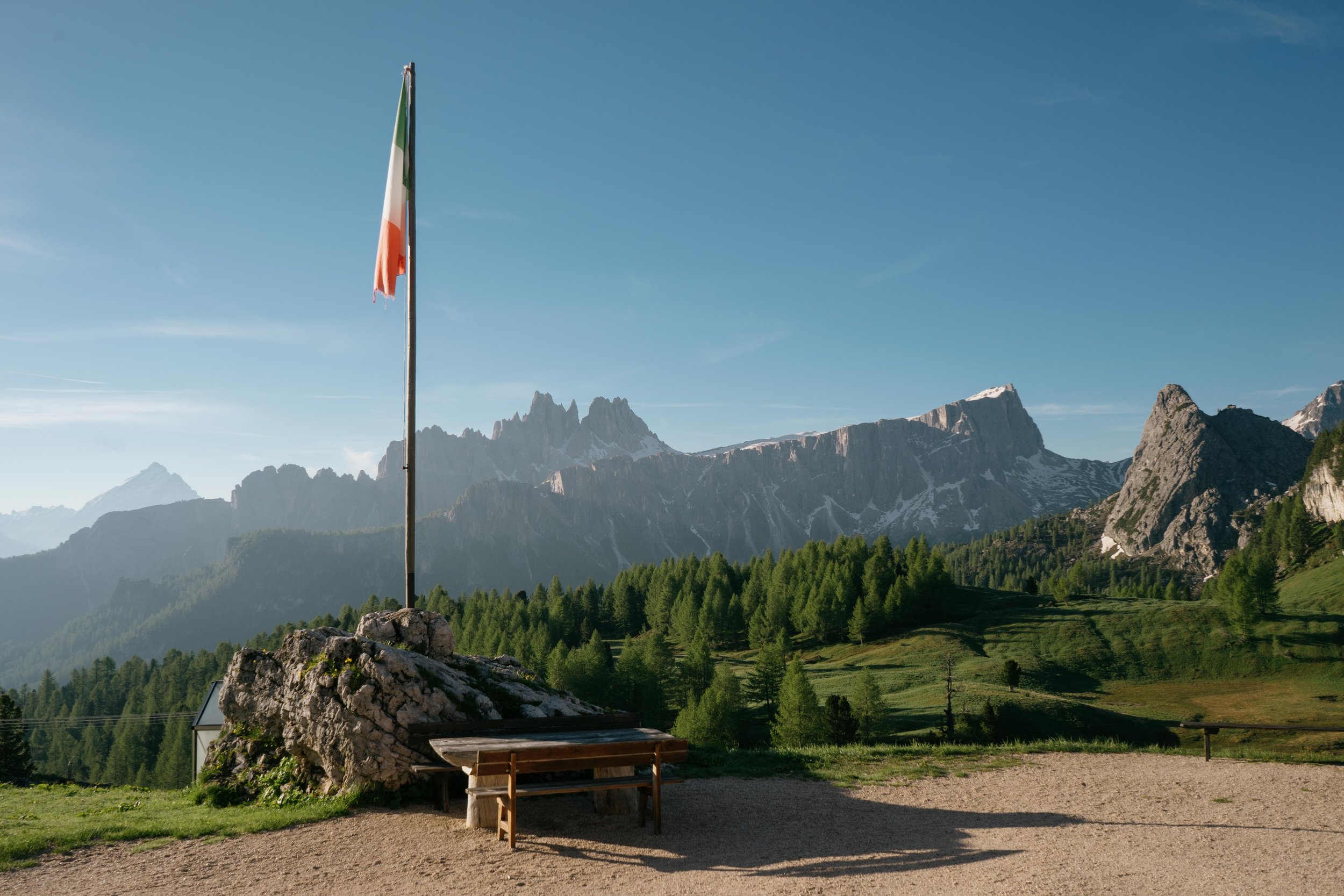
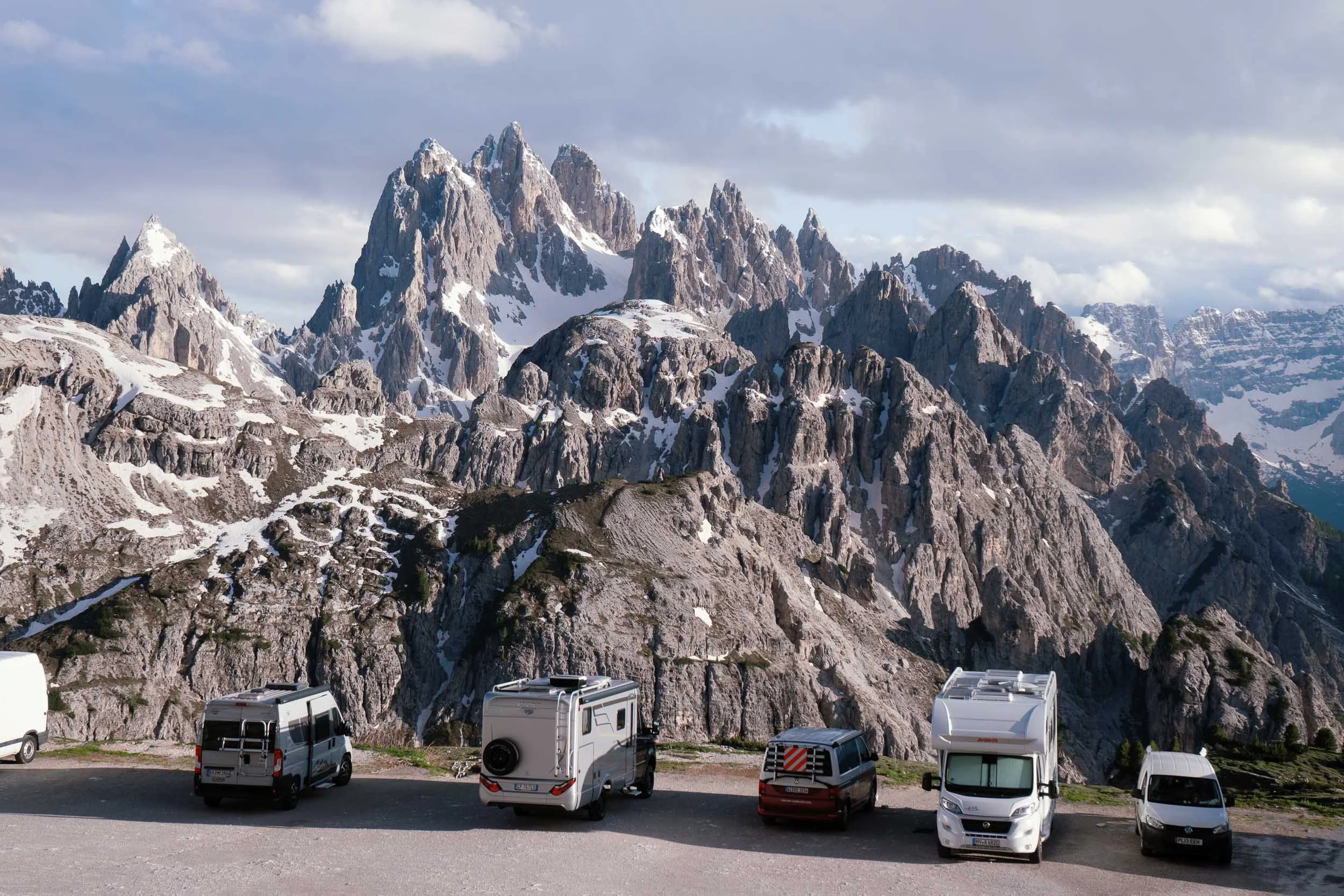
View outside Rifugio Cinque Torri
FAQs for Booking Alta Via 1 Rifugios
What are the Rifugios like?
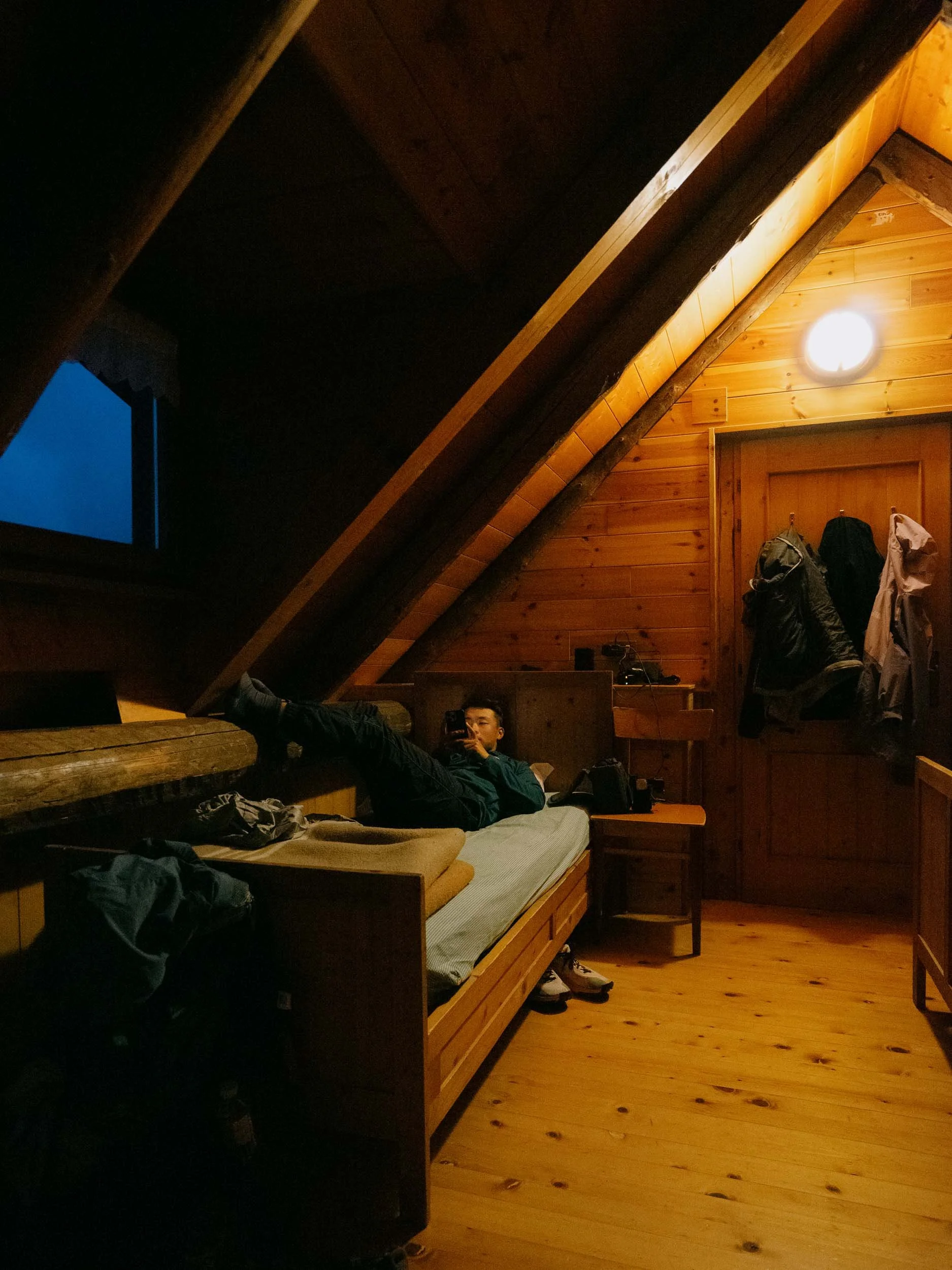
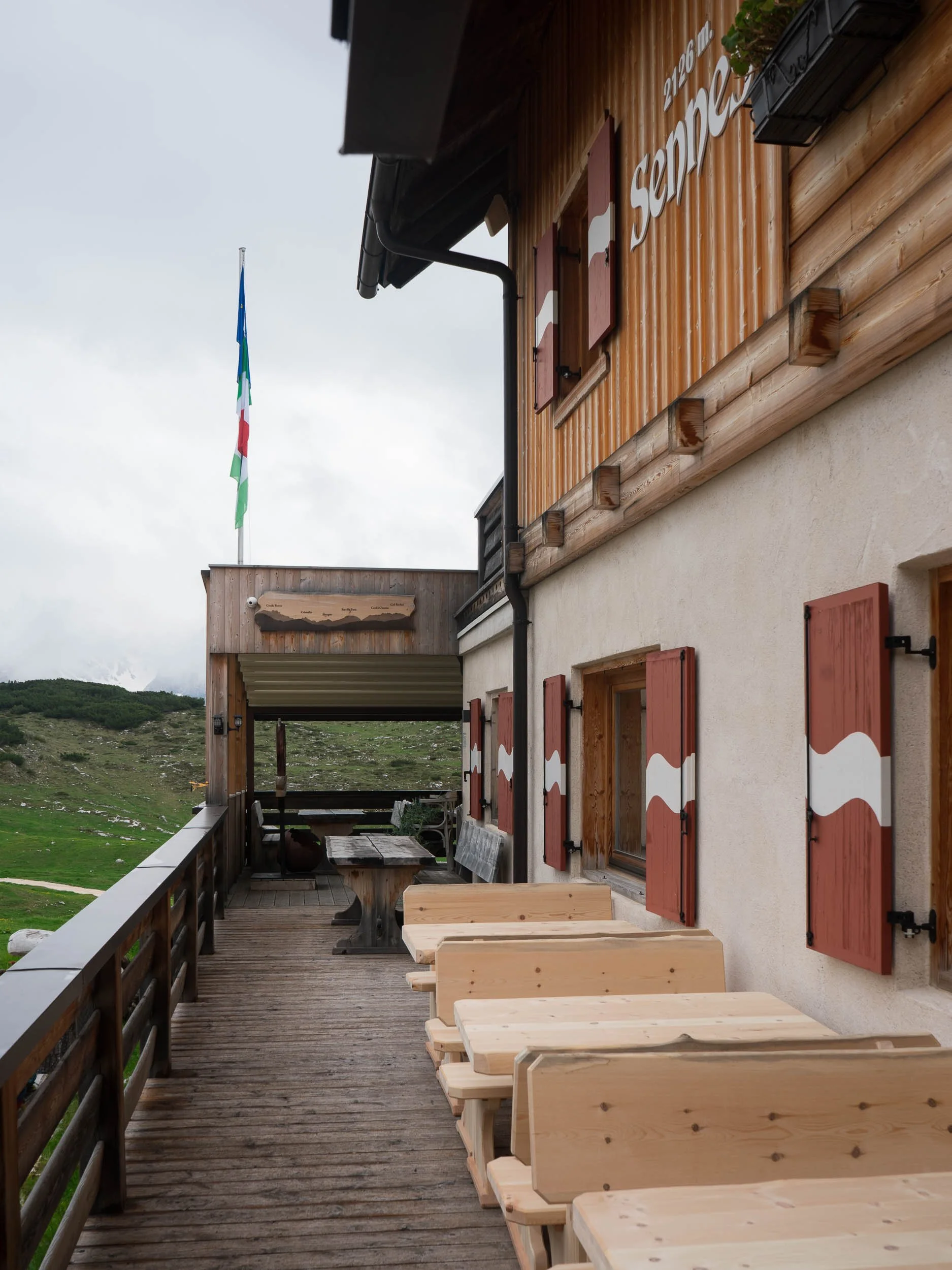
Rifugios on the Alta Via 1 range from basic to more comfortable mountain huts. Most offer dormitory-style accommodations with shared bunk beds, though some provide private rooms. Amenities vary: some rifugios have hot showers, hearty meals, and even Wi-Fi, while others are more rustic. The atmosphere is generally warm and communal, with hikers gathering to share meals and exchange stories about their adventures.
What’s the difference between breakfast-only and half board?
When booking rifugios, you’ll often see two options: breakfast-only or half board. Breakfast-only means you’re booking just a bed for the night with breakfast included, while half board includes dinner and breakfast. Given the remote nature of the huts, it’s highly recommended to go with half board, as this means you won’t need to carry or prepare your own meals - plus, nothing beats a hot meal after a long day of hiking!
What if my dates or rifugios are unavailable?
If your desired dates or rifugios are fully booked, you may need to adjust your itinerary. Unfortunately, walk-up reservations are not typically an option on the Alta Via 1. Start by looking for alternative rifugios nearby (our hut booking guide lists several within a couple of hours of each other). You can also modify your dates or consider less popular rifugios. Hiking in the shoulder season, either late June or September, is another great way to avoid crowds.
Some rifugios may experience cancellations in the month or two leading up to your trip, so it's worth checking back if your first choices are unavailable. That said, booking early gives you the best chance of securing your preferred rifugios.
What documents do I need to bring with me?
Make sure you bring your printed booking confirmation, as some rifugios may not have reliable internet reception to verify reservations. Additionally, bring your passport, as it is a legal requirement for rifugios to check your identity and charge the appropriate tourist tax. Also, carry cash, since not all rifugios have card machines to pay the remaining balance of your booking fee or for any additional food or drink you may need during your stay.
Is camping allowed on the Alta Via 1?
Wild camping is not permitted along the Alta Via 1. Strict regulations are in place to protect the natural environment and preserve the beauty of the Dolomites.
There are, however, two official campsites located along or near the route:
Camping Sass Dlacia – near Rifugio Scotoni
Camping Palafavera – near Rifugio Palafavera
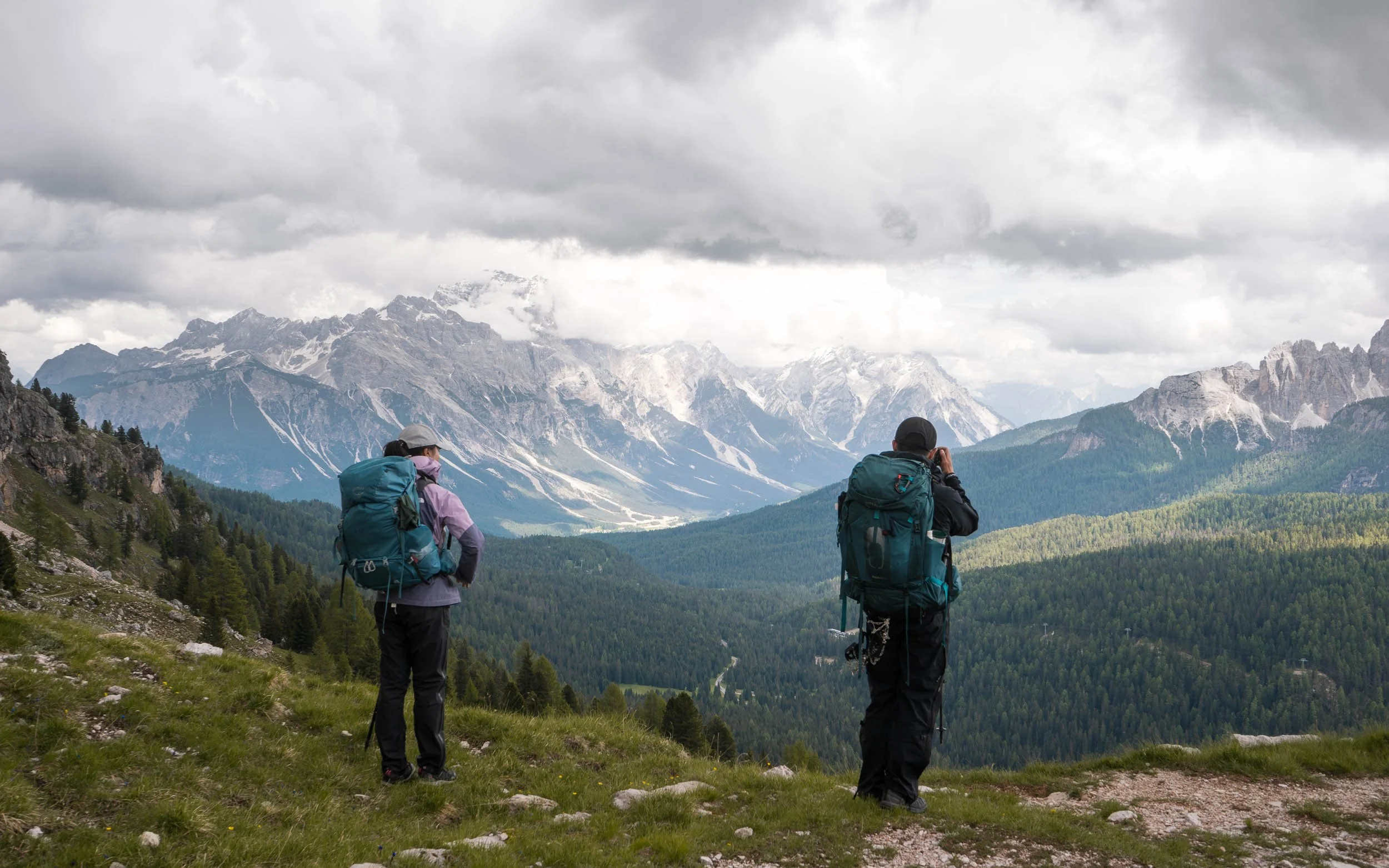
Our friends overpacked for their first hut-to-hut trek. Keep your pack under 10kg!
What do I need to pack to stay in the rifugios?
Check out our packing list! Here’s a list of essential items to bring for your stay in the rifugios:
Towel – Most rifugios provide basic facilities, but you’ll need your own towel for showers.
Sleeping Bag Liner – Rifugios provide blankets, but it’s customary and more hygienic to bring a sleeping bag liner.
Clean Shoes or Flip-Flops – Most huts don’t allow hiking boots inside, so bring a pair of clean shoes or flip-flops for indoor use.
Toiletries – Pack the essentials, including soap, toothbrush, and toothpaste, as rifugios often have limited supplies.
Earplugs – Dorm-style sleeping can be noisy, and earplugs will help ensure a restful night.
Power Bank – Some rifugios have limited charging facilities, so a power bank can be useful to keep your devices charged.
Lightweight Clothes for Sleeping – Pack a comfortable set of lightweight sleepwear.
Baby Wipes – Some rifugios don’t have showers, and others may charge for their use. Baby wipes are a convenient alternative for freshening up.
Offline Maps
For hikers tackling mountain trails like the Alta Via 1, having reliable navigation tools is essential. AllTrails+ provides premium features like offline maps and real-time GPS tracking, which can make all the difference when cell signals fade or conditions get challenging.
In the mountains, high snow can cover trails and even obscure signposts, making it difficult to stay on course. With AllTrails+, you can download maps to access your route offline and even print a paper copy directly from the app to carry as a backup. This way, you’re fully prepared if technology fails. Use my discount code vivchow30 to get 30% off your AllTrails subscription and stay safe and confident on your mountain adventures!

Appreciate the Help? Support Us!
If this guide has been helpful to you and you're feeling grateful for all the time and effort put into creating it, consider supporting our work by buying us a coffee on Ko-Fi. Your contribution will help us continue to create detailed guides like this one and bring more value to adventurers like you.
This guide has taken a lot of time to compile, and we can guarantee it will save you tons of research time — making your 2026 Alta Via 1 trek a dream come true!
Follow us on Instagram for more hiking tips and updates on our adventures:

2026 Dolomites Hut Booking Guide