
Last updated: 25 October 2026
Planning our Alta Via 1 (AV1) trek took nearly two years of research. It was our dream route from day one of dating, the setting where Kev hoped to propose to Viv, and Viv’s very first multi day hike. Even with months spent studying maps and navigating the notoriously fragmented mountain hut booking system, our plans constantly evolved around hut openings and trail availability.

That flexibility is the true magic of the AV1. Among the ten Alta Vias the Dolomites, the AV1 is the ultimate introduction to alpine trekking. It delivers dramatic limestone spires, high mountain passes, and warm, serviced huts (rifugi) without requiring heavy tents, cooking gear, or technical climbing equipment. It remains a demanding hike with steep ascents, rugged scree, and long mountain days, but staying in huts keeps your pack light and the journey deeply rewarding.
Because hut availability and walking paces vary for everyone, no two itineraries ever look the same. We built this step by step planning guide using the hard earned research from our own trip to answer your most common questions, demystify the booking timeline, and help you design an Alta Via 1 trek that is completely your own.
The Alta Via 1: A Quick Overview
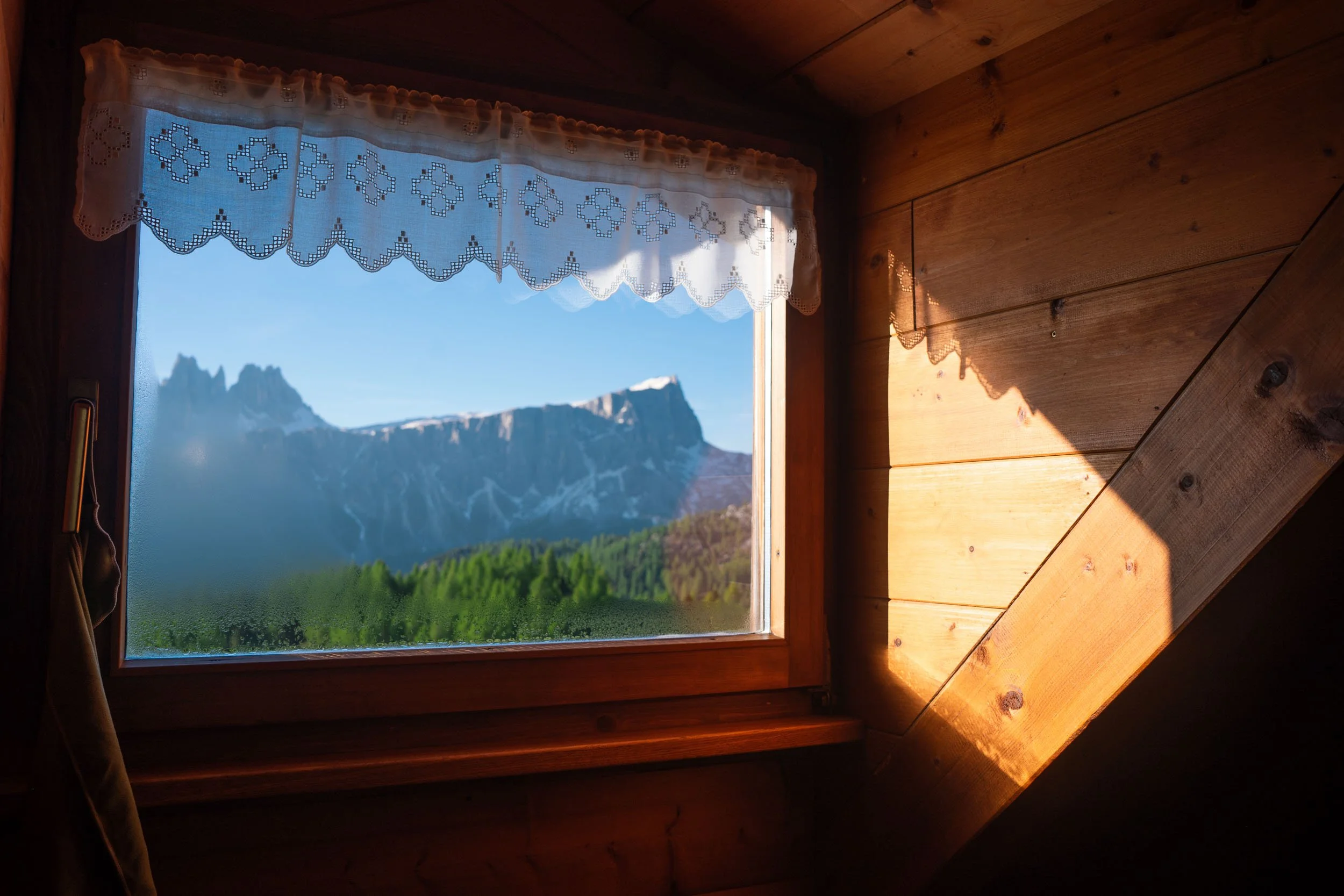
The Alta Via 1 is a stunning 125km trekking route starting at the iconic Lago di Braies and ending in Belluno. Covering roughly 7300m of elevation gain, this trail offers some of the most unforgettable sunrises, sunsets, and mountain passes you will ever witness.
"Alta Via" translates to "High Way" in Italian. These are a series of renowned, long-distance trekking routes that wind through the high-altitude terrain of the Italian Dolomites. While there are 10 official Alta Vias, Alta Via 1 (AV1) and Alta Via 2 (AV2) are by far the most popular.
It is widely considered a beginner-friendly route. This doesn't mean it’s "easy" - you still need good fitness and hiking experience - but it doesn't require technical climbing skills. You’ll navigate everything from paved roads and forest paths to rocky dolomite landscapes and, depending on the season, occasional snow patches.
Before planning your itinerary, read our companion guide, [Everything You Need to Know About Hiking the Alta Via 1 in the Dolomites]. It covers the route, difficulty, packing advice, mountain hut life, safety considerations and our personal highlights.
How Many Days Do You Need for the Alta Via 1?
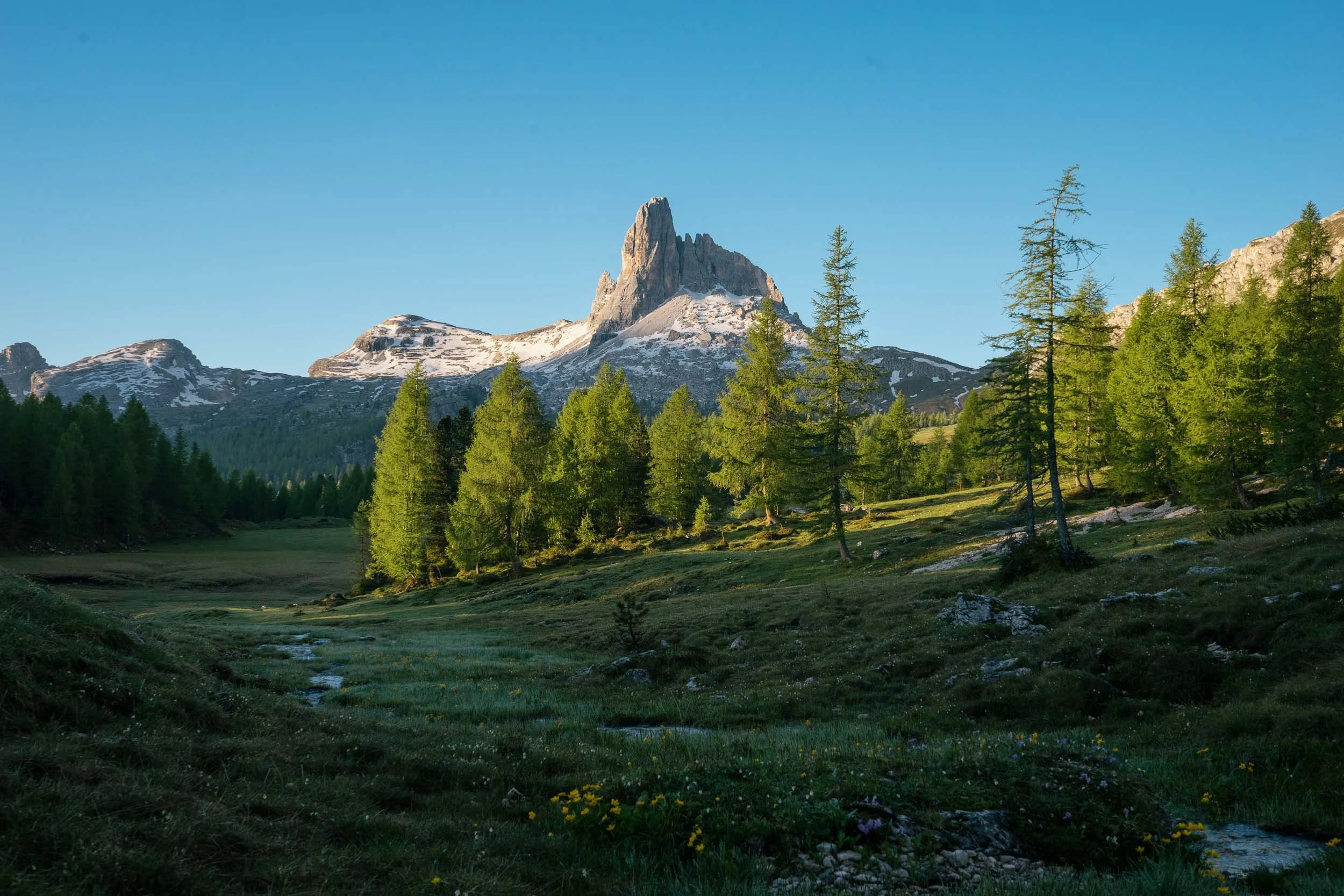
The full Alta Via 1 is approximately 125 kilometres long, although the exact distance depends on your chosen route and overnight stops.
Most hikers allow between 8 and 12 days to complete the full route. Some move faster, while others prefer to add rest days or split longer stages.
Your itinerary could look something like this:
4–5 days: Northern Alta Via 1 highlights
6–8 days: A shorter or faster section of the route
8–12 days: Full Alta Via 1 from Lago di Braies to Belluno
12+ days: A slower itinerary with shorter walking days, extra nights or weather flexibility
The number of days you need will depend on your fitness, how much time you have, whether you want to stop at specific huts and how comfortable you are with long ascents and descents.
Before booking anything, decide whether your priority is to complete the entire route or experience the most scenic sections at a more relaxed pace.
How to Book Rifugo on the Alta Via 1
If you are planning to complete the full Alta Via 1 from Lago di Braies to Belluno, you will usually need around 8 to 12 consecutive nights in mountain huts. Securing those beds is often the single most stressful part of the planning process. Unlike many famous long distance trails around the world, the Alta Via 1 does not operate on a centralized reservation portal. Every single refuge along the trail is independently owned and operated, which means each hut manages its own bookings. One property might use a slick digital calendar with an instant credit card deposit, while the very next hut down the path asks you to send a direct email, wire money via bank transfer, or call them over the phone.
The true challenge is rarely booking a single bed. The difficulty lies in chaining together eight or more independent refuges that link together in a logical geographic order, match your group’s daily walking pace, and happen to have open availability on consecutive nights.
Why Alta Via 1 Hut Bookings Can Be Complicated
There are several things to keep in mind when booking your huts. Each rifugio has its own booking system, and booking windows open at different times. Some accept reservations online, while others still rely on email, and some may not respond until much later in the season. Private rooms are also limited, deposits may be required, and cancellation policies vary from hut to hut.
It is also worth remembering that your preferred hut may not be available on your planned dates. One unavailable hut can sometimes affect several days of your itinerary, as changing one overnight stop may mean adjusting the stages around it too.
Some huts begin accepting reservations as early as autumn of the previous year, while others may not confirm bookings until winter or early spring. This is why planning the Alta Via 1 is less about finding one perfect itinerary and more about building a route that can adapt as bookings open.
Our biggest piece of advice is simple: be flexible.
You do not need to stay in the exact same five huts you have seen on social media. The Alta Via 1 route has a number of alternative refuges, valley accommodations and road-accessible options that can help you build a route around availability. In fact, being open to different huts can often make the whole planning process much easier.
When Do Dolomites Hut Bookings Open for 2027?
If you are aiming for a summer 2027 trek, starting your research in the late summer and autumn of 2026 gives you the best chance of securing your first choice route. While every warden sets their own release date, the reservation season generally follows a predictable seasonal rhythm.
Here’s the planning timeline:
August to September 2026: Research and Preparation
Late summer is all about laying your groundwork. This is the ideal window to lock in your approximate travel dates, choose whether you want to hike north to south, sketch out a rough itinerary, and line up both your preferred huts and secondary backups. Reaching out to wardens now is very useful. Even if their calendars are not finalized yet, sending a polite email lets you know roughly which month their booking engine will unlock so you can set your calendar reminders.
October to December 2026: Early Booking Windows
A significant wave of private and high demand refuges open their reservation books during late autumn. Private rooms and beds in iconic huts like Lagazuoi sell out rapidly during this stretch, so monitoring their websites and social channels closely in late autumn is essential to secure your top choices early.
January to March 2027: Traditional and CAI Openings
Many traditional refuges, particularly those managed by the Club Alpino Italiano (CAI), wait until midwinter or early spring to open their reservation systems. If you send an inquiry in December and hear nothing back, do not assume the hut is fully booked. Most mountain huts close their doors from late September through mid June, and wardens often check emails only once every couple of weeks while working winter jobs, ski guiding, or carrying out seasonal maintenance. A slow reply during the winter months is completely normal mountain pace.
Confirming Your Reservations and Paying Deposits
Once a warden accepts your dates, you will usually secure your spot with a deposit of roughly 20% to 50%, paid via credit card or international bank transfer. The hut will then issue an official email confirmation or booking voucher. Be sure to save digital copies for offline use and print physical backups to bring in your backpack. When you arrive on the mountain, you will check in, show your confirmation, and settle the remaining balance alongside any local tourist taxes during your stay.
Skip the Planning Headache
Finding contact details, tracking staggered booking windows, and checking dozens of independent websites can take an overwhelming amount of time. It took us nearly two full years of research to piece all of this together when planning our own trip and making it happen. To save you that same stress, our [Alta Via 1 Hut Booking Guide 2027] brings every detail together in one place, complete with direct booking channels, release calendars, alternative huts, and practical trail notes to help you build your dream AV1 itinerary.
Our Alta Via 1 Hut Hut Booking Guide is a comprehensive resource featuring all huts along the official and variant routes, alternative rifugios nearby, and multiple itineraries for different trip lengths and paces.
You’ll also find suggested exit points, budget breakdowns, and even via ferrata options. Our guide is regularly updated, so even if you’re not planning to hike the AV1 this year (or missed out on bookings), it will still be available with the most up-to-date information for future seasons.
By using this guide, you’ll:
Save hours of research time
Streamline your planning process
Avoid the frustration of juggling multiple websites and emails
Have peace of mind knowing your accommodations are taken care of well in advance
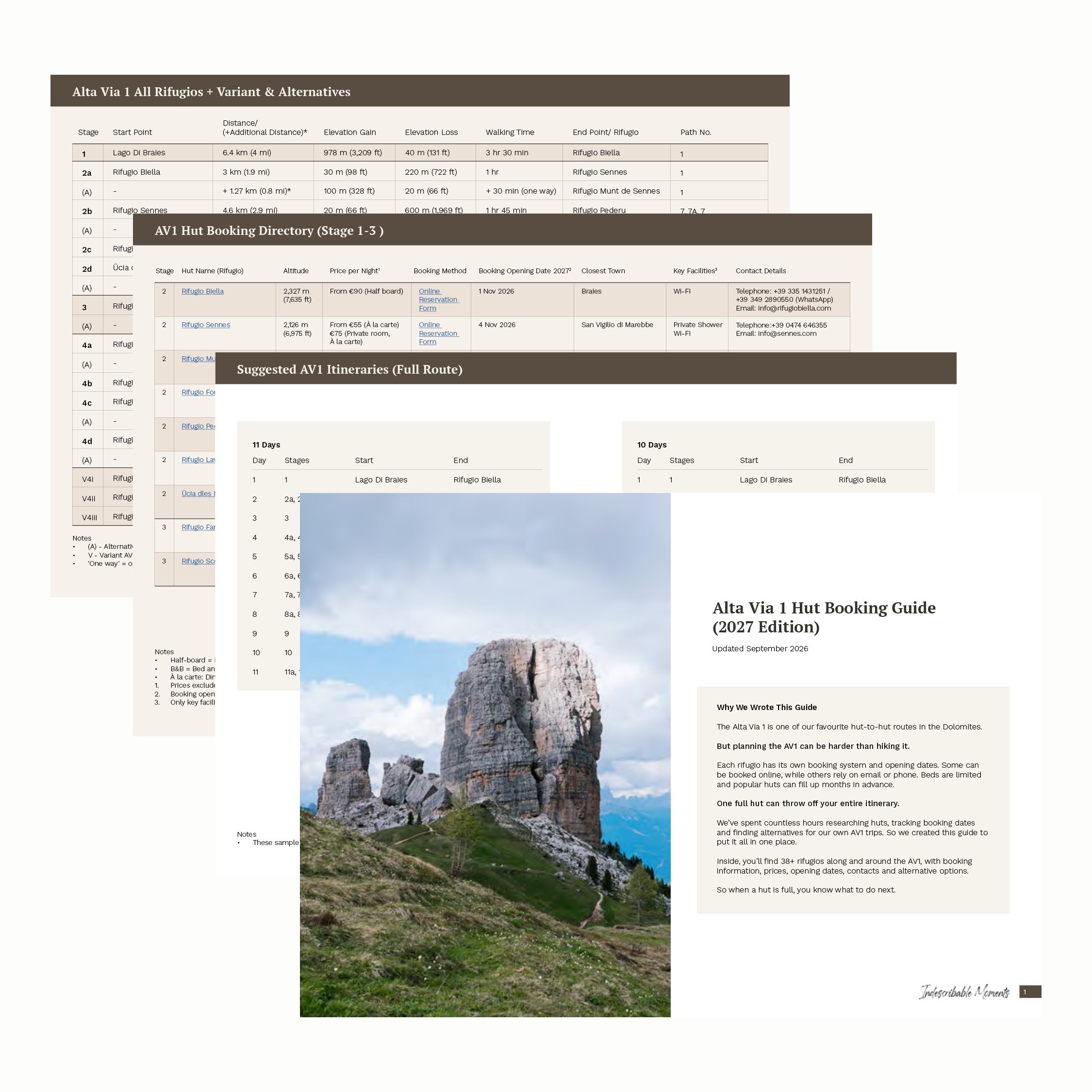
Preview of our Dolomites AV1 Hut booking guide
How to Plan and Book Your Alta Via 1 Trek: Step by Step
Booking the Alta Via 1 can feel like solving a puzzle, but breaking the process into stages makes it much more manageable.
Step 1: Decide How Many Days You Have and Choose Your Direction
Start by deciding how much time you can realistically spend on the trail. The full Alta Via 1 usually takes around 8 to 12 days, but you can also complete shorter sections or create a slower itinerary with additional nights.
Think about whether you want to complete the entire route from Lago di Braies to Belluno, focus on the northern highlights, explore the quieter southern section or simply build a trek around a few huts you particularly want to visit.
You should also decide which direction you want to hike. The classic route runs from north to south, but your choice may depend on transport connections, hut availability, weather and the sections you most want to experience.
At this stage, you do not need a final itinerary. A rough idea of your dates, direction and preferred number of days is enough to begin.
Step 2: Map Out Your Ideal Itinerary
Once you know how many days you have, start mapping out your preferred overnight stops.
Use a reliable trail map alongside your preferred navigation app to understand the distance, elevation gain and terrain between huts. Do not look only at kilometres. A short stage with a significant climb can be much more demanding than a longer day on easier terrain.
Your initial itinerary should include:
Your preferred hut for each night
One or two alternative huts
Approximate walking time and elevation gain
Possible exit points or road access
Any rest days or shorter stages
Planning tip // Do not book your huts based only on the classic 11-stage itinerary. Use it as a starting point, then adjust it around your own fitness, preferences and actual hut availability.

Step 3: Compare Rifugi Before Making Reservations
This is where the planning becomes more complicated.
A hut may be in the perfect location, but it might not have private rooms, showers, suitable food arrangements or availability on your dates. Another refuge slightly further along the trail may work much better for your itinerary.
Before contacting each hut, compare the details that matter most to you, such as accommodation type, facilities, location, walking time and booking method.
Our [Alta Via 1 Hut Booking Guide 2027] can help with this stage by bringing together information on 38 rifugi, including booking contacts, direct links, alternative huts, booking windows and practical planning details. Rather than researching every hut from scratch, you can use the guide to narrow down your preferred options and prepare a realistic backup plan.
Step 4: Book Your Huts and Track Every Reservation
Once you have a workable itinerary, start contacting the huts. We recommend booking the most important or difficult-to-replace nights first, particularly if you want private rooms or are travelling during July and August.
Because every hut uses a different booking system, keep a simple booking tracker so you can see which reservations are confirmed and which still need attention.
Do not assume that a hut is fully booked simply because it has not replied. Some refuges open their reservations later in the season or check emails infrequently during winter.
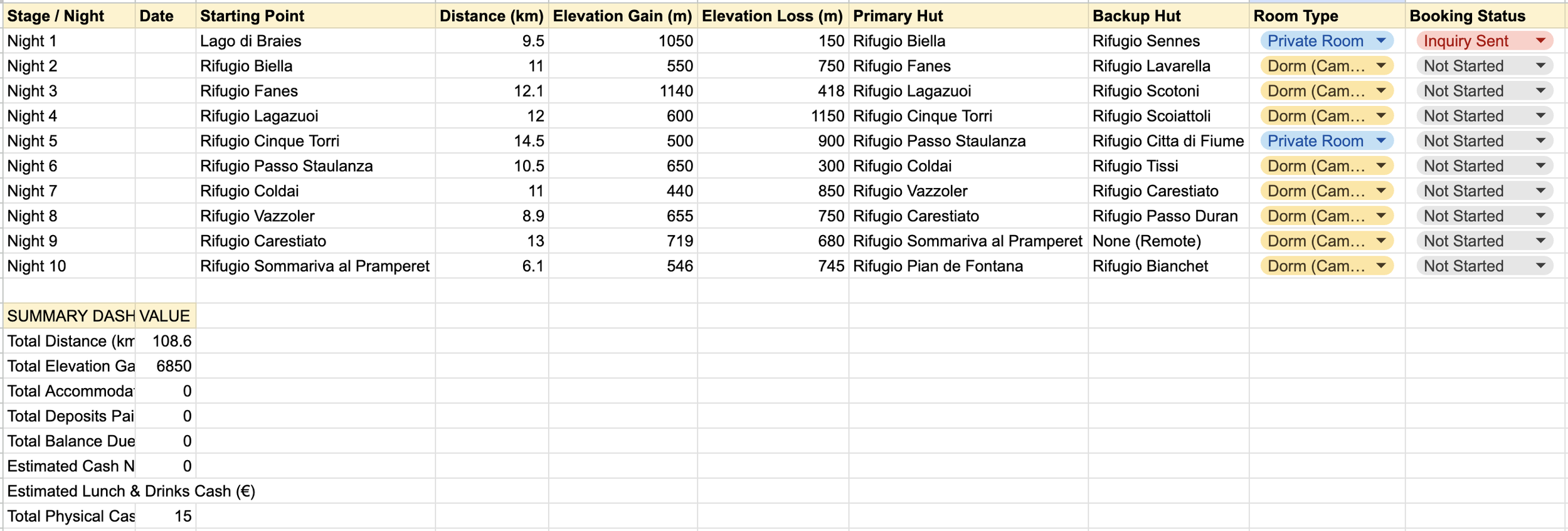
Use our custom booking tracker to help you plan!
Step 5: Rework Your Route Around Availability
It is very normal for your first-choice hut to be unavailable. The important thing is not to panic or immediately abandon your itinerary.
First, check whether there is another refuge nearby. If not, see whether you can walk slightly further, stop earlier or adjust the following night. A change of only a few kilometres can sometimes make the difference between an impossible itinerary and one that works.
However, always look at the wider route rather than changing just one night. Moving one hut can affect the distance, elevation and availability of the next two or three stages.
This is why we recommend having alternatives prepared before booking day. Our Alta Via 1 Hut Booking Guide 2027 includes 38 rifugi and route options to help you explore these alternatives more easily.
Step 6: Check Your Bookings and Prepare for the Trail
Once all your reservations are confirmed, check that the dates connect correctly from one night to the next.
Make sure there are no missing nights, overlapping bookings or stages that are too long for your group. It is also worth checking whether your arrival and departure dates work with your transport and accommodation before and after the trek.
Before leaving, save your booking confirmations, maps and transport information offline. Mobile reception can be unreliable in the mountains, so we also recommend keeping printed copies of your hut confirmations in a waterproof pouch.
Finally, check the latest weather, trail conditions and hut opening information shortly before departure. Even the best-planned itinerary may need to change once you are in the mountains.
Tips to Simplify Your Hut Booking Puzzle
If you run into sold out dates while assembling your itinerary, these four field tested strategies will help keep your trip on track:
Adjust Your Daily Walking Mileage: If a classic stage finish like Rifugio Lagazuoi is full, consider pushing an extra hour down to Rifugio Col Gallina, or stop earlier at Rifugio Scotoni. Changing your daily distance slightly often unlocks completely different room availability.
Consider Splitting Up Larger Groups: If you are trekking with friends or family and a hut cannot accommodate four or five people in one room, look into booking two smaller separate rooms or splitting across two neighboring huts (such as Rifugio Fanes and Rifugio Lavarella, which sit only five minutes apart).
Choose Alternative Trailheads or Finish Points: You do not have to walk the classic start to finish line. If northern huts are packed, consider jumping on trail at Passo Falzarego, finishing at Passo Staulanza, or focusing exclusively on the scenic southern massifs.
Set Calendar Alarms for Release Windows: Research your huts early, mark exact booking launch dates on your calendar, and send your reservation requests the morning doors open. You will secure your first choice beds with zero stress.
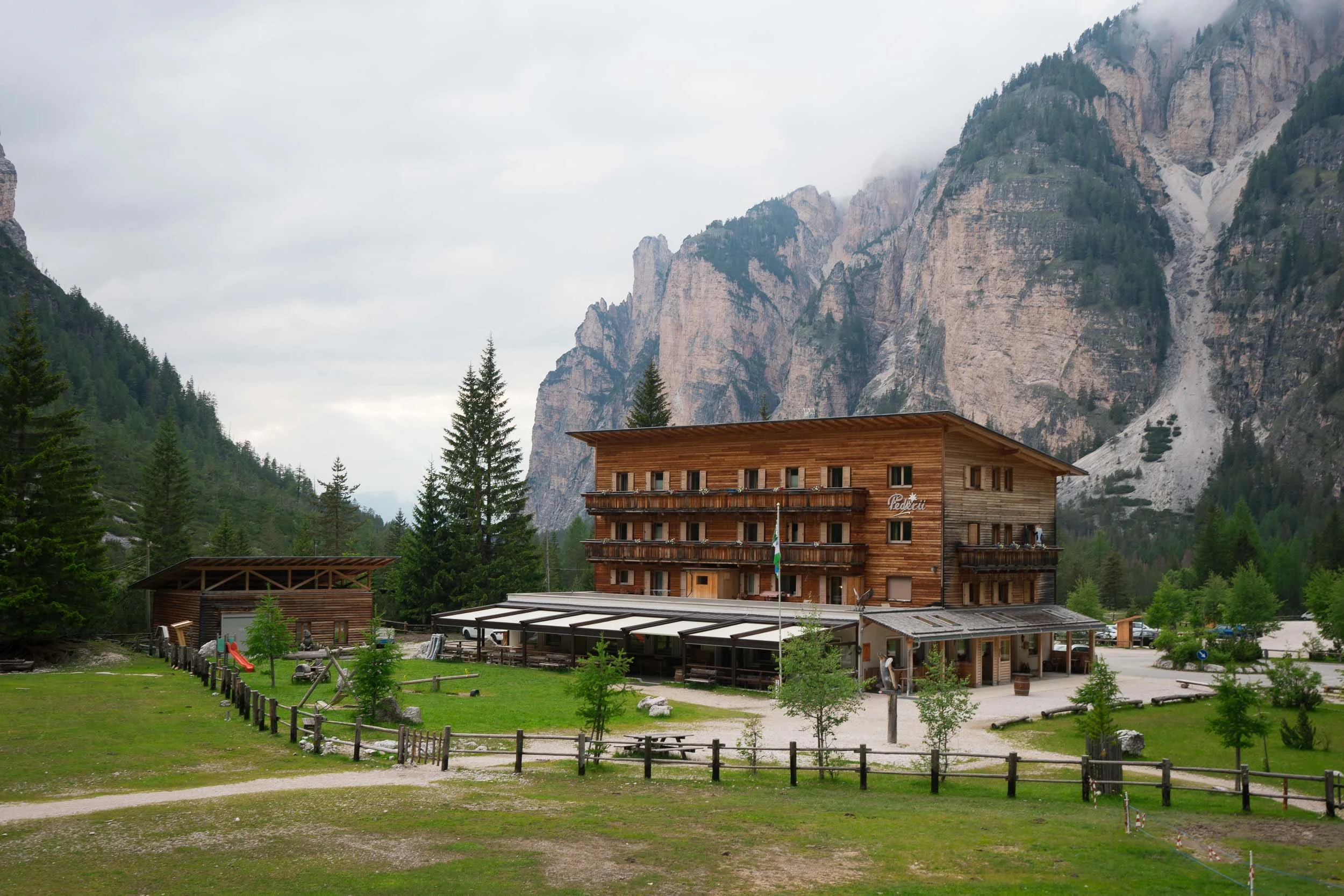
Rifugio Pederu
The Official Alta Via 1 Route: Standard 11-Stage Itinerary
The traditional Alta Via 1 is often divided into an 11-stage itinerary from north to south.
This is a useful starting point, but it should not be treated as a fixed booking template. Your final route may look different depending on hut availability, walking preferences and the number of days you have.
Stage 1 Lago di Braies to Rifugio Biella // 6.4 km | 978 m ascent | 120 m descent | 3 hours 30 minutes
Stage 2 Rifugio Biella to Rifugio Fanes // 13 km | 668 m ascent | 908 m descent | 4 hours 45 minutes
Stage 3 Rifugio Fanes to Rifugio Lagazuoi // 12.1 km | 1,140 m ascent | 418 m descent | 5 hours 30 minutes
Stage 4 Rifugio Lagazuoi to Rifugio Nuvolau // 9.8 km | 549 m ascent | 700 m descent | 3 hours 30 minutes
Stage 5 Rifugio Nuvolau to Rifugio Città di Fiume // 15.3 km | 591 m ascent | 1,030 m descent | 5 hours 15 minutes
Stage 6 Rifugio Città di Fiume to Rifugio Coldai // 15.4 km | 900 m ascent | 700 m descent | 4 hours 30 minutes
Stage 7 Rifugio Coldai to Rifugio Vazzoler // 11 km | 440 m ascent | 850 m descent | 3 hours 30 minutes
Stage 8 Rifugio Vazzoler to Rifugio Carestiato // 8.9 km | 655 m ascent | 750 m descent | 4 hours
Stage 9 Rifugio Carestiato to Rifugio Sommariva al Pramperet // 13 km | 719 m ascent | 680 m descent | 5 hours 15 minutes
Stage 10 Rifugio Sommariva al Pramperet to Rifugio Pian de Fontana // 6.1 km | 546 m ascent | 745 m descent | 3 hours 30 minutes
Stage 11 Rifugio Pian de Fontana to La Pissa // 19 km | 300 m ascent | 1,400 m descent | 5 hours 30 minutes

Alta Via 1 Hut Directory: 23 Rifugi by Stage
The classic itinerary includes a number of well-known huts, but there are also alternative refuges around many sections of the route.
The directory below gives you an overview of the main options. For more detailed booking information, including contact details, booking channels, release dates and additional alternatives (38 rifugi in total), see our [Alta Via 1 Hut Booking Guide 2027].
Stage 1: Lago di Braies to Rifugio Biella
Rifugio Biella (2,327 m)
Rooms // Shared dormitories only
Showers // Hot showers available (subject to water availability)
CAI // 10% discount
Rifugio Sennes (2,126 m)
Rooms // Private rooms and shared dormitories available
Showers // Hot showers available
Rifugio Fodara Vedla (1,285m)
Rooms // Private rooms with ensuite options and shared dormitories
Showers // Private bathrooms and hot showers included
Stage 2: Rifugio Biella to Rifugio Fanes
Rifugio Pederü (1,548 m)
Rooms // Private rooms with ensuite options and shared dormitories
Showers // Private bathrooms and hot showers included
Ücia dles Muntagnoles (2,045 m)
Rooms // Dormitories
Showers // Hot showers available
Rifugio Lavarella (2,050m)
Rooms // Private rooms and shared dormitories
Showers // Hot showers available
Rifugio Fanes (2,060 m)
Rooms // Private rooms with ensuite options and shared dormitories
Showers // Private bathrooms and hot showers included
Stage 3: Rifugio Fanes to Rifugio Lagazuoi
Rifugio Scotoni (2,040m)
Rooms // Private rooms and shared dormitories
Showers // Hot showers available
Rifugio Lagazuoi (2,752 m)
Rooms // Private rooms and shared dormitories
Showers // Hot showers available (token required)
Stage 4: Rifugio Lagazuoi to Rifugio Cinque Torri
Rifugio Angelo Dibona (2,037 m)
Rooms // Private rooms and shared dormitories
Showers // Hot showers available
Rifugio Croda da Lago (2,046 m)
Rooms // Shared dormitories and limited private rooms
Showers // Hot showers available (token required)
CAI // 20% off
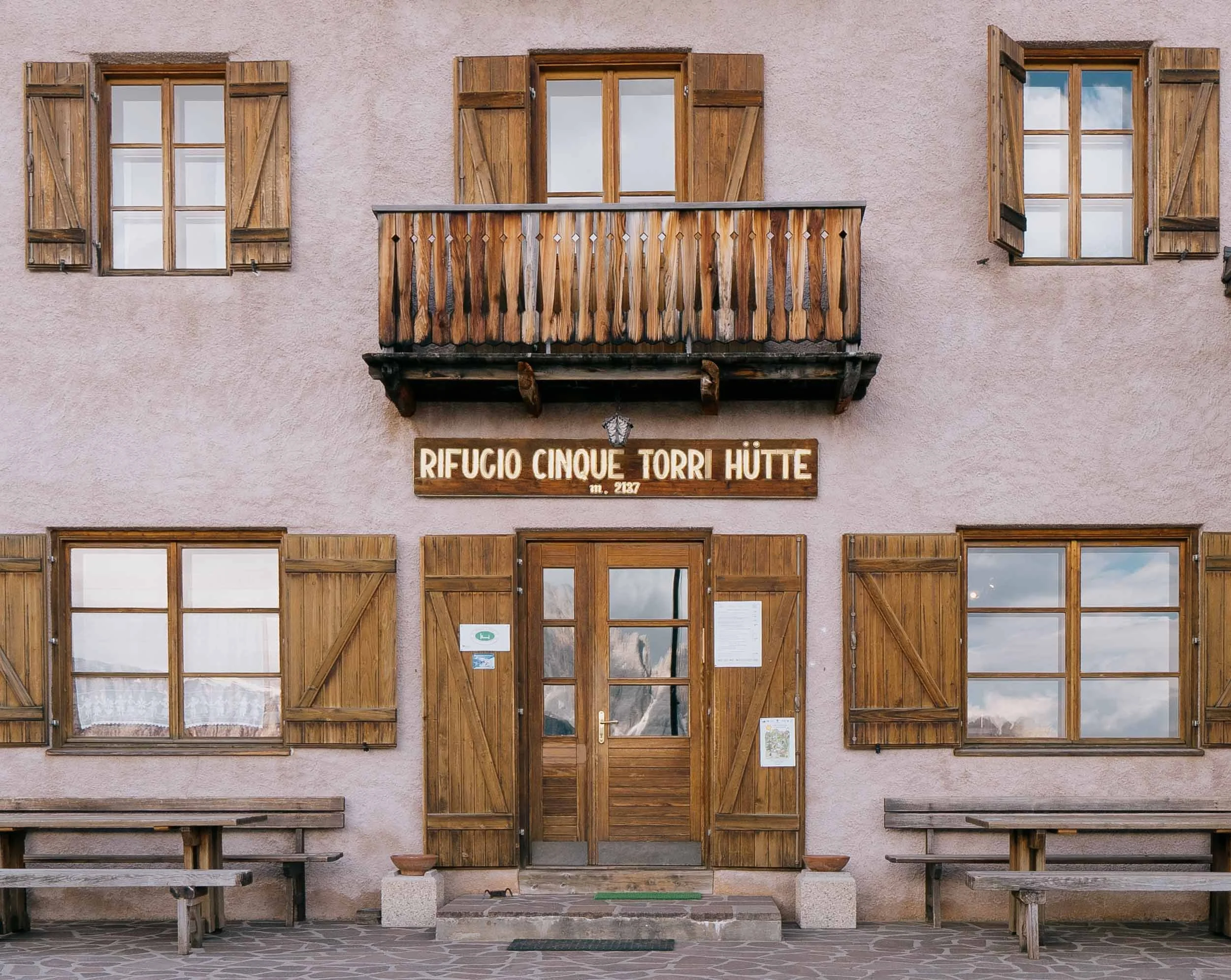
Rifugio Cinque Torri (2,137 m)
Rooms // Private rooms and shared dormitories
Showers // Hot showers available (token required)
Rifugio Averau (2,413 m)
Rooms // Private enquite rooms and shared dormitories
Showers // Hot showers available
Stage 5: Rifugio Cinque Torri to Rifugio Città di Fiume
Rifugio Nuvolau (2,575 m)
Rooms // Shared dormitories only
Showers // No showers available
CAI // 20% discount
Berghotel Passo Giau (2,236 m)
Rooms // Private hotel style rooms only
Showers // Private ensuite hot showers included
Rifugio Città di Fiume (1,918 m)
Rooms // Shared dormitories only
Showers // Hot showers available (token required)
CAI // 20% discount
Stage 6: Rifugio Città di Fiume to Rifugio Coldai
Rifugio Coldai (2,132 m)
Rooms // Private dormitory and shared dormitories
Showers /// Hot showers available (token required, water level dependent)
CAI // 20% discount
Rifugio Tissi (2,250 m)
Rooms // Private dormitory and shared dormitories
Showers // Limited hot showers available (token required)
CAI // 20% discount
Bring Cash
Stage 7: Rifugio Coldai to Rifugio Vazzoler
Rifugio Vazzoler (1,714 m)
Rooms // Private rooms and shared dormitories
Showers // Hot showers available (token required)
CAI // 20% discount
Stage 8: Rifugio Vazzoler to Rifugio Carestiato
Rifugio Carestiato (1,834 m)
Rooms // Private rooms and shared dormitories
Showers // Hot showers available (token required)
CAI // 15% discount
Rifugio Passo Duran (1,601 m)
Rooms // Private ensuite rooms and shared dormitories
Showers // Hot showers available (token required)
Stage 9: Rifugio Carestiato to Rifugio Sommariva al Pramperet
Rifugio Sommariva al Pramperet (1,857 m)
Rooms // Shared dormitories only
Showers // Hot showers available (token required, subject to water supply)
Stage 10: Rifugio Sommariva al Pramperet to Rifugio Pian de Fontana
Rifugio Pian de Fontana (1,632 m)
Rooms // Shared dormitories only
Showers // Cold showers available
CAI // Discount aailable
Stage 11: Rifugio Pian de Fontana to La Pissa Bus Stop
Stay in Belluno
Need More Hut Options?
Our [Alta Via 1 Hut Booking Guide 2027] includes a wider directory of 38 rifugi, with booking contacts, alternative accommodation, route information and practical details to help you create an itinerary around real hut availability.

Rifugio Sennes
Club Alpino Italiano (CAI) vs Private Huts
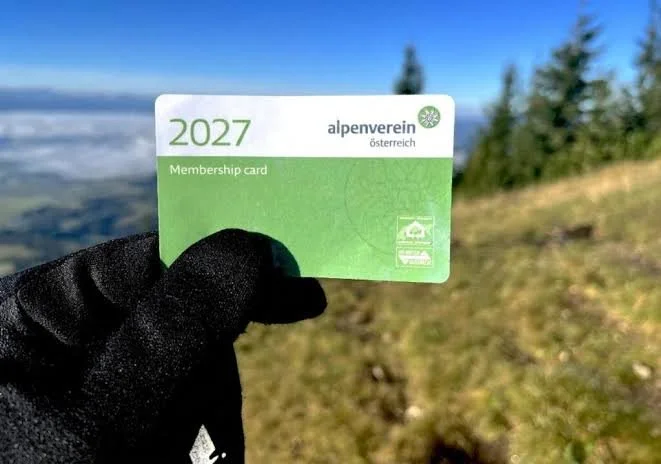
Many rifugi along the Alta Via 1 are privately owned and run by local families. Some are affiliated with the alpine clubs like Club Alpino Italiano (CAI).
If you hold a valid alpine club membership, you may be entitled to a discount at participating huts. The amount of discount and eligibility depend on the hut and the organisation involved. You will need to present your membership card upon arrival to be offered a discount.
Dolomites Rifugio Facilities & Daily Life: What to Expect
Life inside a mountain hut is straightforward, social, and deeply relaxing, but facilities vary considerably from one property to the next.
Sleeping Arrangements (Private Rooms vs Dorms): Many huts offer a mix of private double/triple rooms and communal dormitories (camerate) sleeping 4 to 18 people. Private rooms book out the fastest. In private rooms, fresh bedsheets and duvets are almost always provided. In dorms, clean pillows and heavy blankets are supplied, but bringing your own lightweight sleeping bag liner is mandatory for hygiene.
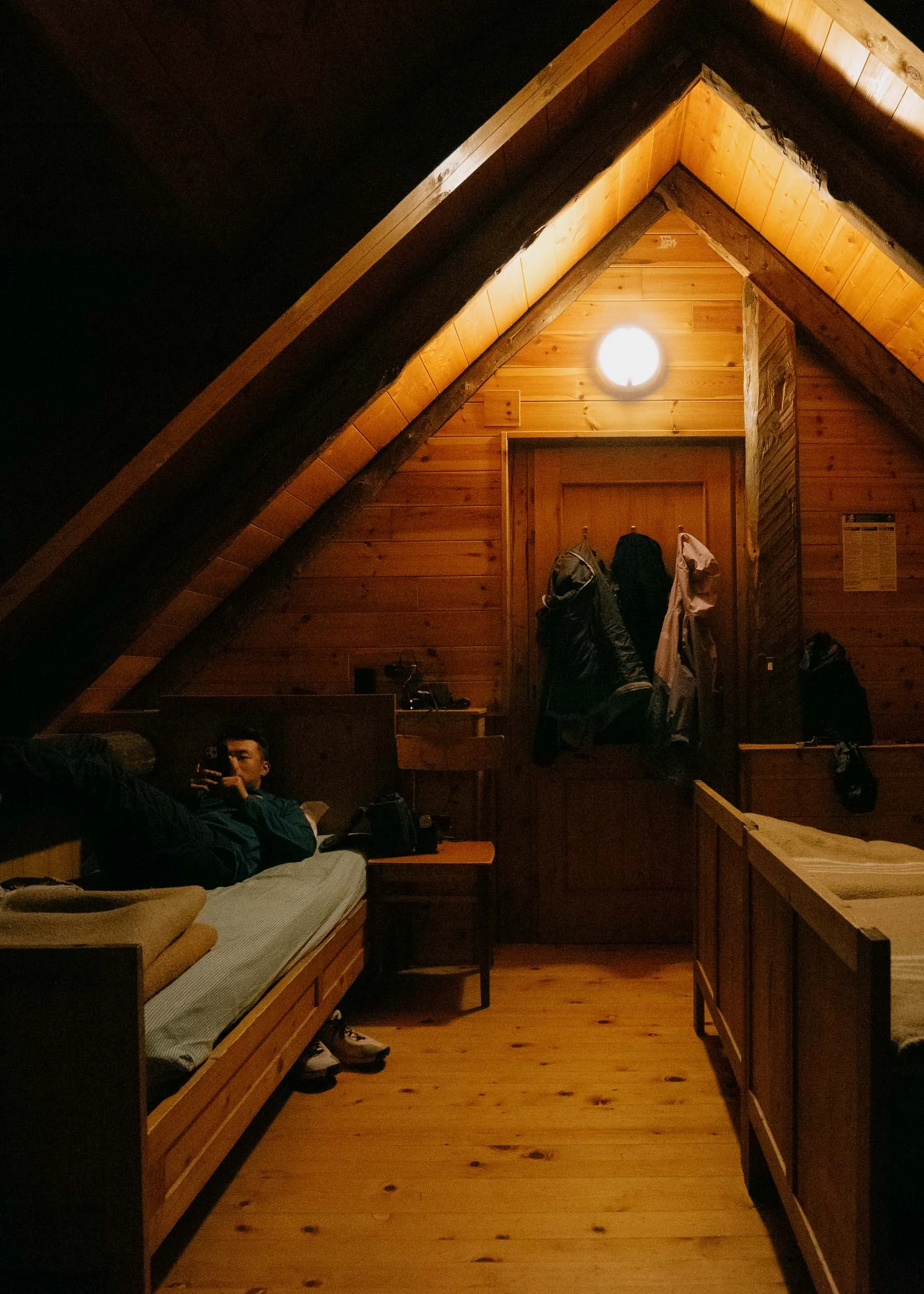

Showers and Running Water: Most huts have running potable water and hot showers. Because water is scarce at high elevations, hot showers usually operate on a token system costing around €5 to €8 for roughly 25 liters (about 3 to 4 minutes) of hot water. If winter snowfall was low, some high huts may restrict shower use entirely, so always carry a pack of biodegradable wet wipes.
Heated Ski Boot Rooms: In the northern sections, many huts feature dedicated drying rooms with heated racks that dry out your wet hiking boots and damp socks overnight. This amenity disappears in the simpler huts further south.
Power, Charging & Wi-Fi: Many rooms feature standard European wall sockets, but larger dorms often rely on a communal power strip in the dining hall. Bring a small power bank so you are never waiting in line for a charge. Wi-Fi varies from fast satellite internet to no signal at all; treat it as an invitation to unplug, read, or play cards with fellow trekkers.
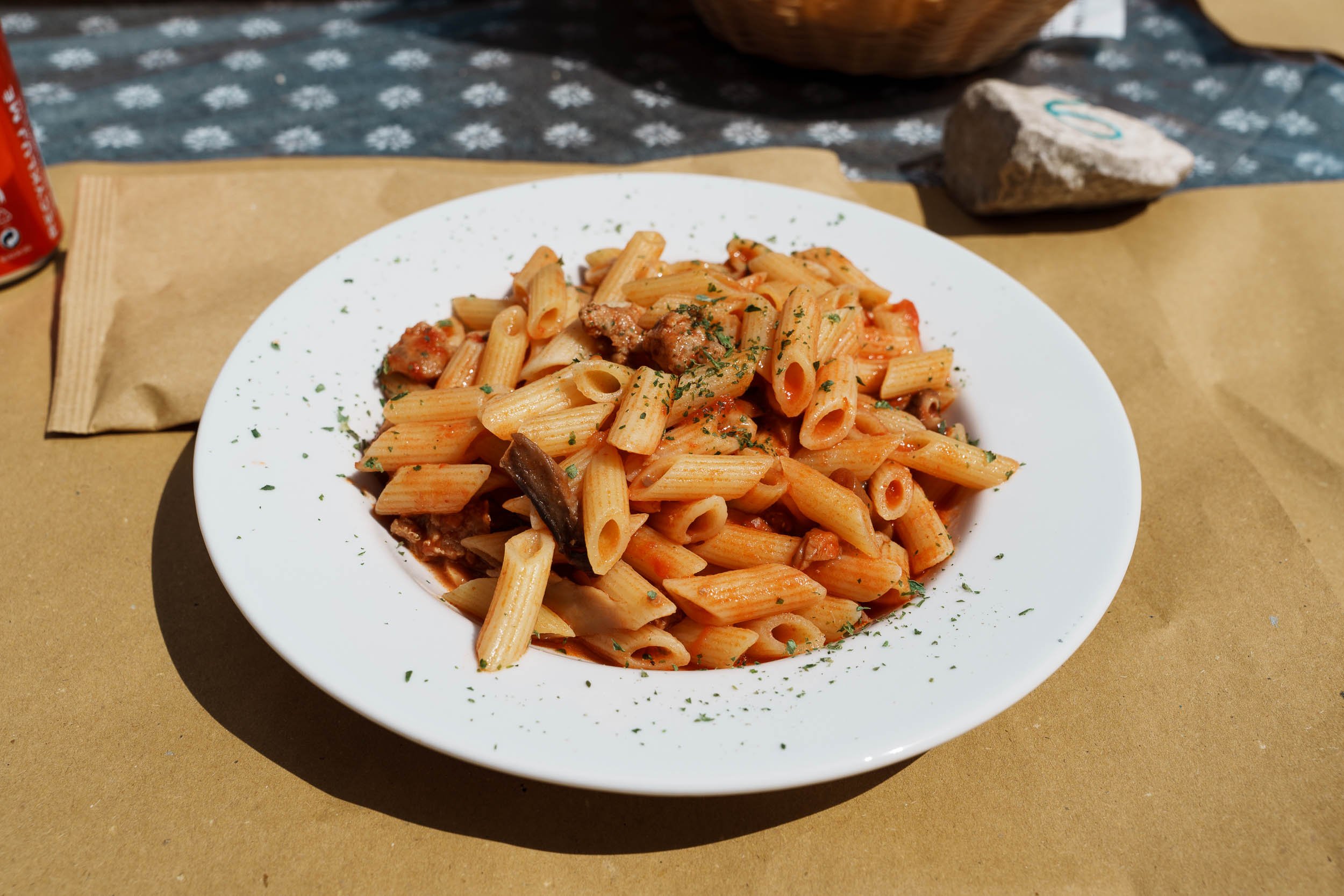
Half-Board (Mezza Pensione): We strongly recommend booking half-board. Dinner is a hearty, three-course feast featuring local pasta, polenta with stewed meats or melted cheeses, and homemade strudel. Breakfast is typically a self-serve buffet with crusty bread, jams, cheese, muesli, fruit, and warm espresso. For lunch, you can stop at intermediate huts along the trail for hot dishes, meaning you rarely need to buy packed lunch sandwiches. Some huts provide vegetarian, vegan, gluten-free options, but some don’t.
Dolomites Rifugio Cost: 2027 Budget Breakdown
Hiking the Alta Via 1 is remarkably good value compared to trekking in Switzerland or North America, but daily incidentals do add up. Here is a realistic breakdown of what to budget per person:
Hut Lodging & Half-Board (Dorm Bunk): €80 to €110 per night. This includes your bed in a shared room, a hearty three-course dinner, and a buffet breakfast.
Hut Lodging & Half-Board (Private Room): €110 to €150 per night. These offer extra comfort and privacy, but availability is extremely limited and requires booking well in advance.
Hot Shower Tokens: €5 to €8 per shower. This buys a token for roughly 25 liters (about 3 to 4 minutes) of hot water.
Midday Trail Lunch: €10 to €20 per day. Budget for a hot plate of handmade pasta, polenta, or soup at an intermediate hut along your route.
Beer, Radler, or Wine: €5 to €8 per drink.
Espresso & Strudel: €2.50 to €6.00. The ultimate mid-morning trail fuel and coffee stop.
Local Tourist Tax: €1.50 to €3.00 per night. Charged locally by the municipalities and almost always payable in cash at check-in.
Why Cash is Still King
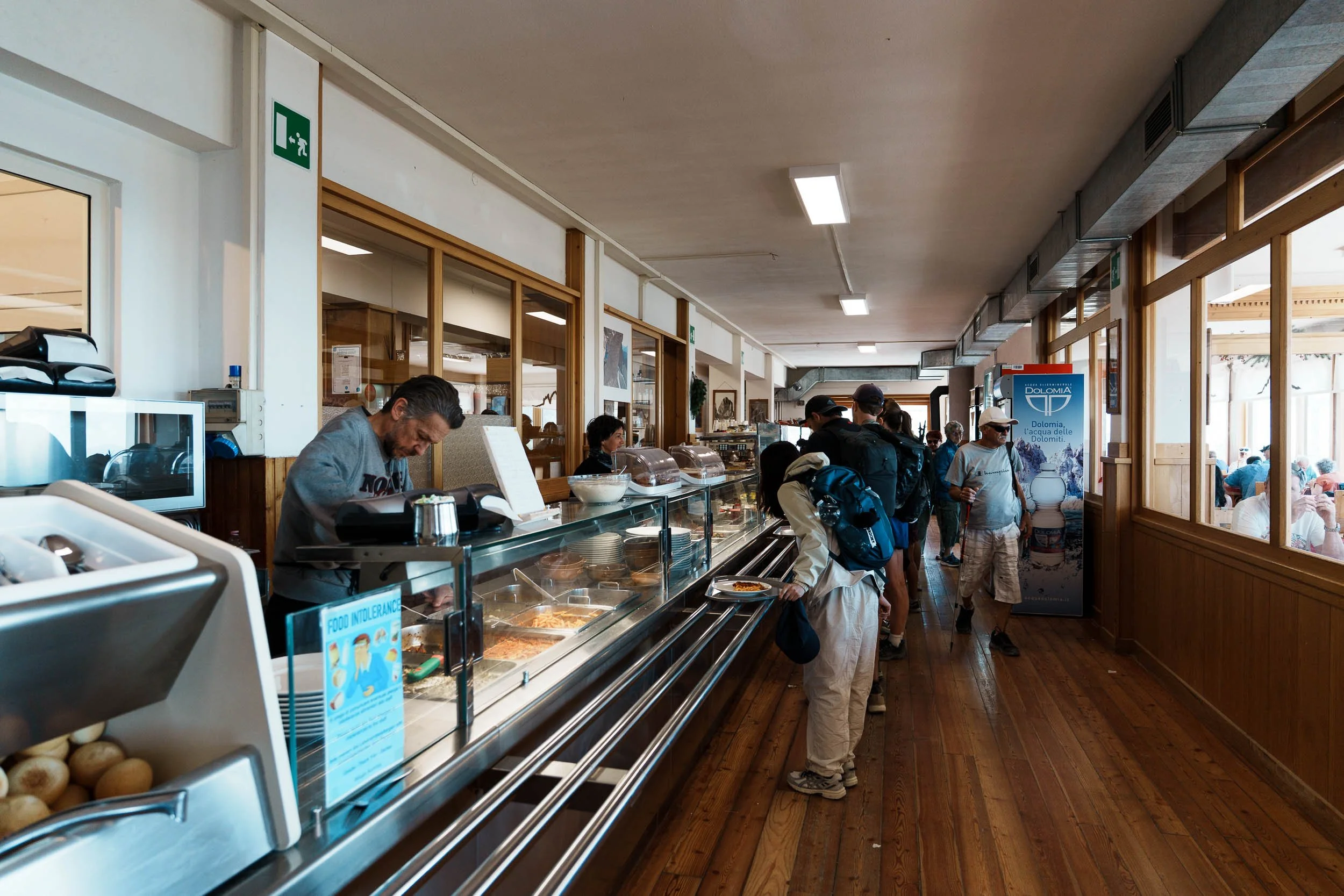
Even though more huts have added card terminals in recent seasons, high-altitude satellite connections frequently fail during stormy or overcast weather. Always bring plenty of physical euros with you to cover your remaining room balances, shower tokens, snacks, and tourist taxes without getting caught out.
Dolomites Trail Logistics: Transport, Luggage & Parking
How to Get to the Trailhead & Return
Reaching Lago di Braies (Start): From Cortina d'Ampezzo, take local bus 442 to Dobbiaco, then transfer to bus 445 directly to Lago di Braies.
Returning from La Pissa (Finish): The trail terminates right beside the road at the La Pissa bus stop. Flag down the local Dolomiti Bus Line 1, which runs directly to the Belluno train station in about 20 minutes. From Belluno, direct trains run straight to Venice. If you are hiking in late September, note that bus frequency drops, so keep a local taxi number saved on your phone just in case.
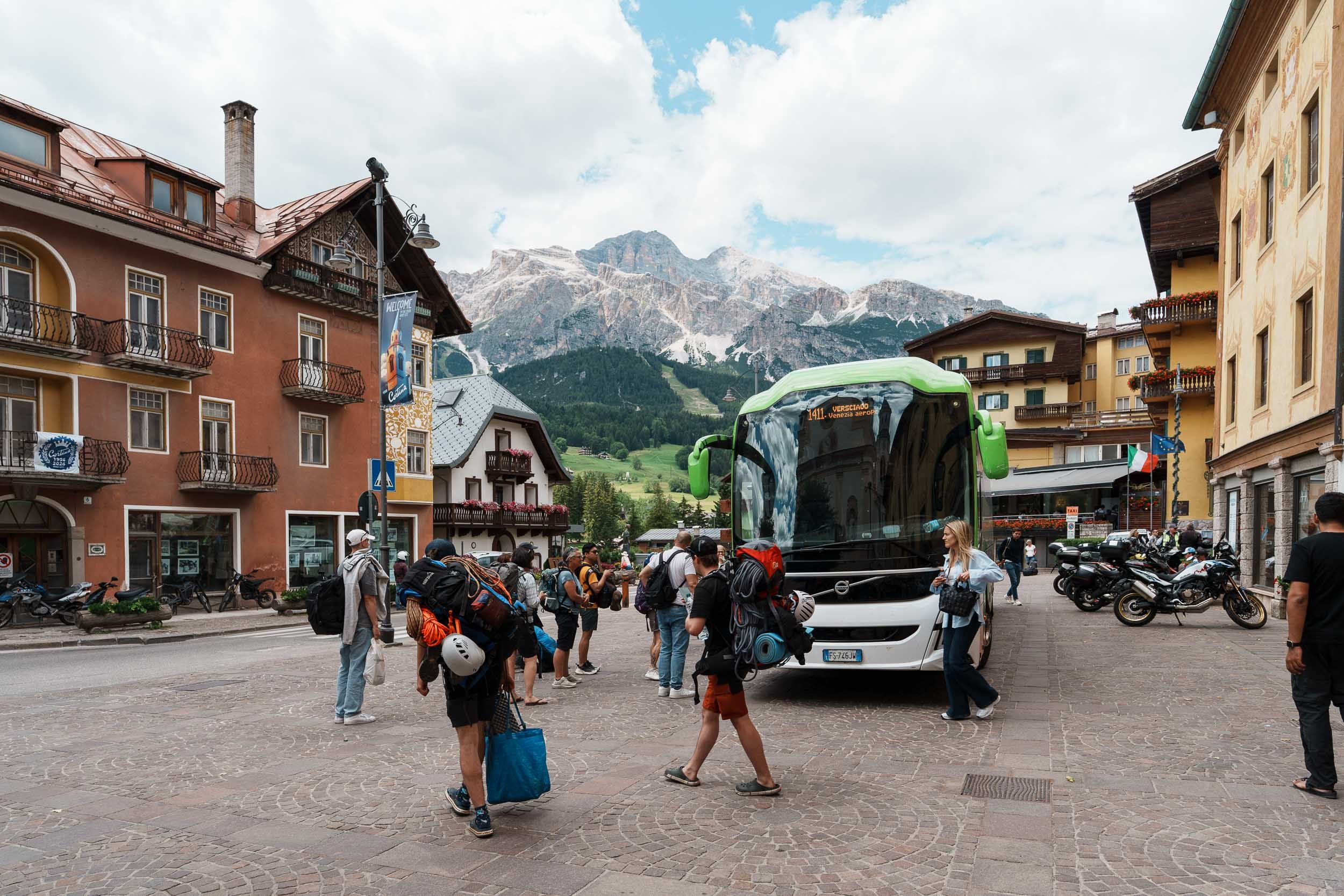
Tips // We recommend not to go straight from your flight or landing in Italy to hiking the Alta Via 1 on the same day. Spend a night in Cortina d’Ampezzo, Dobbiaco or Lago di Braies to allow sufficient time to reach the first hut safely the next day.
Read here to learn how to get to Cortina d’Ampezzo.
Luggage Storage
If you are traveling through Europe with extra bags, most hikers base themselves in Cortina d’Ampezzo before and after the trek, leaving their excess luggage at their hotel. If your hotel cannot hold bags, you can use luggage storage apps like Radical Storage or Bounce, which typically charge around €5 per bag per day. Specialized luggage transfer services (like Send My Bag) can also courier suitcases from Cortina down to Venice or Belluno while you hike.
Where to Park Your Car
If you are travelling by rental car, remember that the Alta Via 1 is a point-to-point route. Leaving a car at the start may create a logistical problem at the end of the trek.
Before driving to the trailhead, check:
Whether multi-day parking is permitted
Whether parking needs to be booked
Whether overnight parking is charged
How you will return to the vehicle from Belluno
Whether public transport is a better option
For many hikers, using public transport and arranging accommodation before and after the trek is simpler than managing a car.
Where we parked
In Cortina d'Ampezzo, there is a few free parking lot signs around. We parked at a free car park just 7 minutes walk outside of the town centre with around 60 spaces located where you can leave a vehicle for several consecutive days without charge. Arrive early in the morning to snag a spot before heading to the bus terminal. If not, it is worth booking a parking space in Cortina – there are many options!
Alternative Alta Via 1 Itineraries
The full Alta Via 1 is not the only way to experience the route.
Depending on your time, fitness and priorities, you could consider:
The Alta Via 1 North : 5 day itinerary
The Alta Via 1 South
A 7 day full-route itinerary
A slower itinerary with additional nights
An itinerary built around private rooms
The most important thing is not to force yourself into the classic itinerary if it does not suit your time or ability.

Build your own Alta Via 1 Itinerary
Planning the Alta Via 1 can feel complicated at first. There are dozens of huts to compare, different booking systems to navigate and countless itinerary combinations to consider. But that is also what makes the experience special.
Your route does not have to look exactly like someone else’s. You might stay in a different hut, walk a shorter stage, spend an extra night in the mountains or discover a quieter alternative that was never part of your original plan.
For us, the trek took two years of dreaming, researching and planning. The final route was not perfect in the way we first imagined, but it became ours.
If you are still learning about the trail, start with [Everything You Need to Know About Hiking the Alta Via 1 in the Dolomites].
And if you are ready to start piecing together your own itinerary, use our [Alta Via 1 Hut Booking Guide 2027] to compare all 38 rifugi, note down when reservation opens, find booking contacts, understand your options and plan around real hut availability.
Support Our Adventures!
Hi there! If you found our guides helpful, please consider using our affiliate links below when booking your next trip. It comes at no extra cost to you, but it helps us keep creating these resources. Thank you so much for your support!
Flights & Hotels: Book your stay with Trip.com
Car Rentals: Find the best rates via Discover Cars
Alltrails:Sign up with vivchow30 here to get 30% off today!
Have a specific question about your upcoming trek? Drop us an email or send a DM to @vivchowvals we’d love to help!
If you’ve enjoyed our content, you can treat us to a ‘virtual’ coffee here.
