
Manaslu Circuit Trek: A Complete Guide & 12-Day Detailed Itinerary
Planning Your Manaslu Circuit Trek
About the Manaslu Circuit Trek
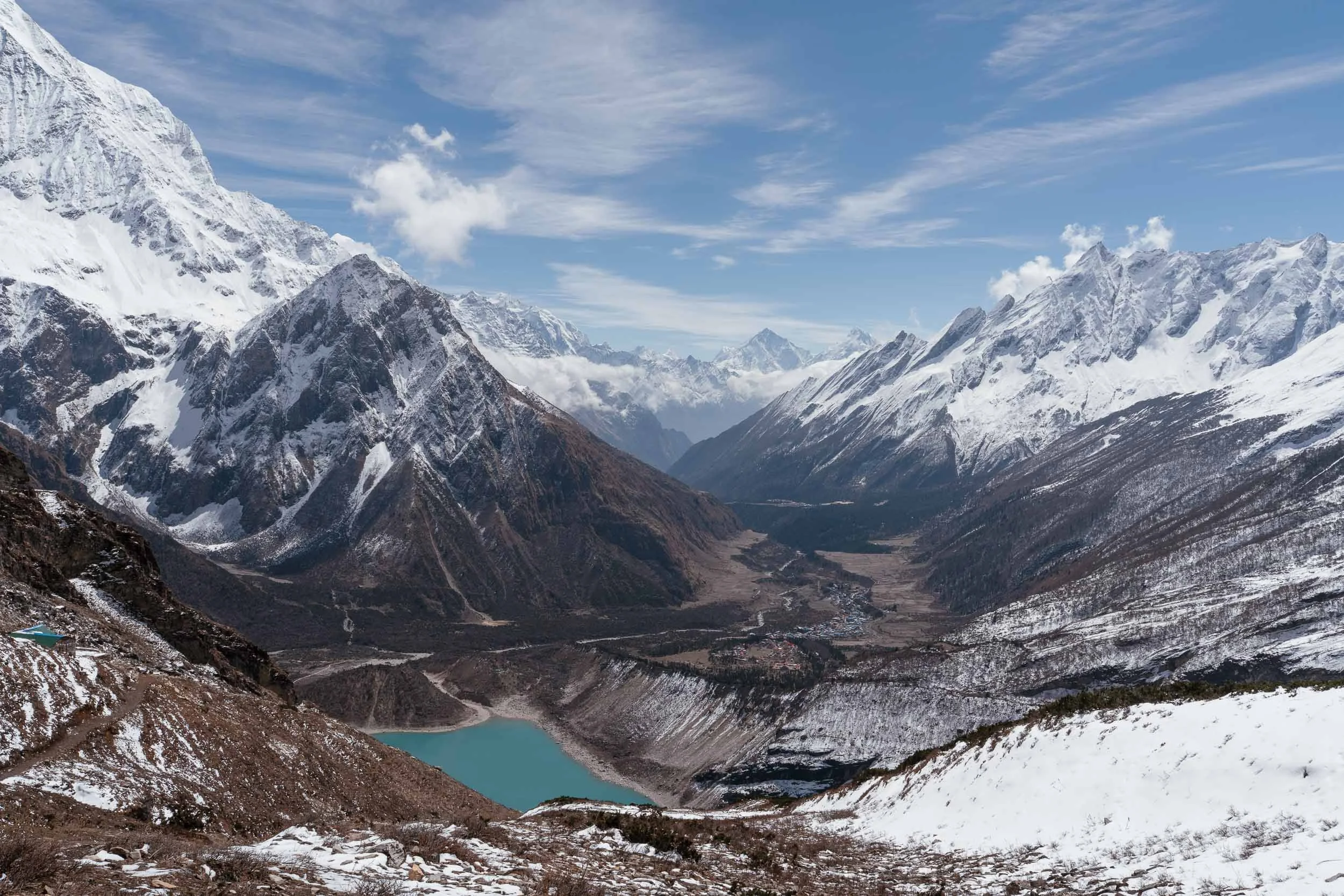
The Manaslu Circuit Trek is a 12-day trek in the Himalayas of Nepal. It loops around the 8th highest mountain in the world, taking you directly through both the Manaslu Conservation Area and the Annapurna Conservation Area.
Manaslu Circuit Trek: Is it for You?
We would say this trek is beginner-friendly - there are no technical climbing or exceptionally difficult sections throughout. As long as you have a relatively good baseline of fitness and are up for an adventure, this trek is for you. Prior multi-day trekking experience is a bonus, but in our opinion, it is not strictly necessary.
How to Plan for the Manaslu Circuit Trek
Permits: To hike the Manaslu Circuit, you are legally required to go with a registered tour company and a guide. This is unlike a few other classic treks in Nepal where you can sometimes get away with going independent (though we don’t recommend it anyway). You will need multiple permits for the trip, covering both the Manaslu and Annapurna regions. The highest point of the trek, the Larke La Pass (5106m), physically separates these two conservation zones. However, since Manaslu Circuit is a strictly guided trek, there actually wasn’t too much overwhelming logistical planning required prior to the trip.
Hiking Season: We did the trek in late March / early April, which marks the start of the spring hiking season. The weather was beautifully clear and the temperatures were mild. The two main hiking seasons in Nepal are March to May and September to November.
Tip: March to May tends to be slightly less busy on the trails. This is because Mount Manaslu is generally only summit-able by mountaineers in the autumn (September to November), which draws bigger crowds. During our trek, we encountered maybe 30 to 40 other hikers each day, which felt incredibly peaceful.
Flights to Nepal: Kathmandu holds the only international airport in Nepal (Tribhuvan International Airport), so it is your only entry point if you are flying in from abroad. Common flight routes if you are coming from the UK, US, or Australia will transit via the Middle East, China, India, Thailand, or Hong Kong.
Choosing a Locally Run Trekking Company
If you search "Manaslu Circuit Trek tour" on Google, you will find endless results from different tour operators showing a massive range of prices - anywhere from $850 USD up to $2,000+ USD for the exact same route.
There are slight differences between each package regarding inclusions and exclusions.
First, we decided to avoid tour operators based outside of Nepal (e.g., travel agencies based in the UK or US). They are almost always significantly more expensive. While they market themselves as more "luxurious" and "upmarket," the actual physical experience on the mountain is the same because they ultimately rely on local Nepalese operators to run the treks for them anyway.
When we were vetting local companies, we made sure the agency was locally run and that there was a real, transparent "human" on the other end to answer our specific questions - not an automated reply or an AI chatbot.
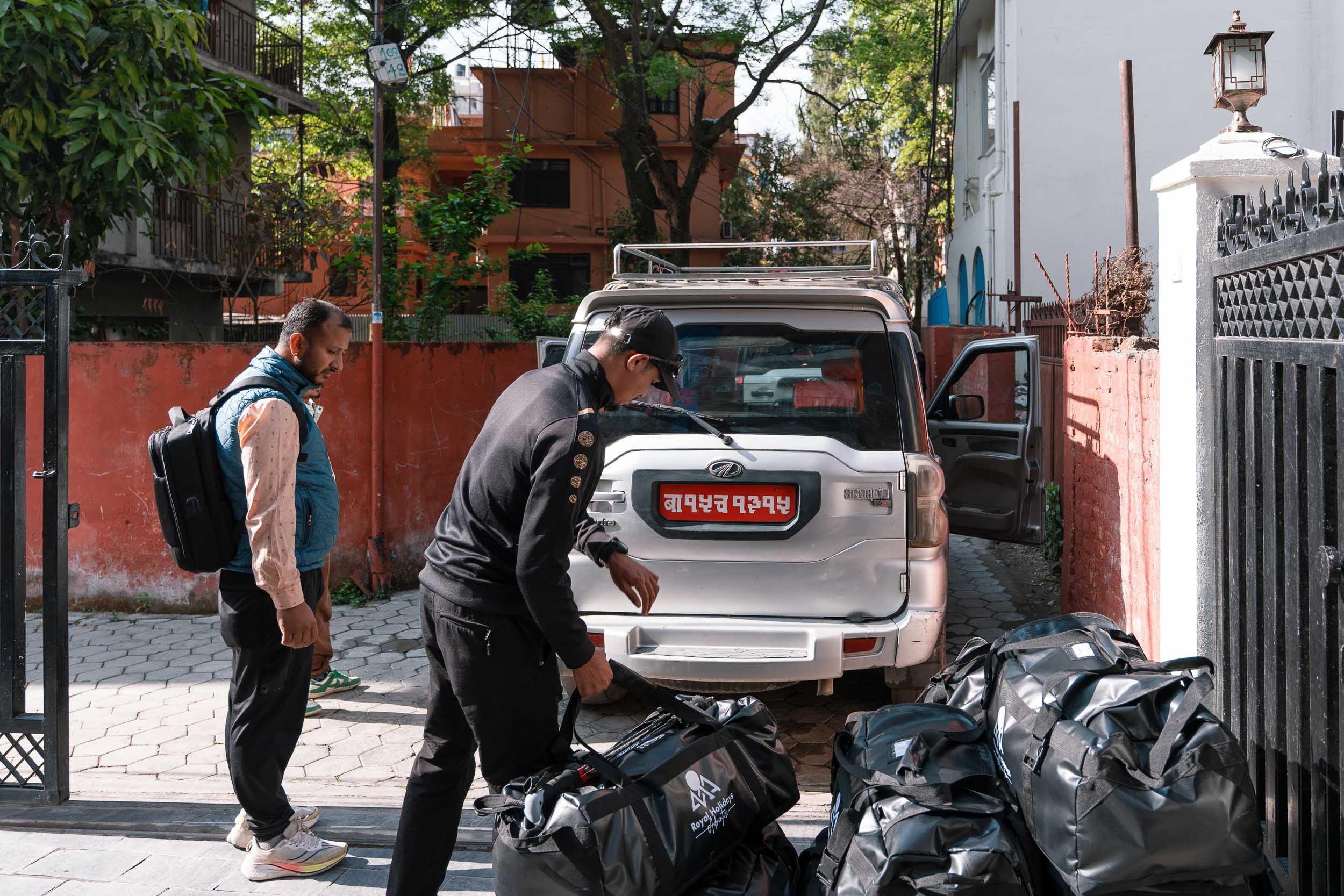
In the end, we chose Royal Holidays Adventure, and they ticked all of our boxes for price and service. Throughout the planning process, they maintained excellent communication, provided comprehensive packing lists, customised itineraries, and arranged private transport for members of our group travelling from different locations. Thanks to Sandip, the entire process was incredibly smooth, despite us being a group of 10 people with varying levels of trekking experience.
How Much Does it Cost?
Here is the exact cost breakdown per person for our trip:
Tour Package (with Royal Holidays Adventure): $885 USD (Includes first & last night hotel in Kathmandu, 11 nights accommodations on the trail, private jeep transfers, guide(s), and porters)
Nepal Visa: $30 USD (15-day)
Food + Bottled Water: ~$350 USD total for the 12 days on the trail
SIM Card + Data: ~$6 USD
Tips: Cash tips for our guides and porters
Overall, you should expect to spend around $1,300 to $1,400 USD total, depending on your personal spending habits.
We’ve partnered with Royal Holidays Adventure to bring you guys an exclusive discount on your next adventure! We are customers of Royal Holidays Adventure ourselves - we had an amazing experience with them, and we wholeheartedly recommend them to everyone. Quote VIVKEV when booking your trek to save 5%. If you book through our code, we receive a small commission at zero extra cost to you. Thank you for supporting our adventures!
What to Know Before Hiking in Nepal for the First Time
Vaccines
The National Travel Health Network and Centre (NaTHNaC) recommends 3 vaccines before you visit the region - Hepatitis A, Tetanus, and Typhoid. We got the travel vaccines as a precautionary measure, though the region is generally safe. If you are based in the UK, you can actually get most of these travel immunizations from your NHS GP doctor for free! Just make sure to schedule them at least 2 weeks before you set off so they have time to become effective.
Visas
Most passport holders will need a tourist visa to enter Nepal. We highly recommend applying and paying for your visa online (link) before your flight to save time at immigration. A 15-day visa costs $30 USD, and a 30-day visa costs $50 USD. Alternatively, you can get a Visa on Arrival using the kiosk machines in the airport terminal and paying at the counter.
Travel Insurance
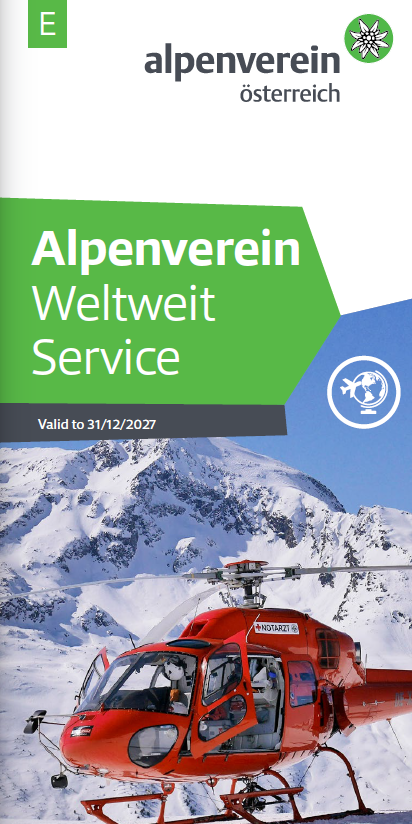
Before setting off, remember to buy a robust travel insurance policy. You must ensure it specifically covers high-altitude mountain rescue and helicopter evacuation up to 6,000m. These policies can look expensive due to a recent insurance fraud scandal in the region.
However, we used a budget-friendly alternative: we kept our standard travel insurance policy, but because we are members of the AAC(UK) (Alpine Club of Great Britain), our membership automatically includes global mountain rescue and evacuation insurance. The cost of this membership is incredibly low, and it also gives you discounts when trekking in the European Alps and staying in mountain huts (including the Dolomites!). Though we haven’t personally had to use their rescue services, it’s a brilliant membership to have if you spend time in the mountains.
Food & Water Safety
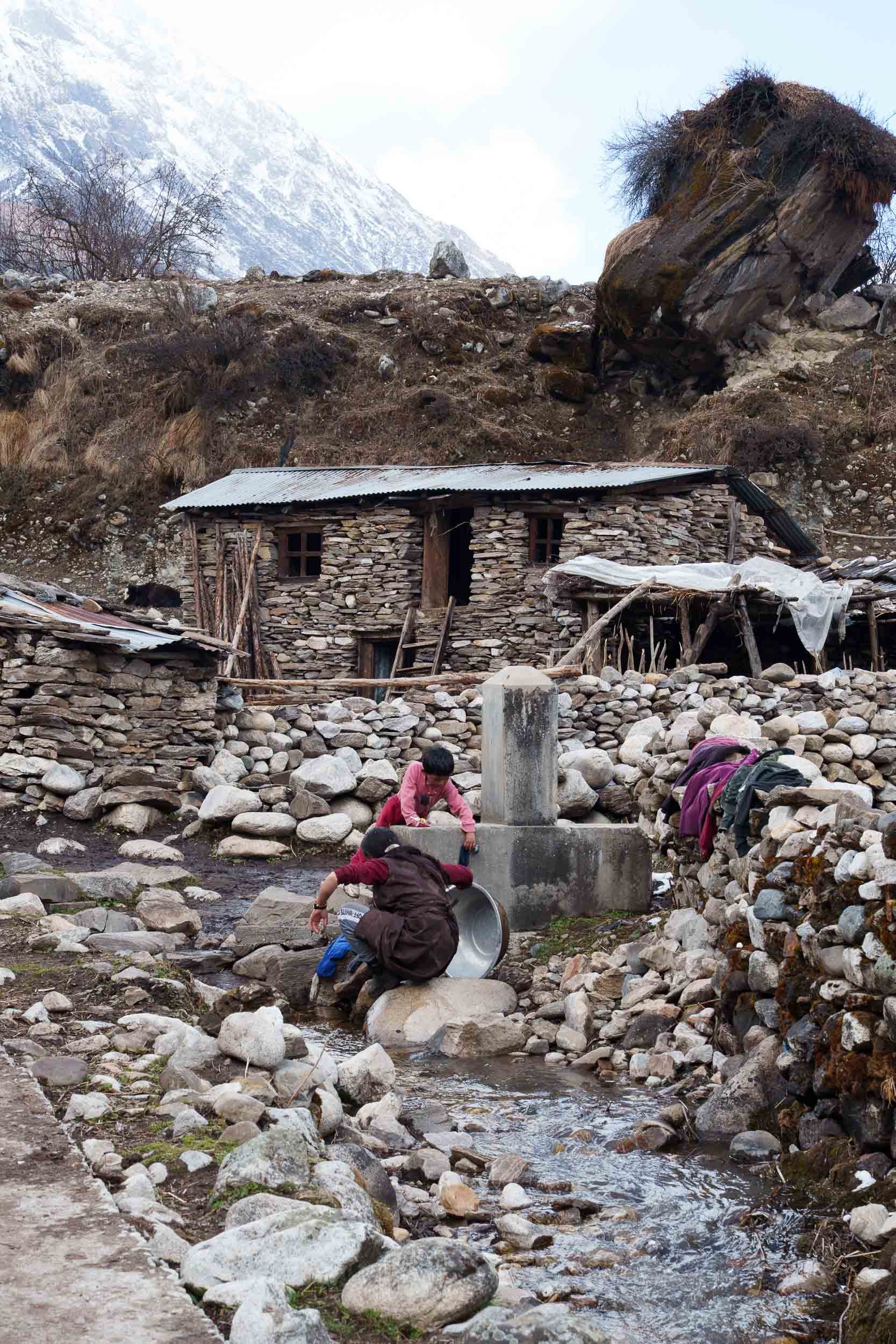
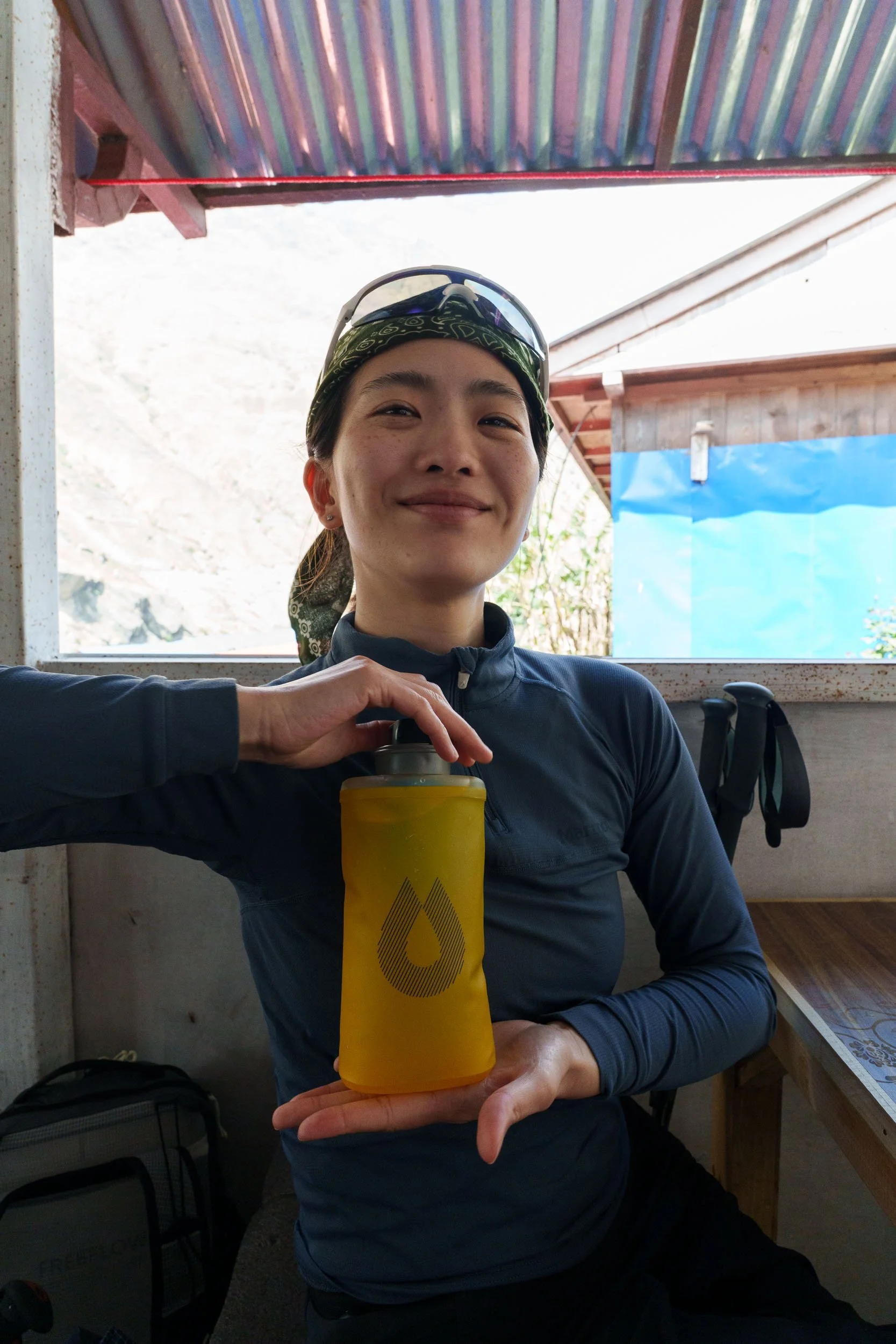
We highly recommend bringing water filters and water purification tablets on the trek (we used the Lifesystems Chlorine Dioxide Water Purification Tablets). Most international travelers are not used to the local water bacteria and virus profiles - better safe than sorry! We paired our filtration systems with flexible water bottles from Hydrapak, but you may want to consider more robust filtration systems that filters viruses too, like the LifeSaver Wayfarer.
Never drink from the tap. If you are highly prone to traveler’s diarrhea, relying on purchased boiled water at the teahouses or bottled water are safe alternatives, though it is less sustainable for the environment.
Porters
There is sometimes controversy online around the use of porters and whether it is an ethical practice. We hiked with porters during our Manaslu Circuit trek, and honestly, they made the journey possible. We spent a lot of time together, had so much fun on the trail, and it made our hike infinitely more enjoyable, especially at high altitudes when we were struggling with the thin air.
In our conversations with them, they genuinely shared that they enjoy the job and the income it provides. Crucially, our tour operator Royal Holidays Adventure enforces a strict weight limit on what each porter can carry. Be mindful of this and don’t overpack. Always think about the fact that a human has to carry your bag up a mountain!
30kg limit per porter + help with local economy
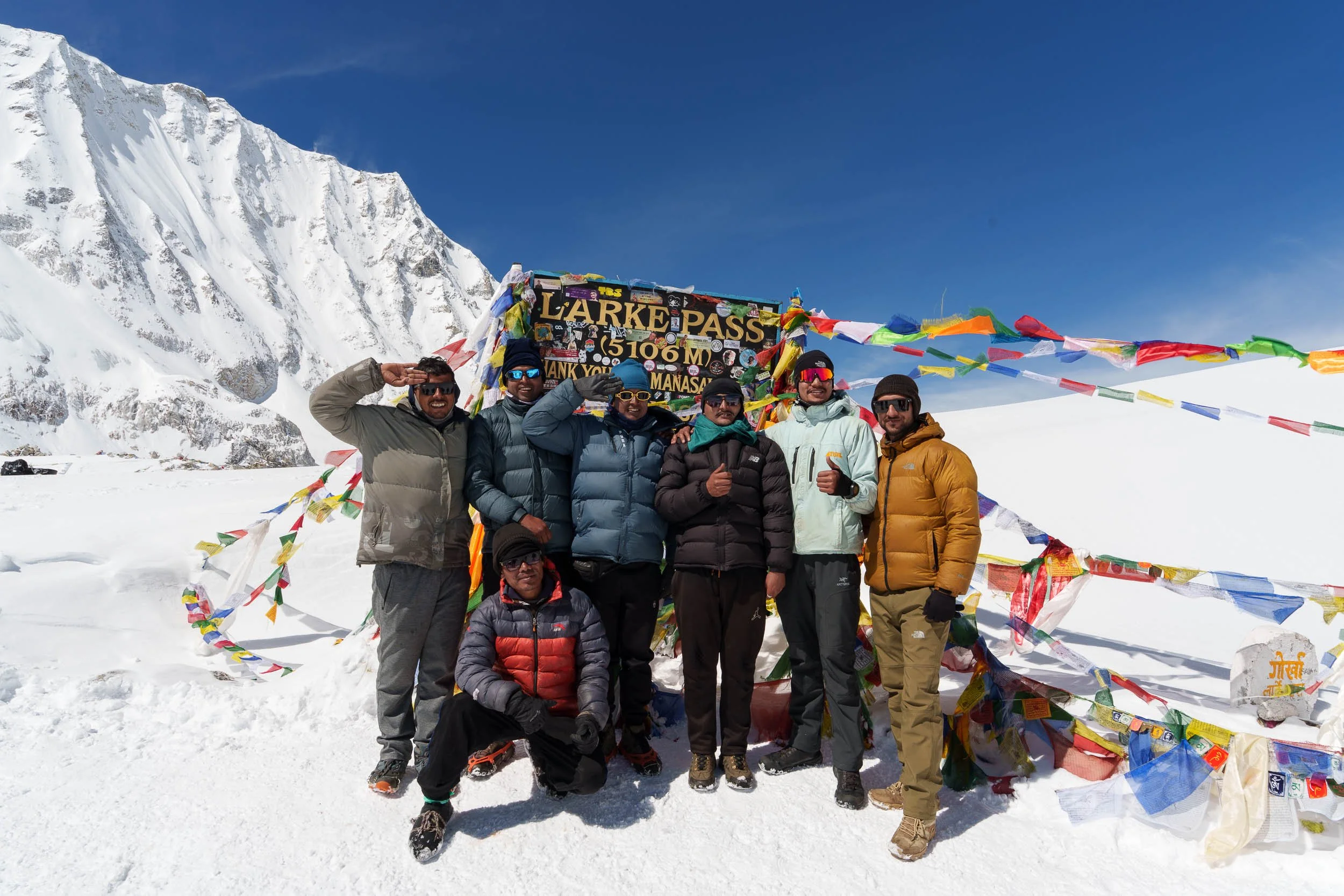
Our amazing Royal Holidays Adventure Guides and Porters
Pre-Trek Preparation & Logistics
Preparing for Your First 5,000m Trek: Fitness & Altitude
Although altitude sickness is not something you can physically "train" for in the gym, the great news is that the Manaslu Circuit route ascends very gradually over 8 days. This gives your body plenty of time to acclimatize naturally.
Our group was a mix of abilities, ranging from beginner hikers to seasoned Iron man triathletes. We recommend having at least some multi-day trekking experience and consistently doing about 3 hours of cardio a week leading up to the trip.
For our specific training, on top of our usual weekend hiking trips, we ran 5–10k a week and cycled around 100k a week combined (mostly via work commutes).
What to Pack: Gear, Medication, & Snacks
Gear
An optimized packing strategy is absolutely critical when you’re prepping for the massive temperature swings of the Manaslu region. The great news is that if you happen to forget any crucial gear, you can easily find replacements at the outdoor gear stores in Thamel, Kathmandu.
However, a quick word of warning based on our own experience: we chose to avoid buying our major technical items there. Many shops in Thamel sell knock-offs or counterfeit brand replicas. While they look the part, we had reservations about their build quality, stitching, and thermal ratings and the last place you want a zipper to break or a seam to rip is at 4,500 meters. While there are shops that sell genuine products, they actually come at a higher price tag than purchasing them back home if you live in the US or UK.
-
Waterproof shell jacket
Down jacket
Technical lightweight fleece jacket
Zip-neck fleece mid-layer
Merino wool long-sleeve base layer (keep your body warm even when sweating)
Light t-shirts
Trekking trousers
Waterproof hiking trousers
Merino wool leggings
Hiking shorts
Warm beanie
Sun hat or cap
Neck gaiter or scarf
Warm outer gloves
Lightweight inner glove liners
2–3 pairs of merino wool hiking socks (keep your feet odour free)
2 pairs of thin, regular socks
-
Daypack (20 - 30L)
3-season sleeping bag (teahouses can provide extra blankets if needed)
Hiking shoes (well-broken-in with good ankle support)
Microspikes (critical for the icy Larke La descent)
Trekking poles (helps conserve energy in multi-day hikes)
Leg/Snow gaiters
Headlamp
Extra headlamp batteries
Sunglasses (prevent snow blindness)
Sunscreen and lip balm
Slippers (for use in teahouses)
Toilet paper and wet wipes
Personal hygiene items
Basic personal medicines (For headaches, stomach bugs, altitude symptoms, and fever)
-
Down camp shoes (Highly recommended by us! Incredibly warm for unheated mountain huts, letting your rigid boots dry out)
Drybag (Crucial for keeping your passport, trail permits, money, and electronics bone-dry)
Camera equipment
Sports watch (Excellent for tracking heart rate, altitude milestones, and daily trekking statistics)
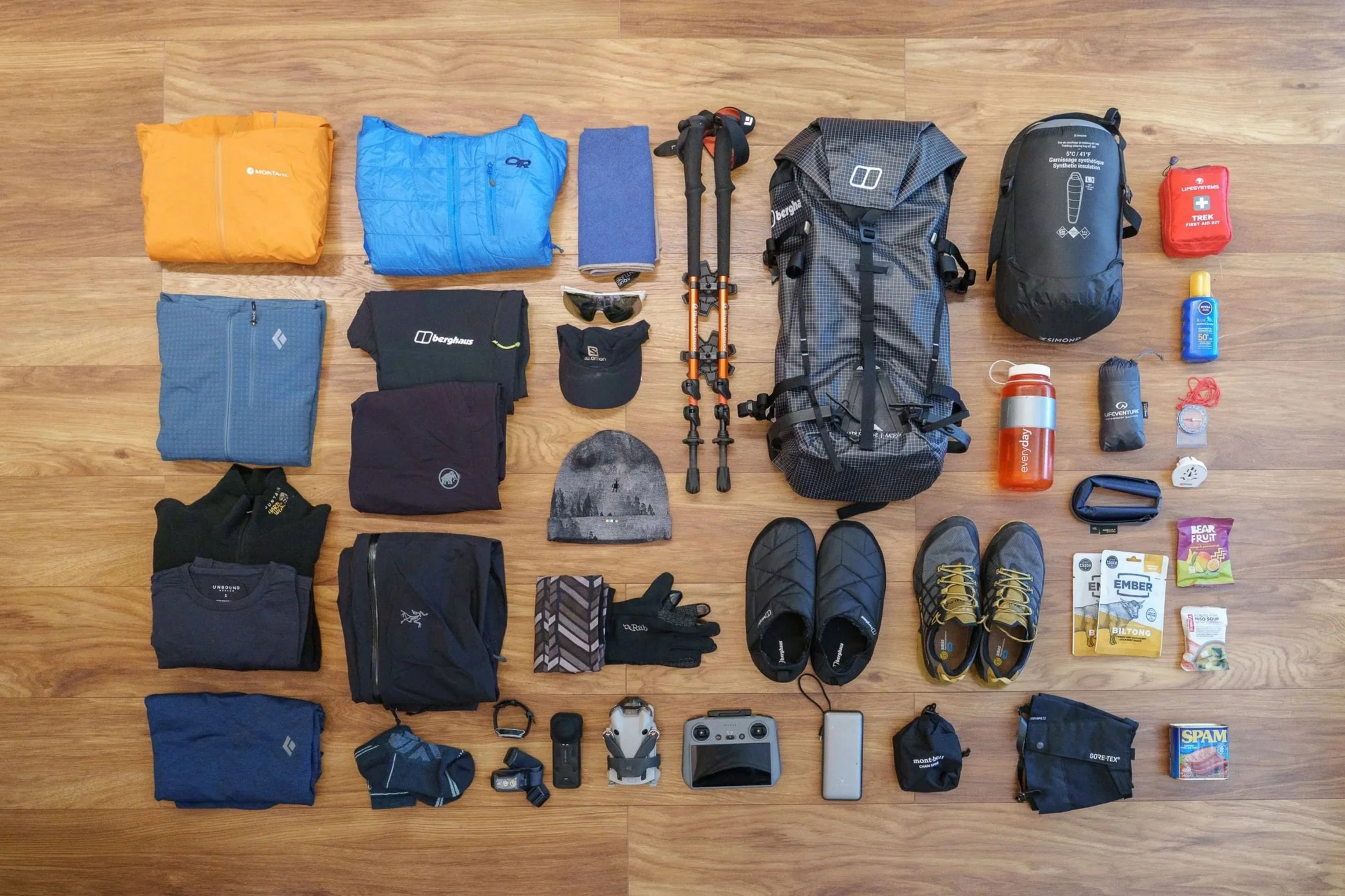
Our Clothing Layering System
The absolute key to staying comfortable on the circuit is having a well thought-out layering system. You will start your days walking through hot, humid valleys and finish in sub-zero degrees alpine heights, so being able to adapt is everything. Over the years, we have developed our own packing toolkit that helps us adapt to any trek, altitude, and distance. If you want to dive deeper into our exact strategy and see a full breakdown of how we stay comfortable on the trail, read our packing guide here.
Note on Drones: Leave the drone at home! We brought one but couldn't use it due to strict, restricted-area drone regulations that we weren't aware of before the trek. Save yourself the pack weight.
Medication
Nepal's pharmacies (especially in Kathmandu and Pokhara) are reasonably well-stocked, but once you're trekking or in remote areas, options disappear fast. It's worth packing a compact medical kit before you go. As always, check with your GP or a travel clinic before your trip, especially for anything prescription-only.
-
Paracetamol and ibuprofen (an NSAID) cover most aches, fevers, and headaches. Paracetamol is also useful for altitude-related headaches too (though don't mask symptoms of serious altitude sickness).
-
Antihistamines such as cetirizine or fexofenadine for dust, pollen, insect bites, or unexpected allergic reactions.
-
Hyoscine butylbromide (e.g. Buscopan) for cramping and abdominal pain
-
Hyoscine hydrobromide is effective for the winding Nepalese mountain roads
-
Acetalzolamide (Diamox) is widely used by trekkers heading above 2,500-3,000m. This is prescription-only in most countries, so arrange it in advance with a doctor.
However, it can cause side effects like increased urination and peripheral paresthesia (tingling or numbness in the fingers and toes).
-
Loperamide for symptom control
Probiotics to help restore gut flora
Azithromycin as a standby antibiotic for more serious traveller's diarrhoea (prescription-only — discuss with your doctor before travel, including when it's appropriate to use)
-
Senna, useful as travel, diet changes, and dehydration can easily cause constipation.
-
Ibuprofen gel for muscle strain, sore knees, or joint pain after long trekking days.
-
Antiseptic wipes or cream, plasters, and medical tape for cuts, scrapes, and blister prevention.
Snacks
We highly recommend avoiding meat while in the Himalayas. Because there are no roads or refrigeration systems at high altitudes, meat has to be carried up exposed to the elements for days and is rarely fresh.
To keep our protein intake high for muscle recovery, we brought along our own canned luncheon meat, beef jerky, and protein-packed snacks. Don't worry about starving, you will be exceptionally well-fed on the Manaslu Circuit, as there are tea houses and villages serving hot meals the entire way. (We will talk more about food later) Just bring enough comfort snacks to keep you motivated on tough days!
For our 10 actual days of moving on the trail, we each packed:
10 packs of 25g beef jerky
10 sachets of instant miso soup
20 energy bars
10 small packs of dried fruit
What to Do Before Leaving the Airport
1. Buy a Local SIM Card
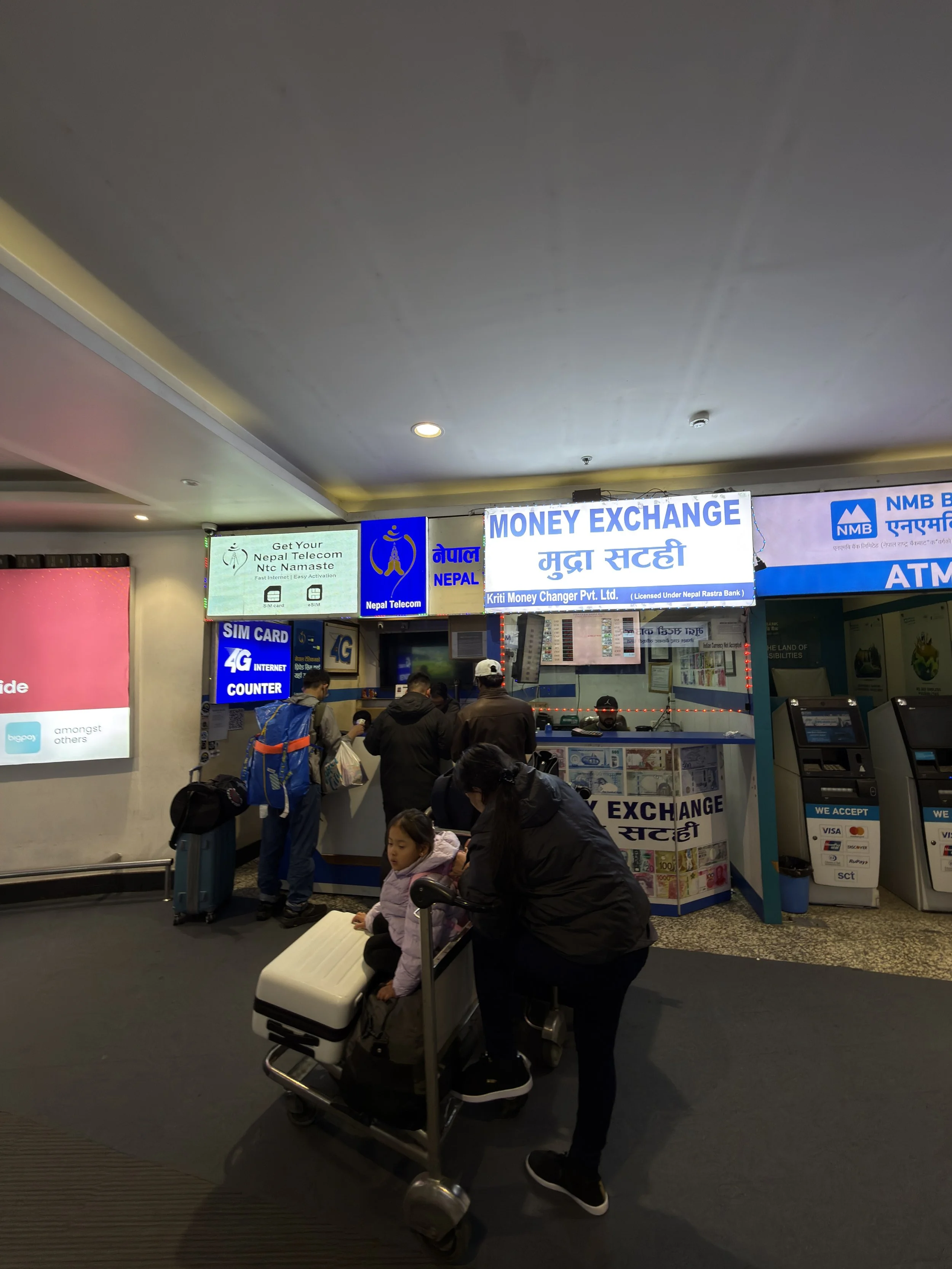
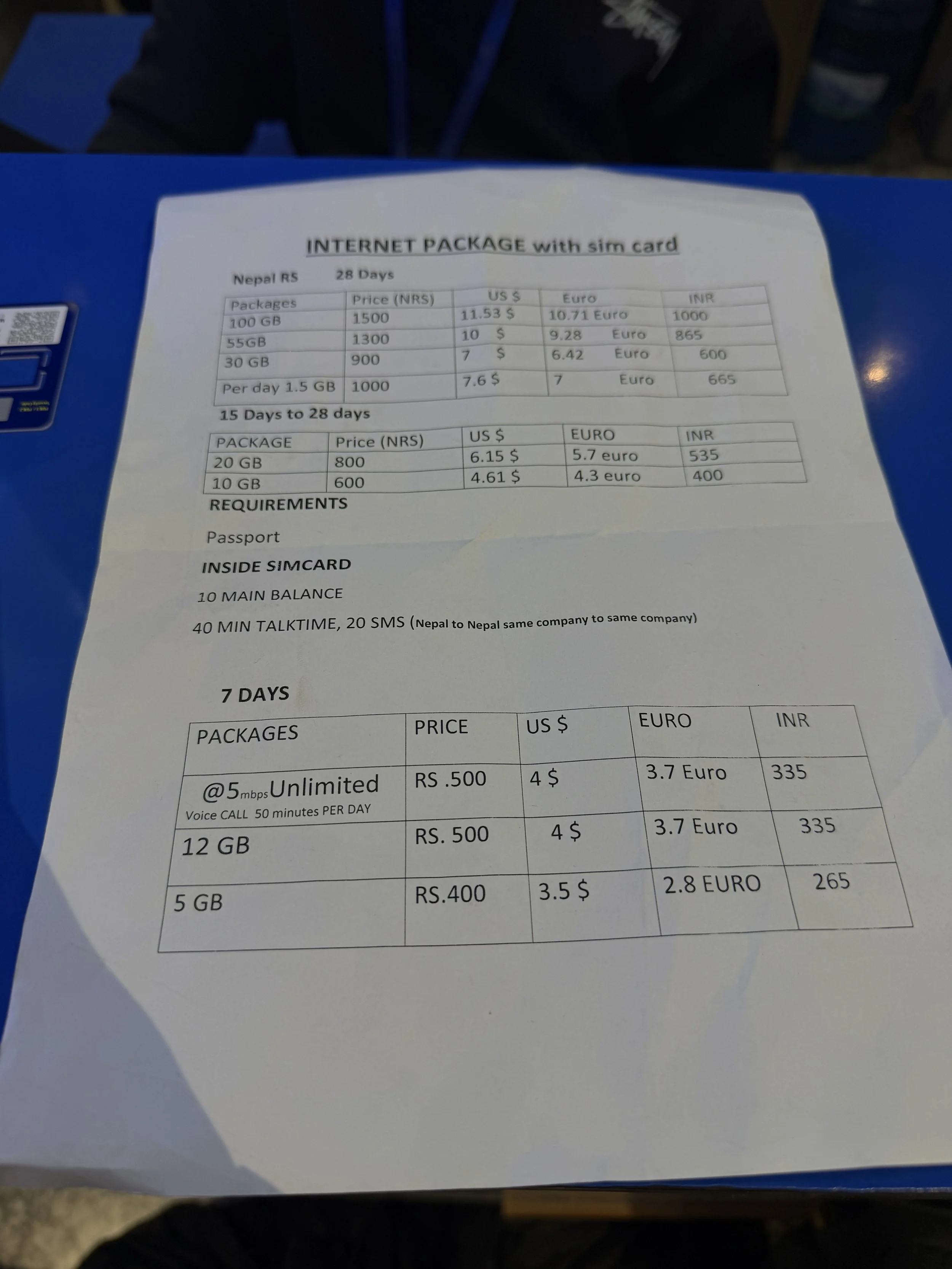
Get your SIM card directly at the airport terminal. Our guide recommended Nepal Telecom (NTC) over Ncell, as it has noticeably better reception along the Manaslu route. The official kiosk is on your immediate right as you exit the baggage reclaim area. It costs roughly 800 Rupees ($8 USD) for 20GB of data plus local calling minutes. They accept credit cards!
2. Get Cash at the ATM
We withdrew our local currency from the airport ATM using our Wise debit card. Wise consistently offers the absolute best exchange rates and convenience for international travel. Keep in mind that Nepalese ATMs charge a local withdrawal fee (around £2.50 / $3 USD) and usually enforce a strict 35,000 Rupee limit per transaction. We also converted some physical cash at the airport exchange desk just in case. The desk closes after midnight, so don't worry if your flight lands late. The rates are decent, though you can get slightly better rates if you wait until you get into Thamel.
Where to Stay in Kathmandu
Our tour company Royal Holidays Adventure arranged our accommodations before and after the trek as part of our package price. We stayed at Temple Suites Kathmandu and Vistara Hotel - both were clean, modern, and located in the vibrant Thamel district. You can always ask them to extend your stay with a discounted price.
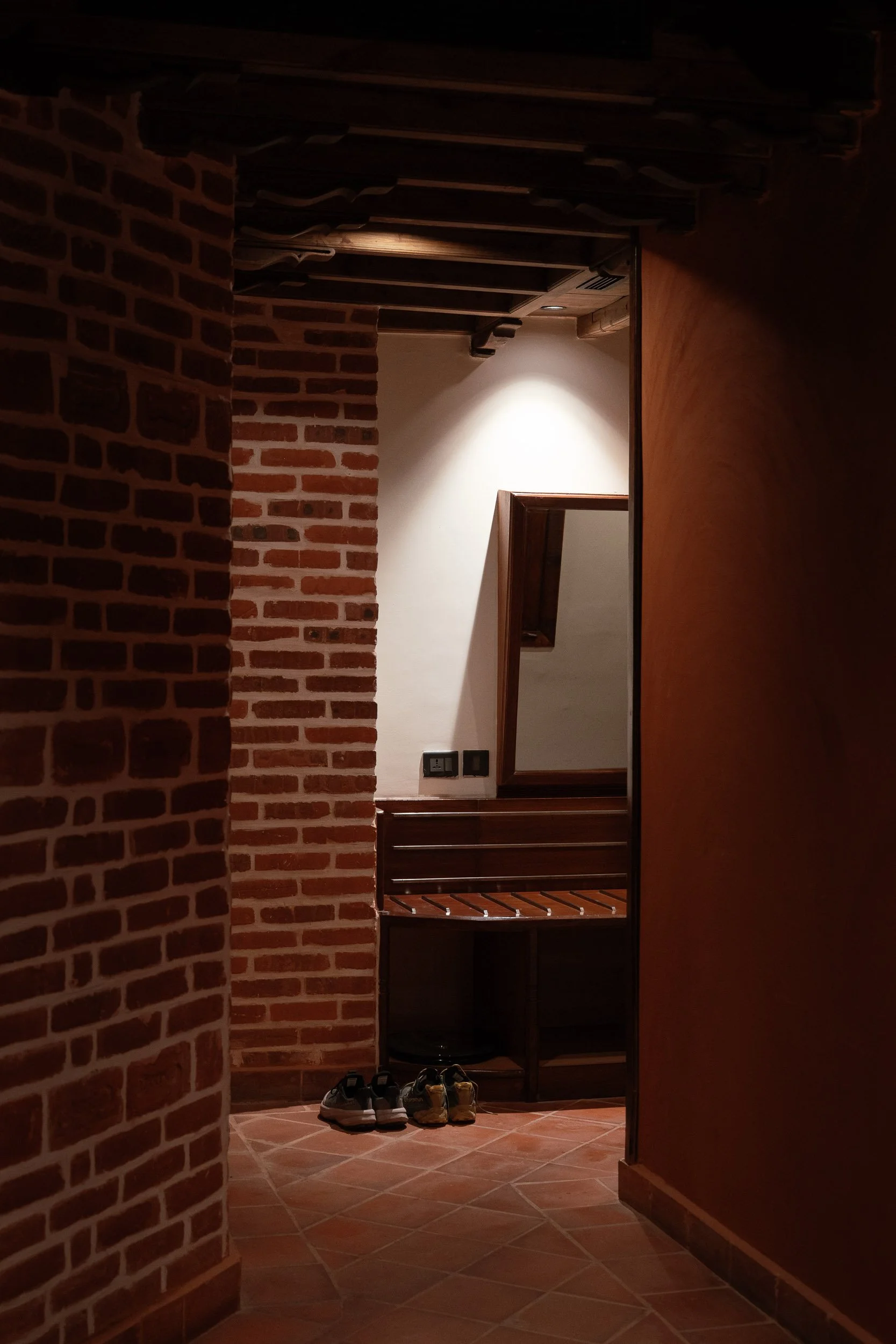
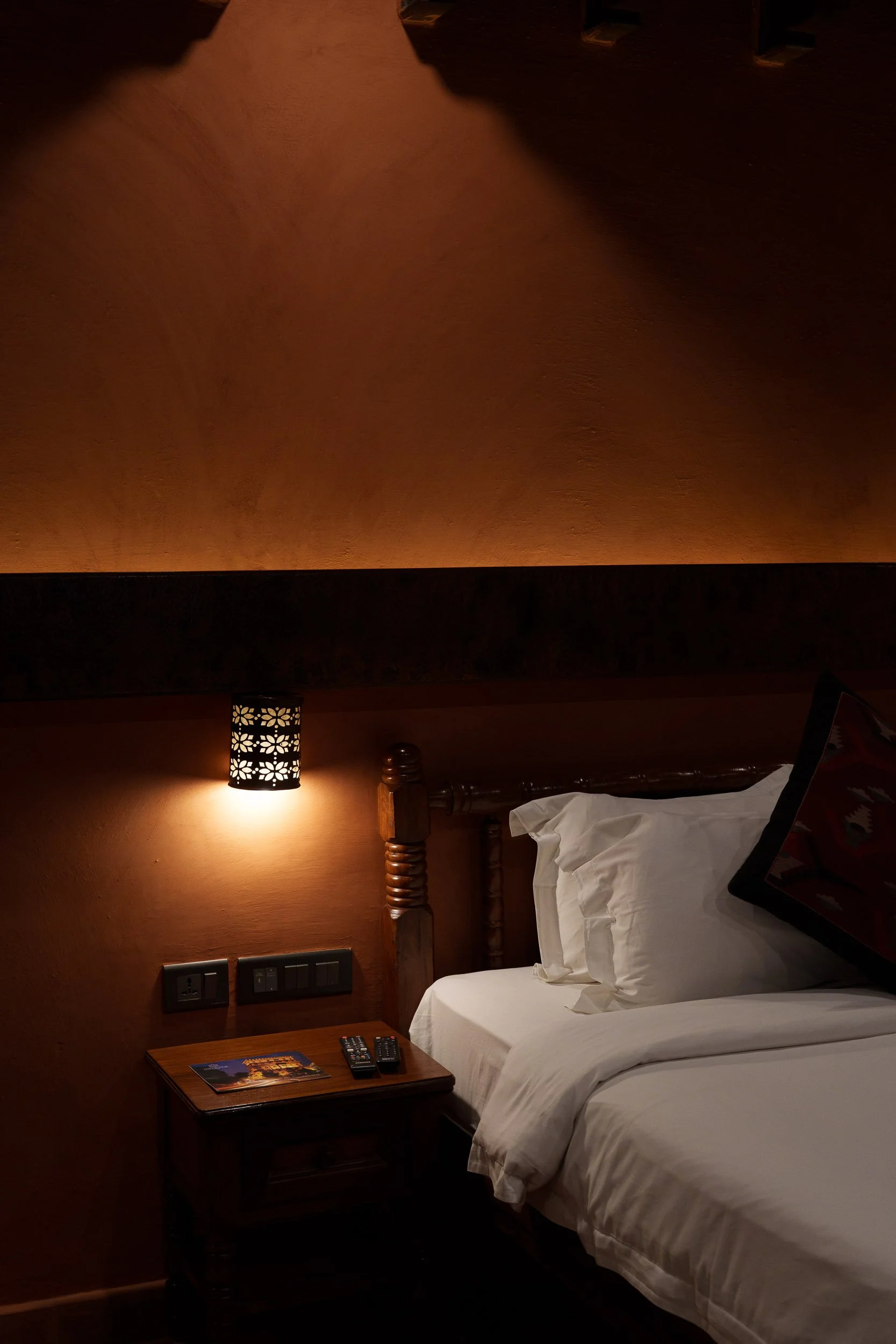
If you decide to spend a few extra days in Kathmandu for sightseeing and post-trek recovery, we highly recommend Basera Boutique Hotel. It features beautiful traditional architecture, great facilities, and an incredible all-you-can-eat breakfast. It is located 15 minutes from the airport, and the hotel will happily arrange your transfers.
What to Expect Day-to-Day on the Trail
Terrain
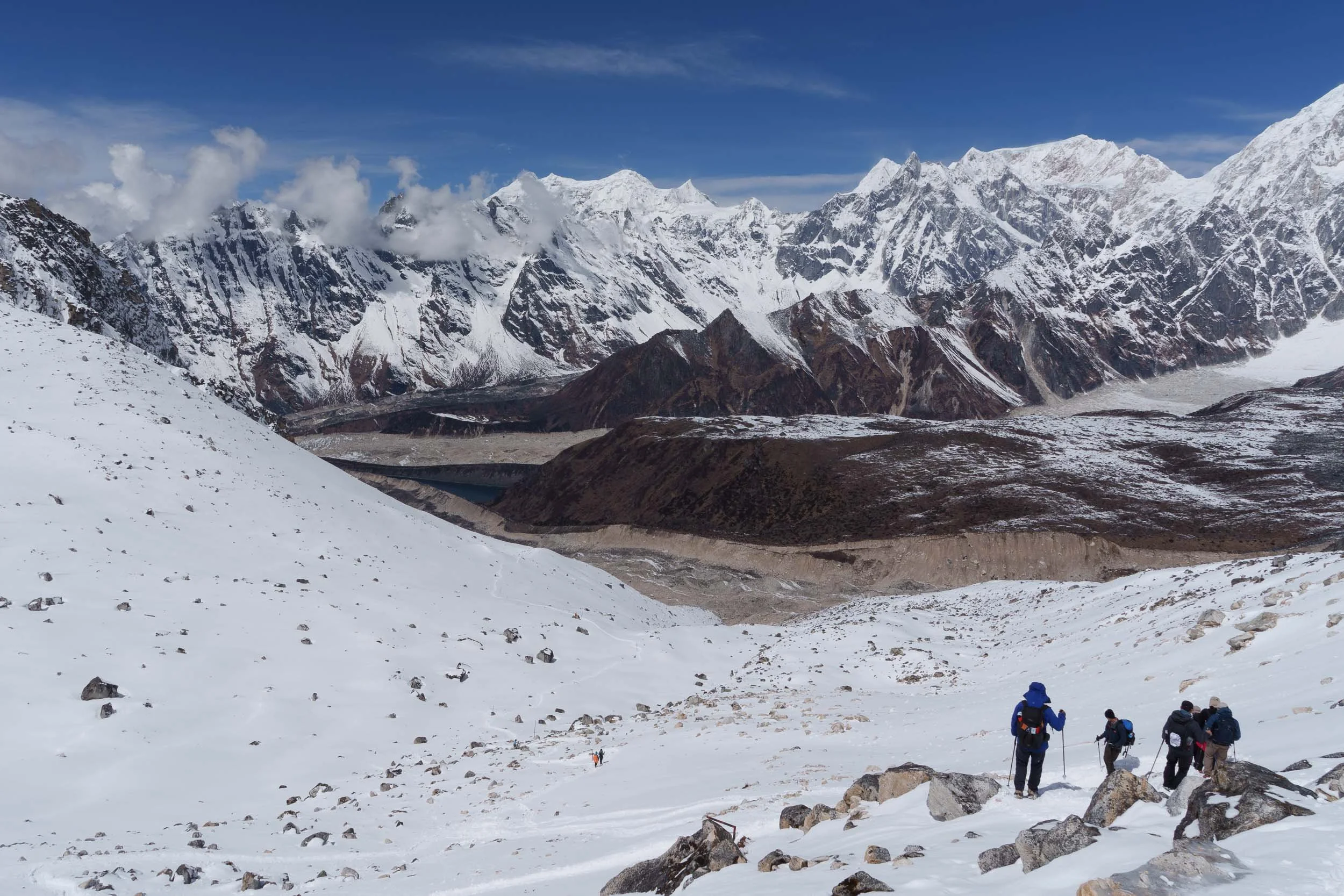
The trail was actually quite mild when it comes to elevation gain. On average, the total elevation gain per day is between 600m to 1,200m, with the exception of the Larka La Pass day and the optional trek up to Manaslu Base Camp. When we hiked in March, the trail was relatively clear of snow, except for Day 10 (Dharamshala to Bimthang via the Larkya La Pass) as well as the trek up to the Manaslu Base Camp.
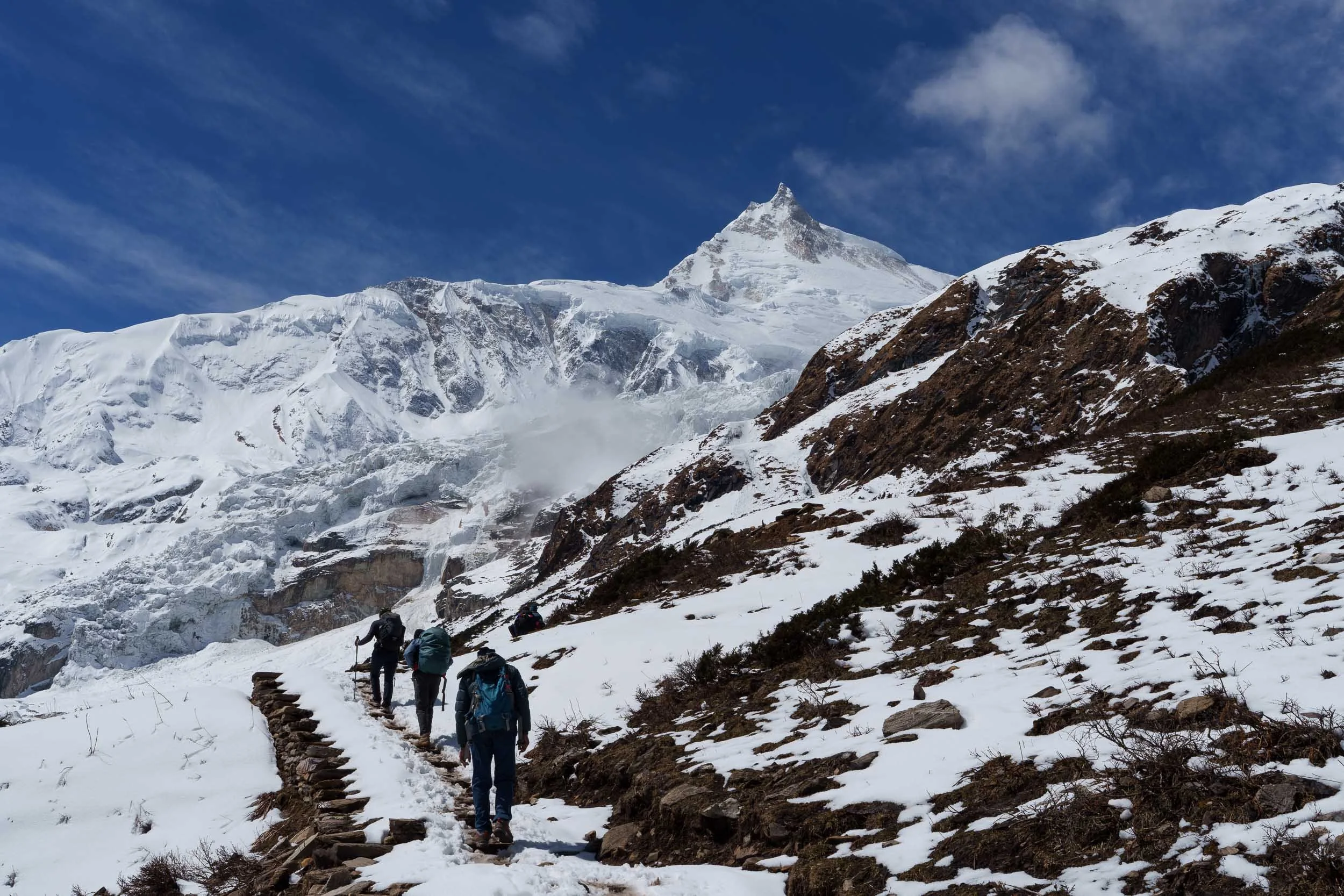
Because of this, we think a good pair of waterproof trail runners or low-ankle hiking shoes will completely suffice for this trail (gaitors will be useful to stop snow from getting into your ankle). For this trek, we wore the Mammut Aenergy mtn low and the La Sportiva Akyra 2 respectively, both waterproof Goretex hiking shoes with good support. Just be sure to bring micro-spikes for crossing the Larka La Pass and reaching Manaslu Base Camp. Unfortunately, because of a major snowstorm just prior to our arrival, the trail was blocked and we didn’t manage to reach the base camp itself.
At no stage of the trek will you involve steep climbing or require technical mountaineering skills. The most difficult section is likely the descent from the Larka La Pass. It was exceptionally steep and snowy when we went, and it absolutely killed our knees after a brutal 12-hour trekking day. Hiking poles would be an absolute lifesaver here. Overall, though, we think the trek is very manageable for any reasonably fit hiker.
Culture
One of the highlights of the Manaslu Circuit Trek is being able to experience the local culture. On the trek, you will pass through different communities. In the lower valley, you encounter Gurung villages with Hindu traditions, and as you proceed further into the trek, you will experience the Tibetan villages. The trek actually felt very real and authentic because you see schools and ordinary locals living in the villages. It gives you a sense that you are experiencing their life. On one of our acclimatization days, we even played football at a school in Samagaun.
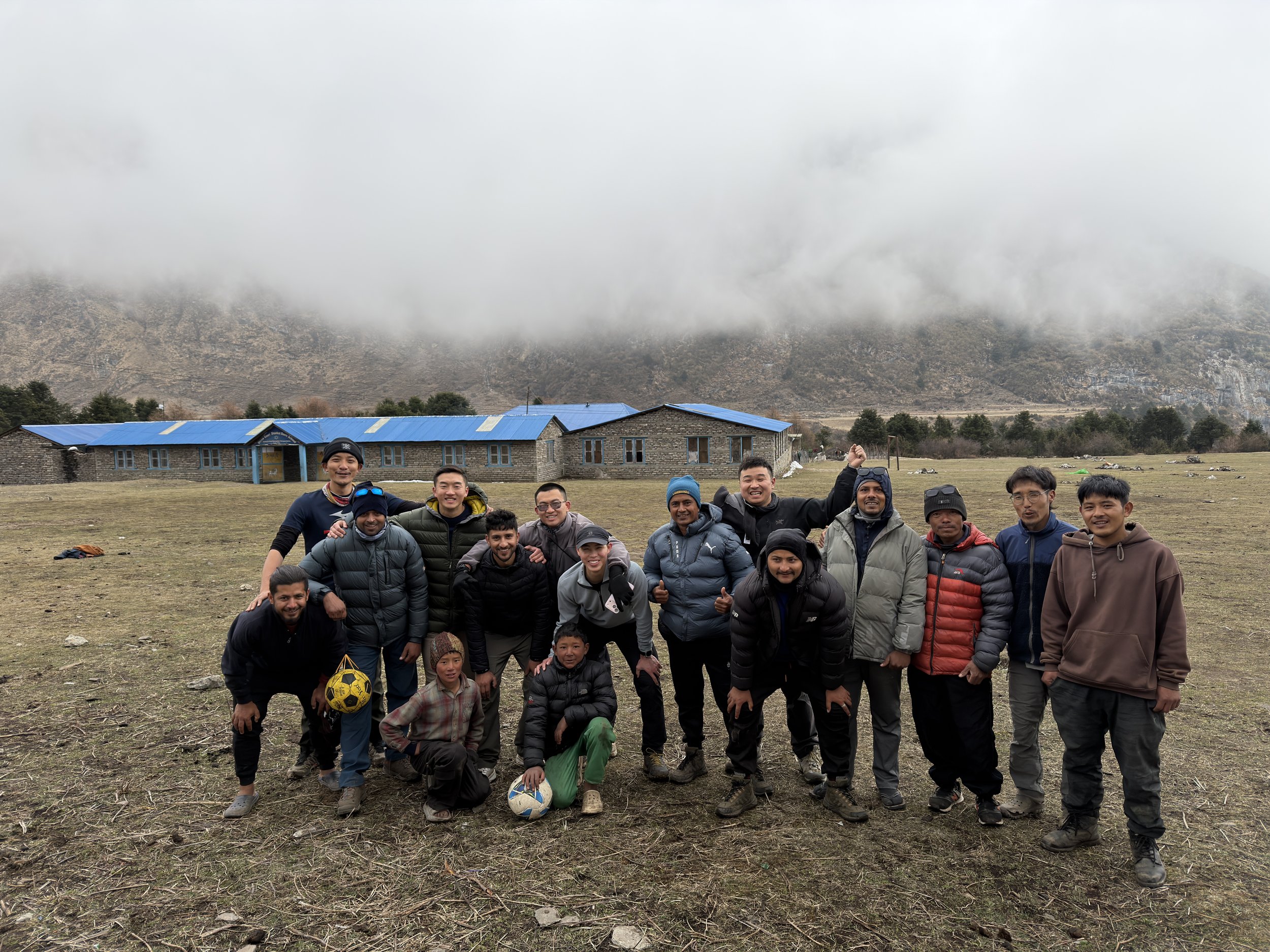
Playing football with the locals at Samagaun (3540m)
Besides, thanks to our guide Sandip, who knew the area very well, he managed to arrange a visit into a private residence! We were shown great hospitality, and it was like visiting a museum exhibit, except it was an actual family home of a Tibetan family! Having spoken to the son of the lady who welcomed us into their home, he told us he would walk (or run) the exact same route that we came in to get home during university semester breaks. However, instead of taking eight days like we did, it only takes him two days to get from Machhakhola to Samdo!
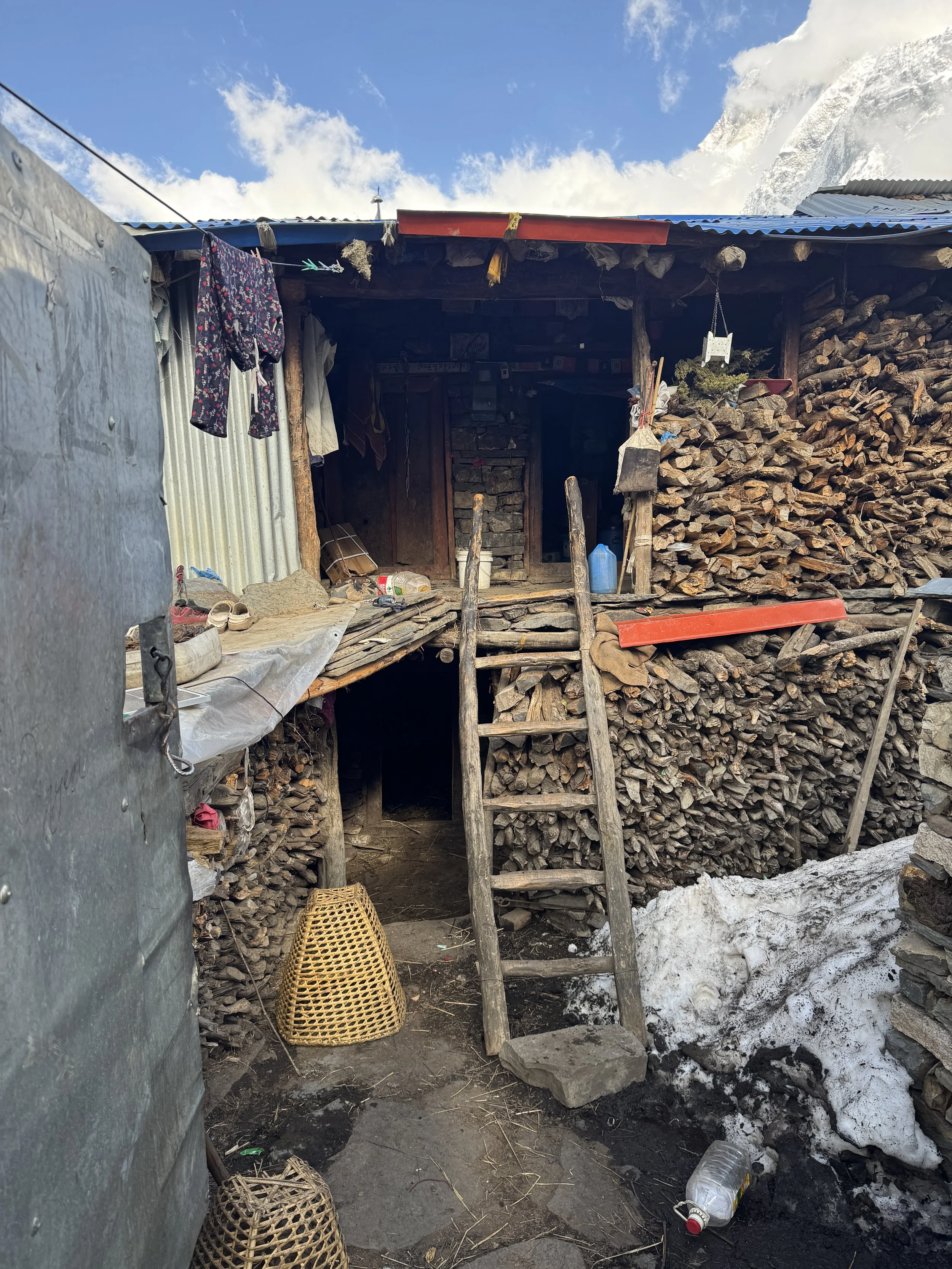
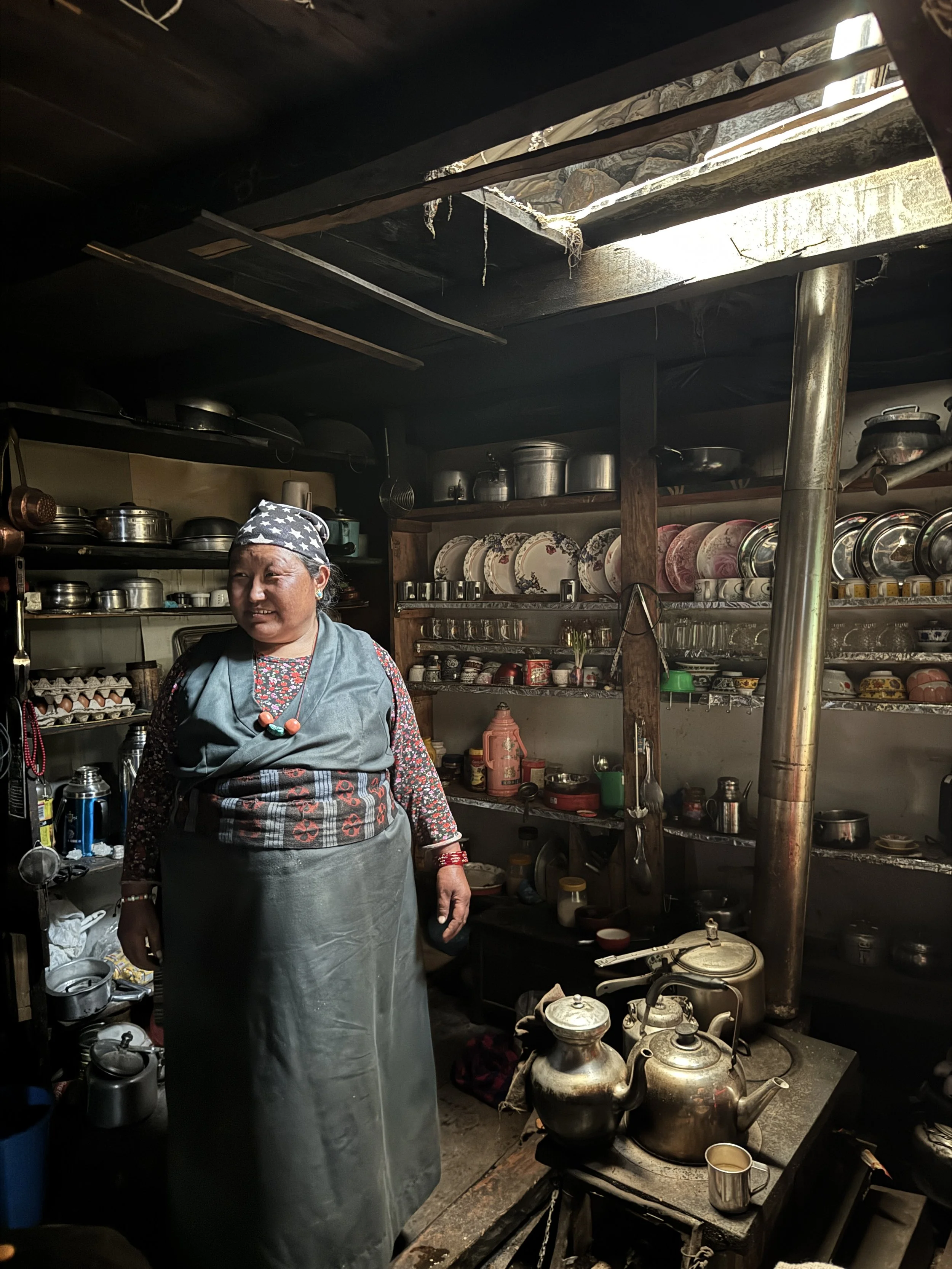
Unlike the Everest Base Camp trek that Kev did several years ago, where it is a very well-established hiking trail with open alpine views every day, the Manaslu Circuit Trek is more like an immersive experience into how the locals live their lives. It did not feel like the trails were opened up only for tourist hikers; they were actually shared and used by the locals who live in those communities along the Manaslu region. (Having said that, there is some construction work at the start and end of the trek to improve accessibility to the region.)
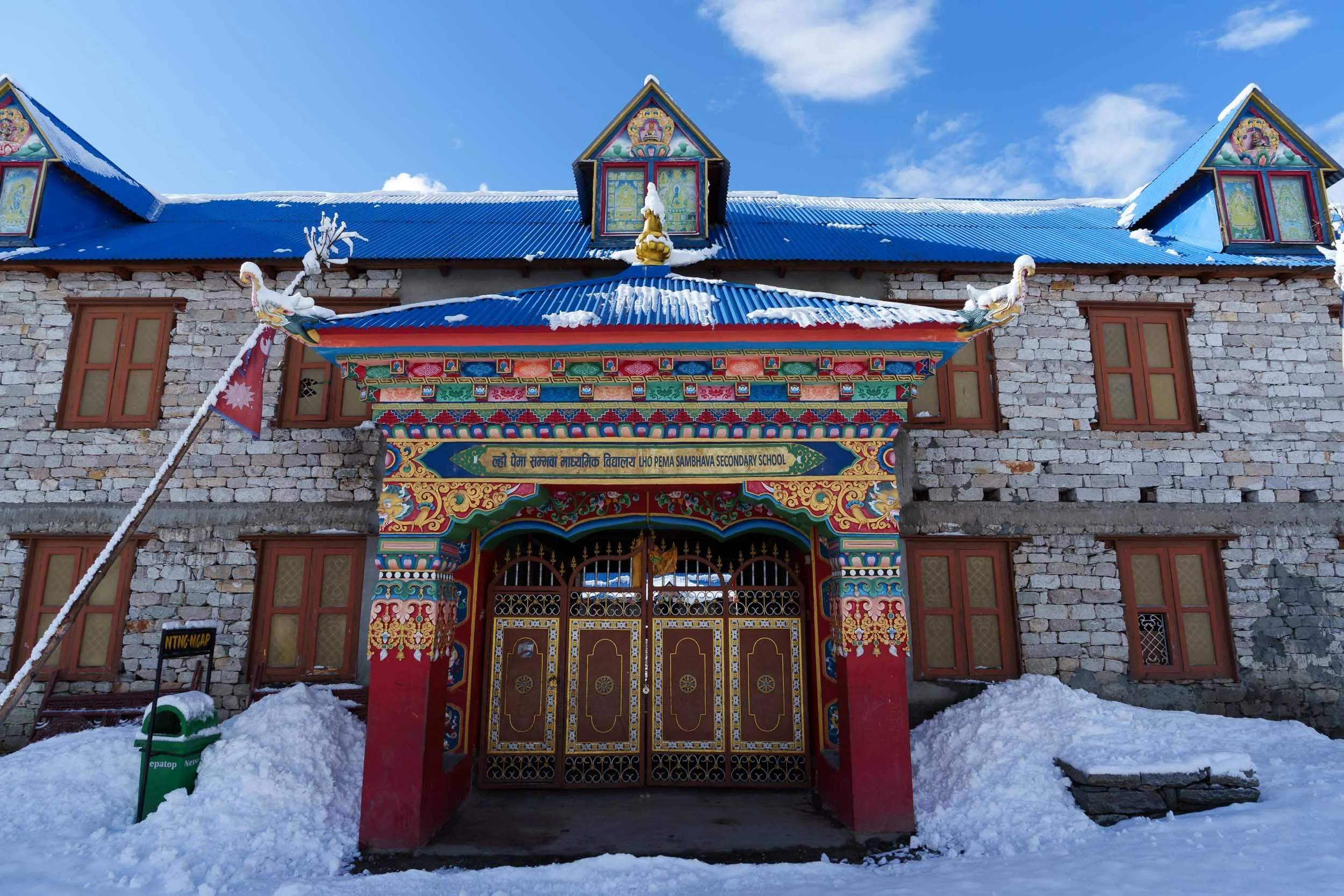
Secondary School on the Manaslu Circuit Trek
Accommodation
This is the topic we get the most questions about! Every single night (except for Day 10, when you stay at the shelters in Dharamshala), we got our own private rooms. Occasionally we had our own private en-suite toilets, but on most days, facilities are shared with the other hikers. The beds are comfortable with proper mattresses. We did sleep inside our own sleeping bags for hygiene and extra warmth, however, you can always request an extra blanket from the teahouse hosts if you need it.
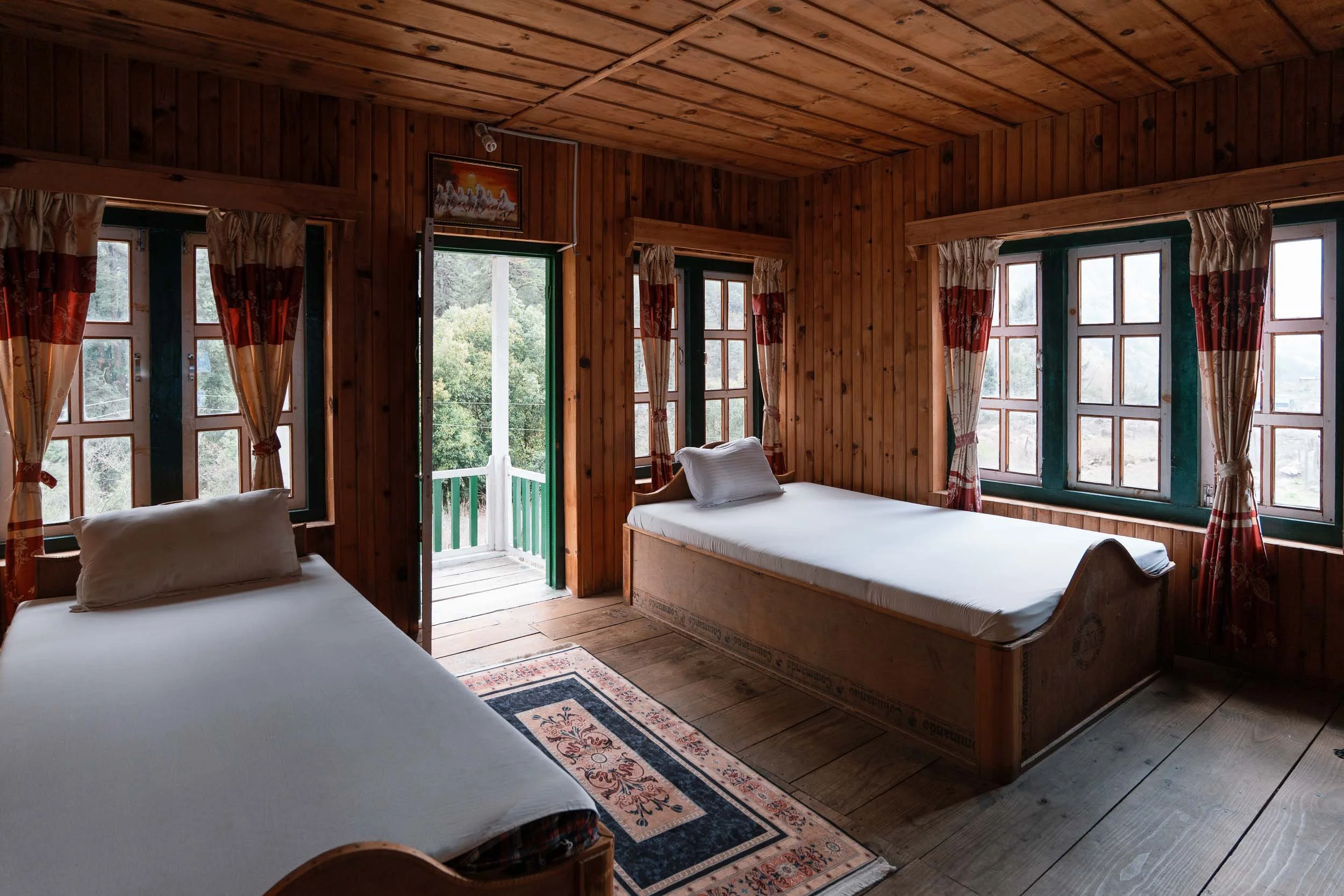
Teahouse on the Manaslu Circuit Trek (Day 11)
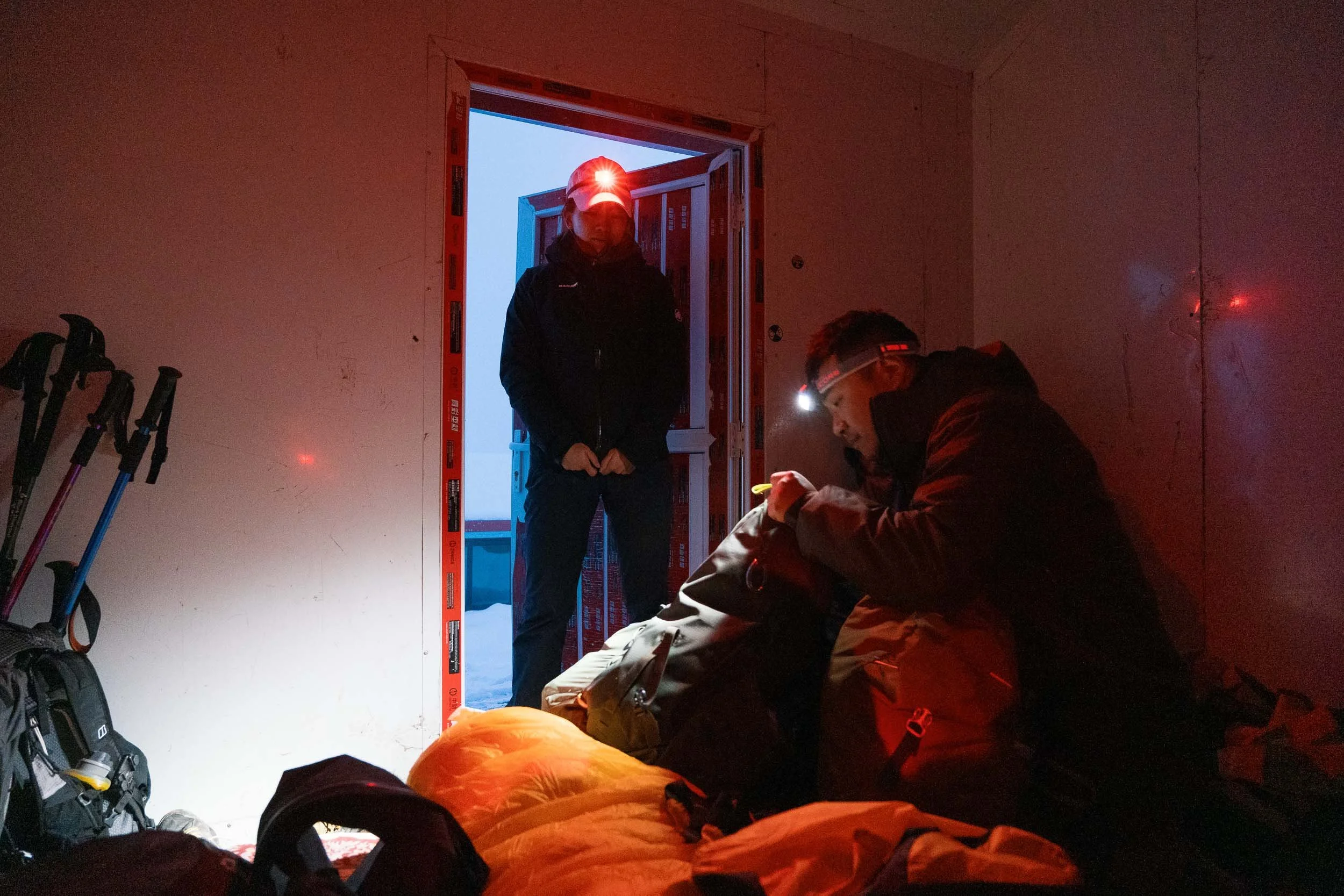
Dharamshala (Day 9) shelter
Our accommodation was arranged by Royal Holidays Adventure and completely included in our tour price. If you are paying out of pocket, the room prices stated on the menus hover around 700 to 1,000 Rupees a night.
Expect to wake up in the cold and deal with potential noise. Because the construction of these teahouses generally uses thin materials, waking up in the morning or hitting the bathroom in the middle of the night will be freezing if you are hiking in the early or late seasons. We highly recommend bringing a thick puffer jacket to wear in the evenings.
The huts are usually well-equipped but come with very basic amenities compared to the Everest Base Camp trek that Kev did a couple of years ago. In terms of hygiene, manage your expectations if you are used to hiking hut-to-hut in Europe or Japan. Teahouses here allow shoes inside the main premises, so the floors can get dirty. Remember to pack slippers, because you definitely don't want to be walking around bare feet!
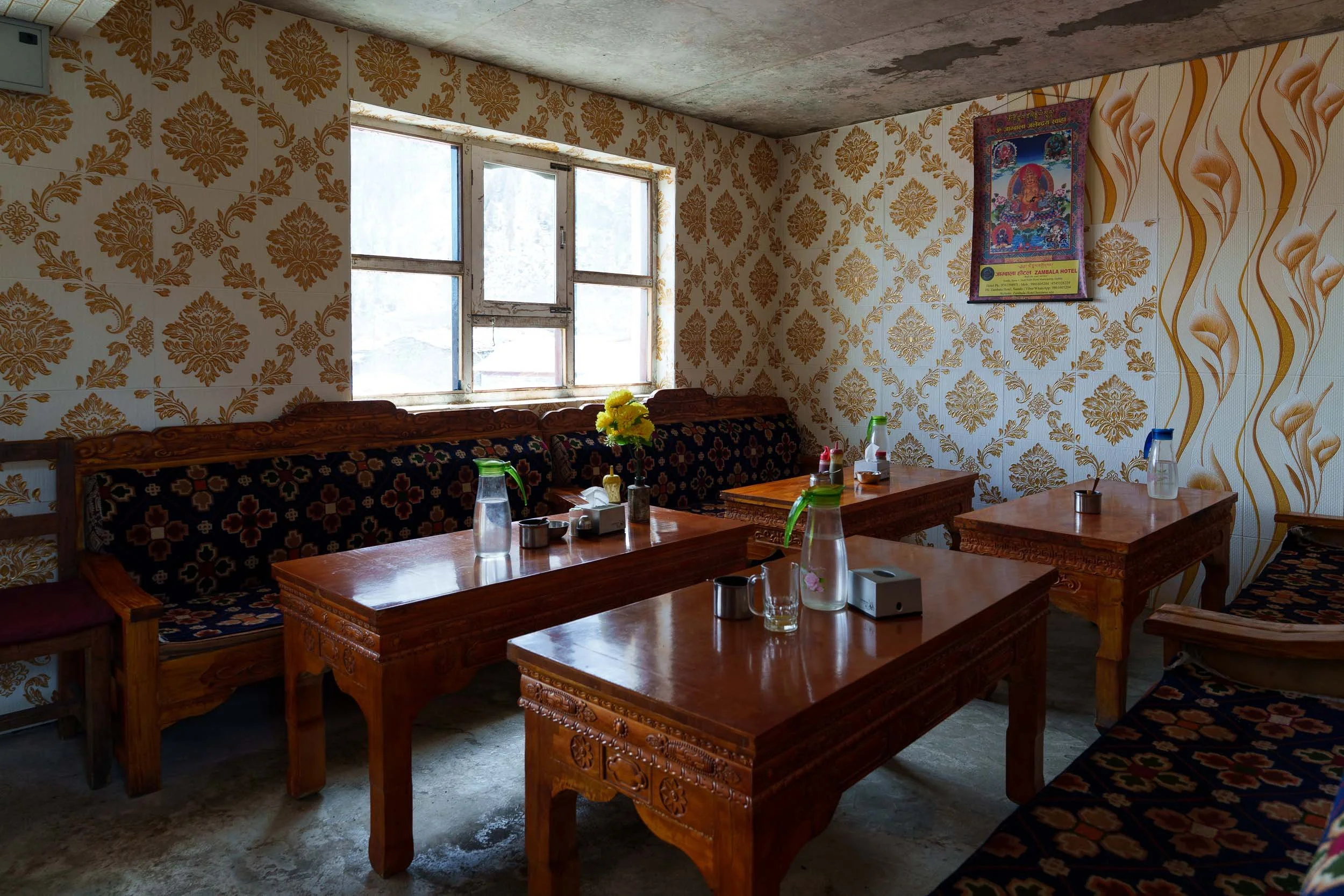
Teahouse dinning area
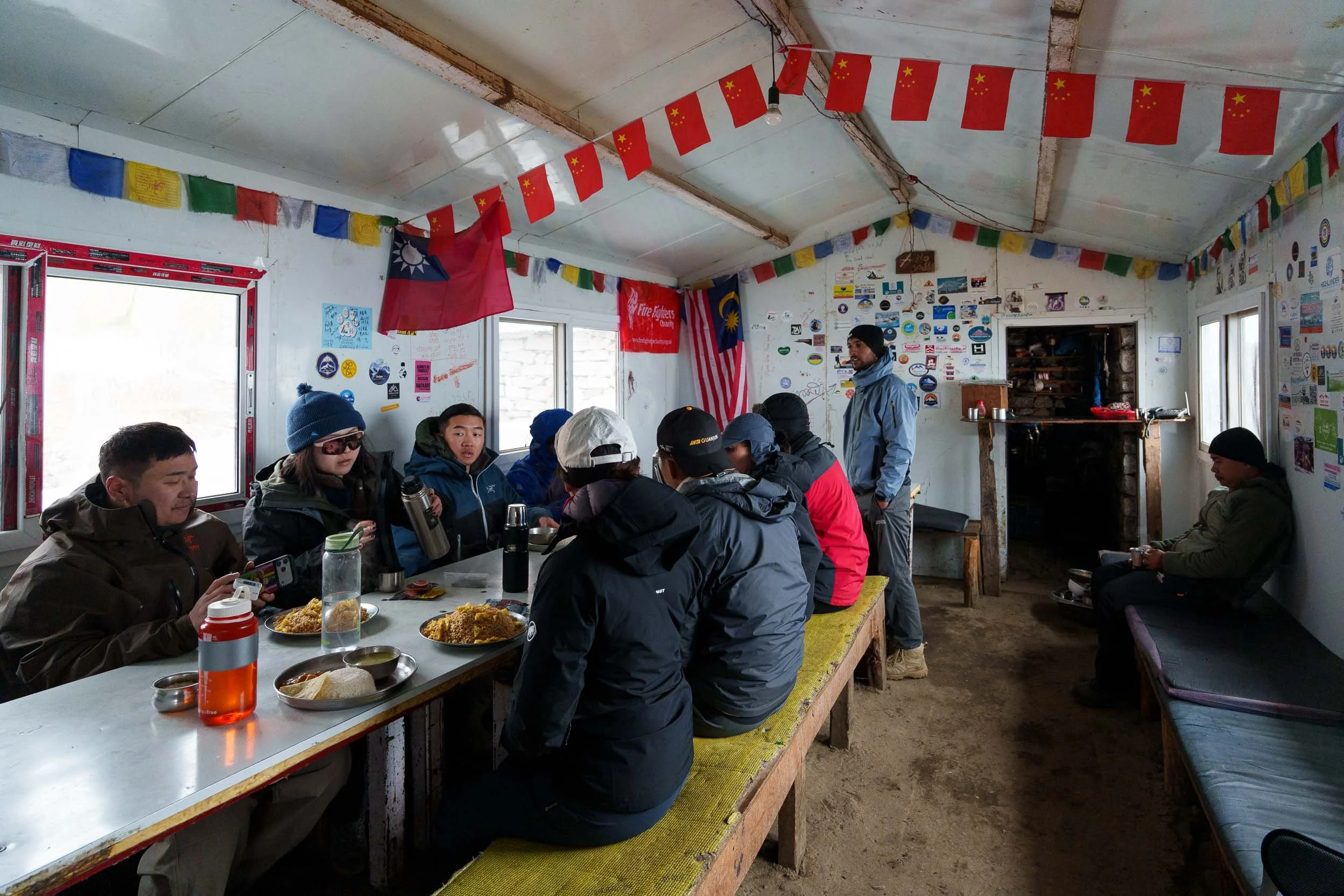
Dinning area in Dharamshala
Toilets & Shower
Toilets are another big one - again, manage your expectations here. On the Manaslu Circuit, most facilities are traditional squat toilets. It does take a while to get used to them, and they are genuinely tiring to use! While the hygiene of the toilets inside the private rooms is acceptable, the shared communal ones usually smell and are poorly cleaned. Bring extra toilet rolls with you since they are not provided in any of the toilets. You can buy them at the teahouses further up the trail if you run out, but they are sold at a premium.
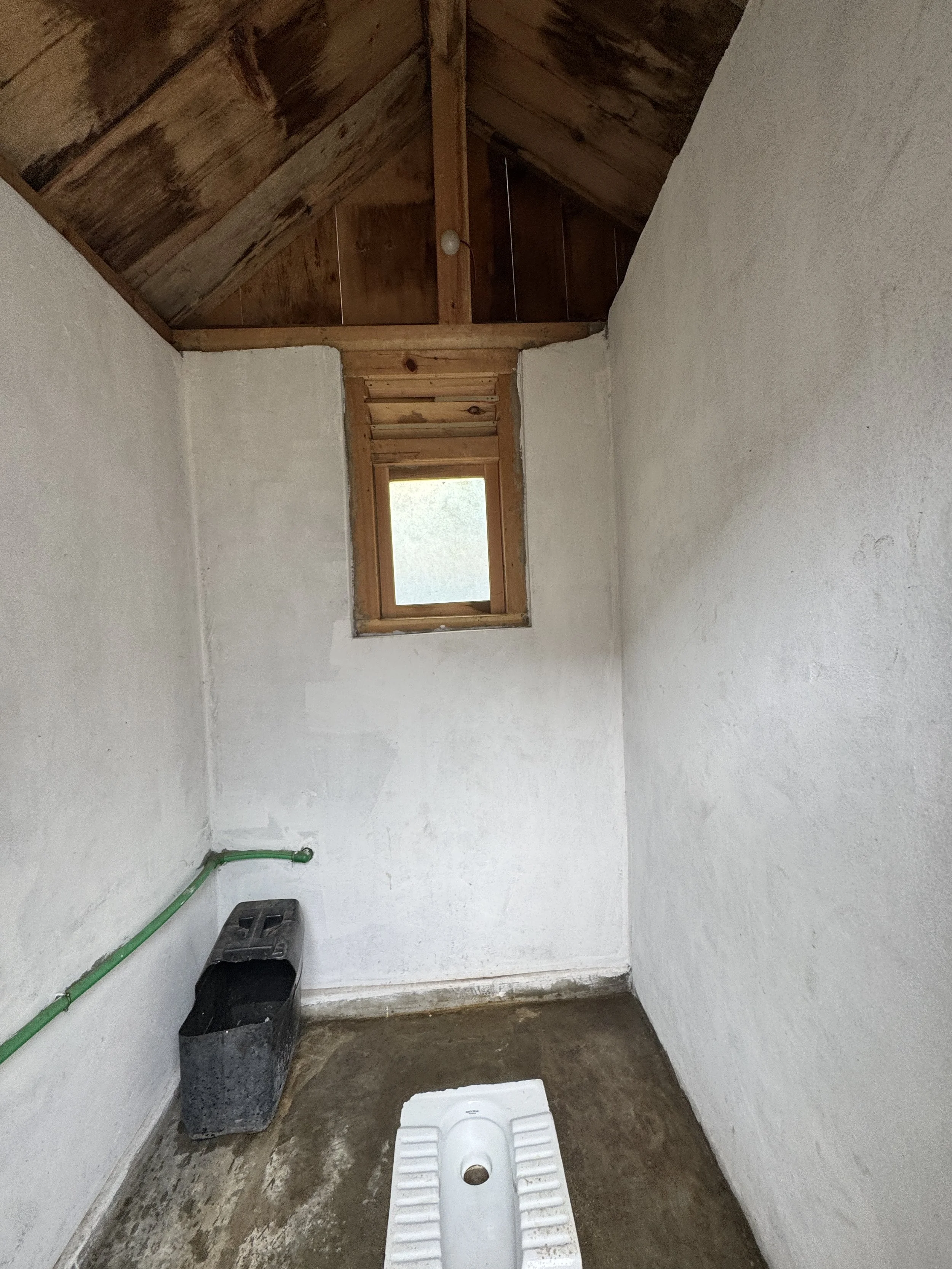
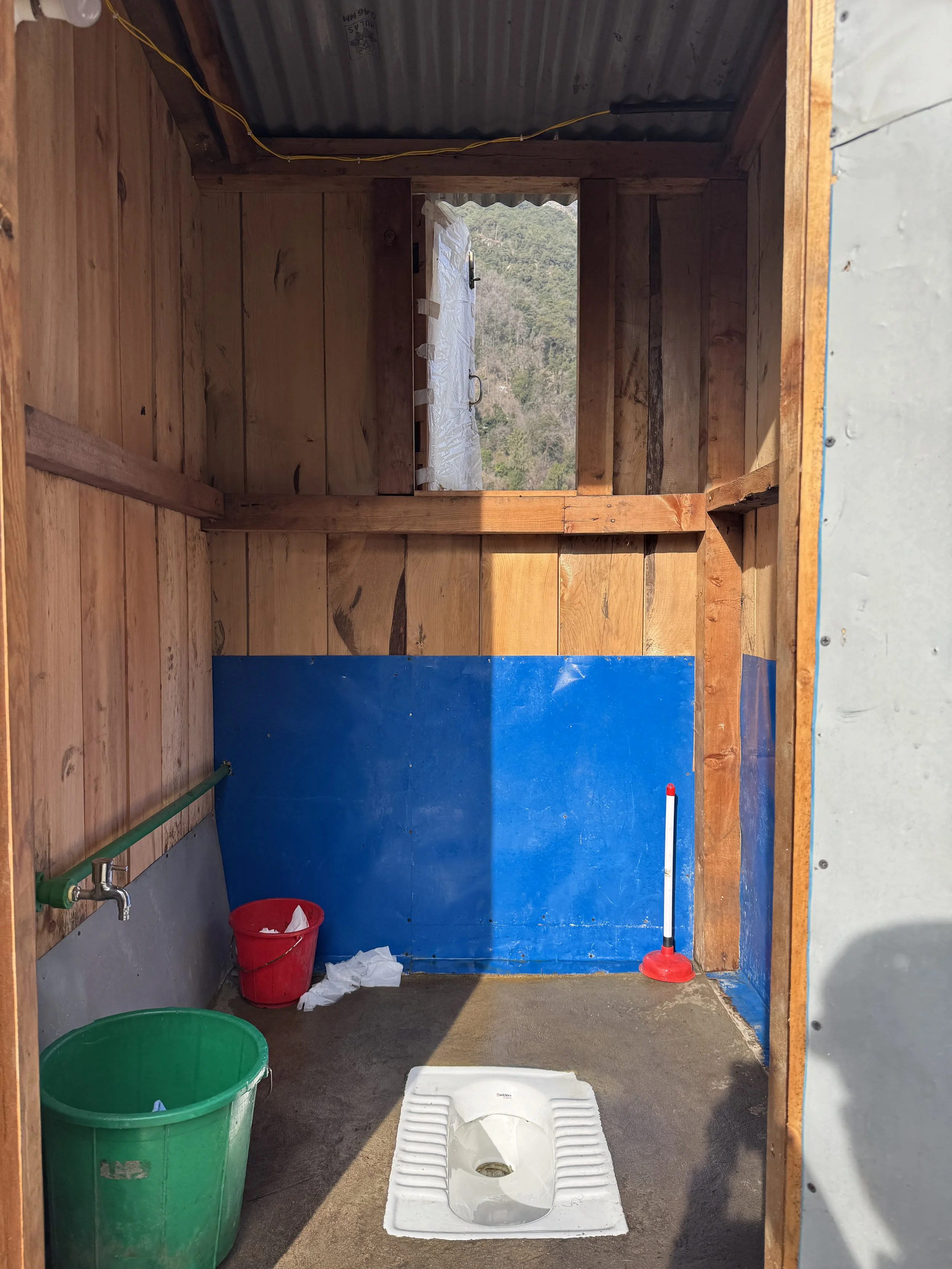
You can take showers in most teahouses at the lower altitudes. Usually, cold showers are free, while a hot gas shower will cost you around 300 Rupees. There is usually no strict time limit on your shower time. Our advice? Only take a shower on days that aren't bitterly cold to avoid catching a chill and getting ill.
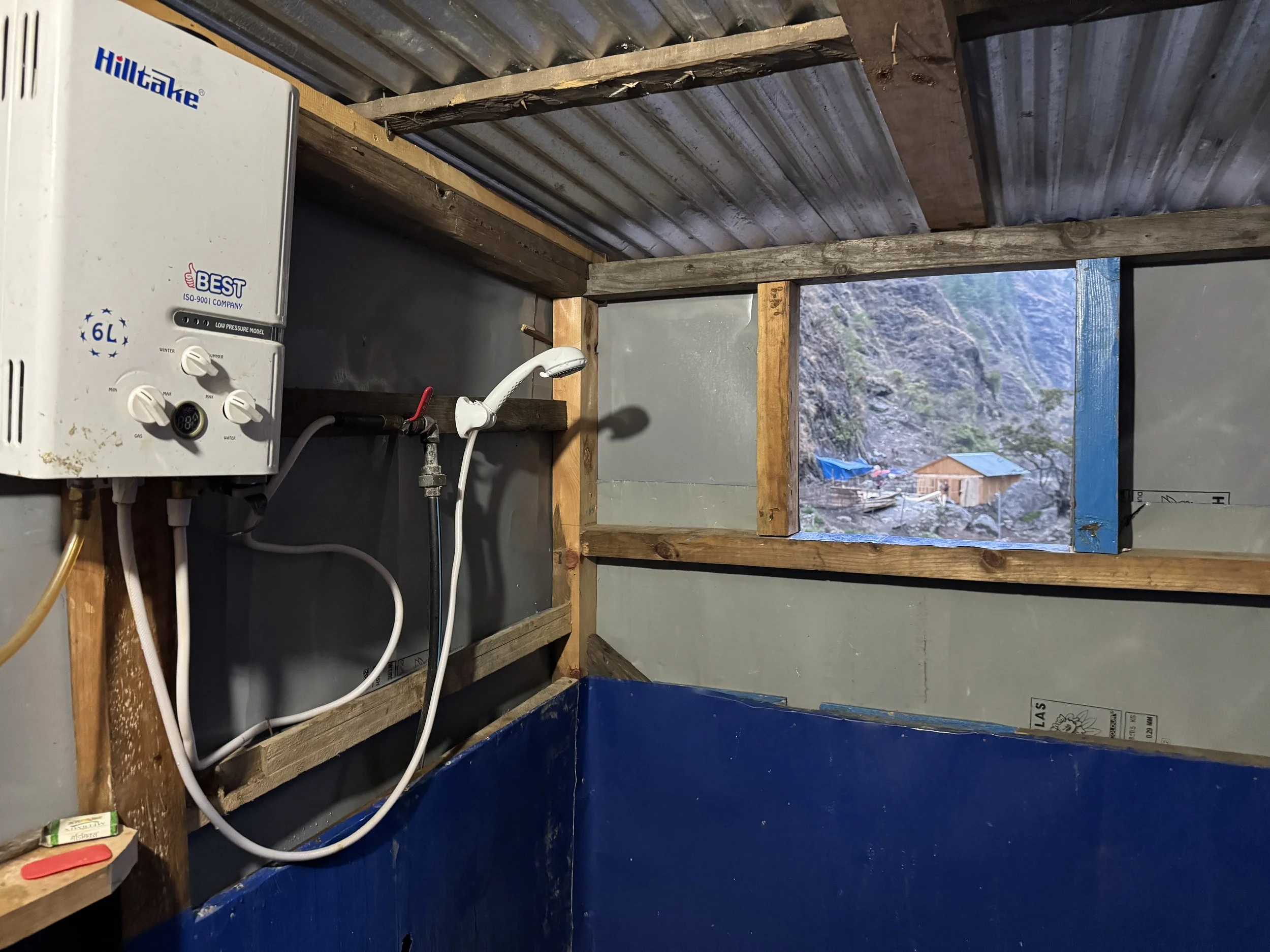
Hot showers
Managing Altitude Sickness
This is the single biggest hurdle to completing the trek. Anyone of any fitness level can experience altitude sickness, and unless you constantly train in low-oxygen conditions, there is no magic way to prevent it from happening. The good news is that the Manaslu Circuit trek climbs very gradually from 800m and only reaches its highest point at 5,106m over the course of 9 days, with one or two dedicated acclimatization days built in. Because of this itinerary, the altitude is not something you need to be overly anxious about.
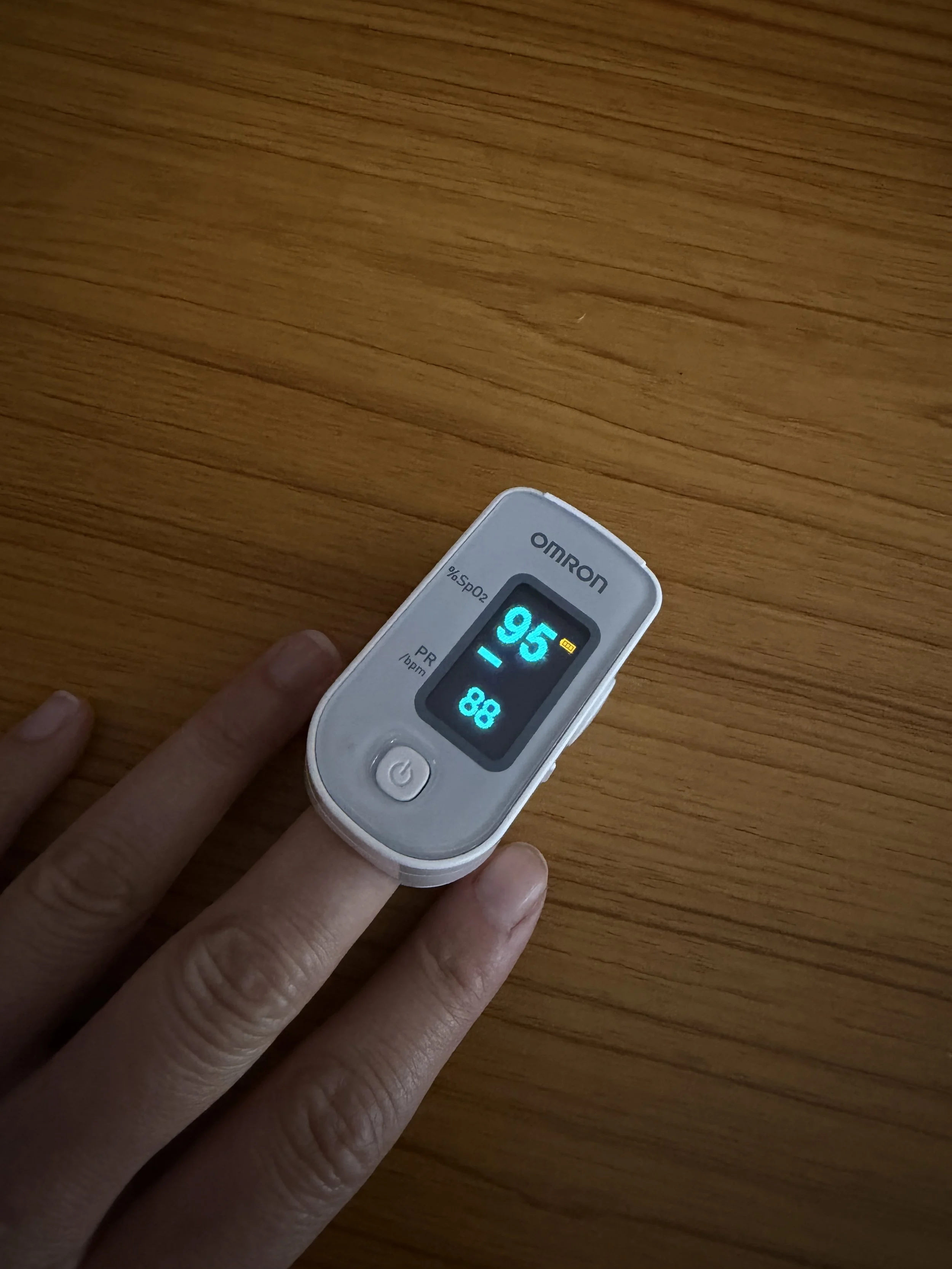
There are plenty of ways to mitigate and lessen the physical effects. We both took Diamox on our way up (remember to drink plenty of water, around 4 to 5 liters per day). While Kev experienced mild symptoms of altitude sickness when trekking EBC in the past, he was completely fine this time around on the Manaslu Circuit. Our guides made sure we were feeling okay at all time and took care of the whole group throughout the trek. We also had our own pulse oximeter to get everyone in check.
Food & Other Supplies
"Dal Bhat power, 24 hour" - be prepared to have Dal Bhat almost every single day of your trek! It is the most common dish in Nepal, and it is extremely nutritious as well. In the mountains, it is generally recommended that you do not consume meat due to food safety and a lack of refrigeration, so you will need to get your protein from other sources. Dal (lentil soup) is a fantastic source of plant-based protein that is great for muscle recovery. Bhat (rice), on the other hand, gives you the necessary carbohydrates to endure the long trekking days. Plus, the best part about Dal Bhat is that you get free refills on the rice and lentils at every teahouse!
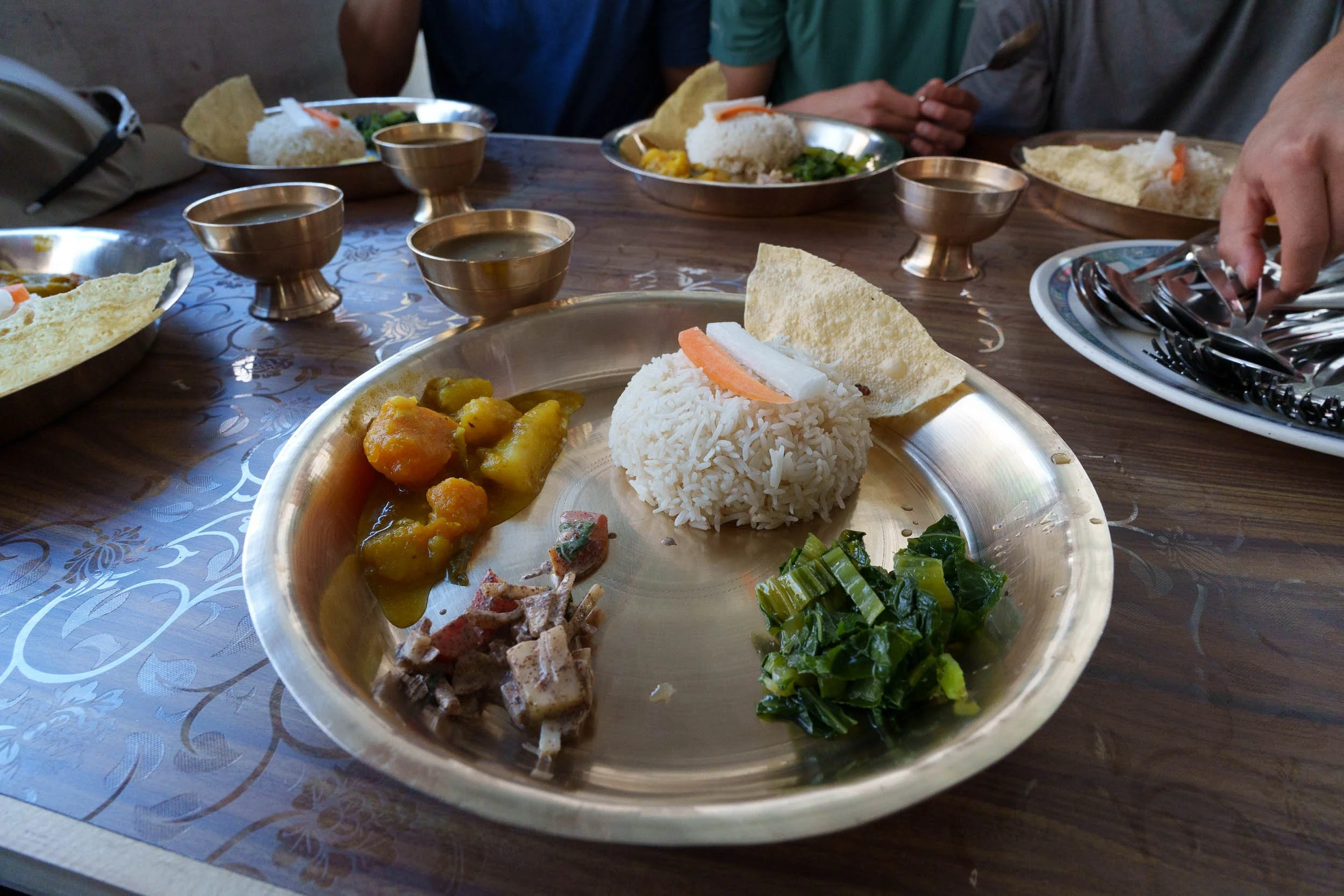
Dal Bhat
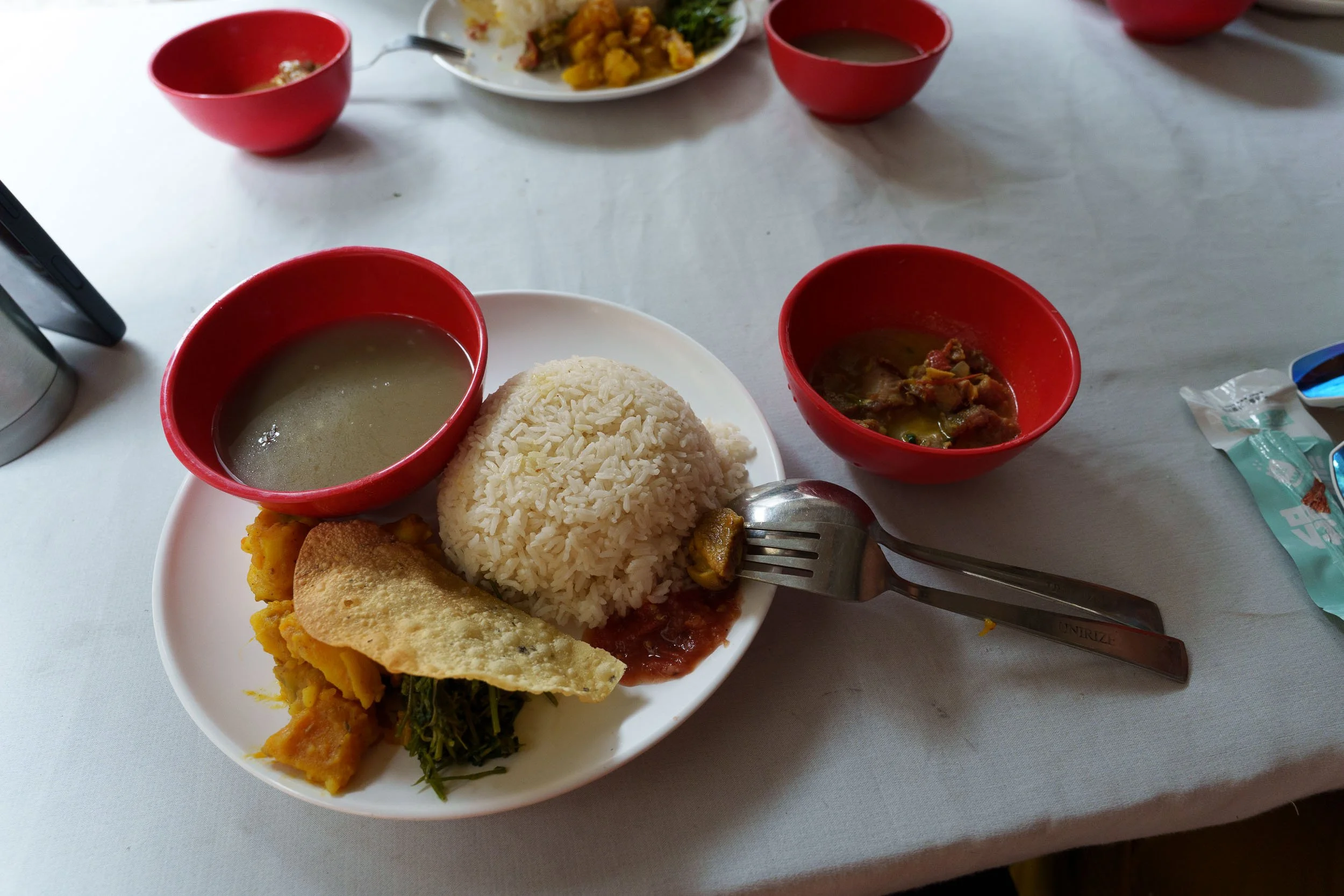
Dal Bhat
If you book a standard tour that includes meals, it is highly likely that you will be eating Dal Bhat for almost every meal. However, if you prefer to choose exactly what you eat, we would recommend booking or negotiating a tour package that has meals excluded. This gives you the flexibility to order whatever you want. With Royal Holidays Adventure, we specifically asked for a package that did not include food because we had a big group of 10, which meant everyone could order whatever they fancied.
The menus at the teahouses along the Manaslu Circuit trek actually feature quite an extensive list of options, ranging from vegetable egg fried rice and soup noodles to garlic soup, momos, and even apple pie. Though it is definitely a menu adapted for "foreigners," we really appreciated the variety and it kept our momentum up during the trek. The prices for each dish usually range between 800 to 1,100 Rupees, and they get progressively more expensive the higher up you go.
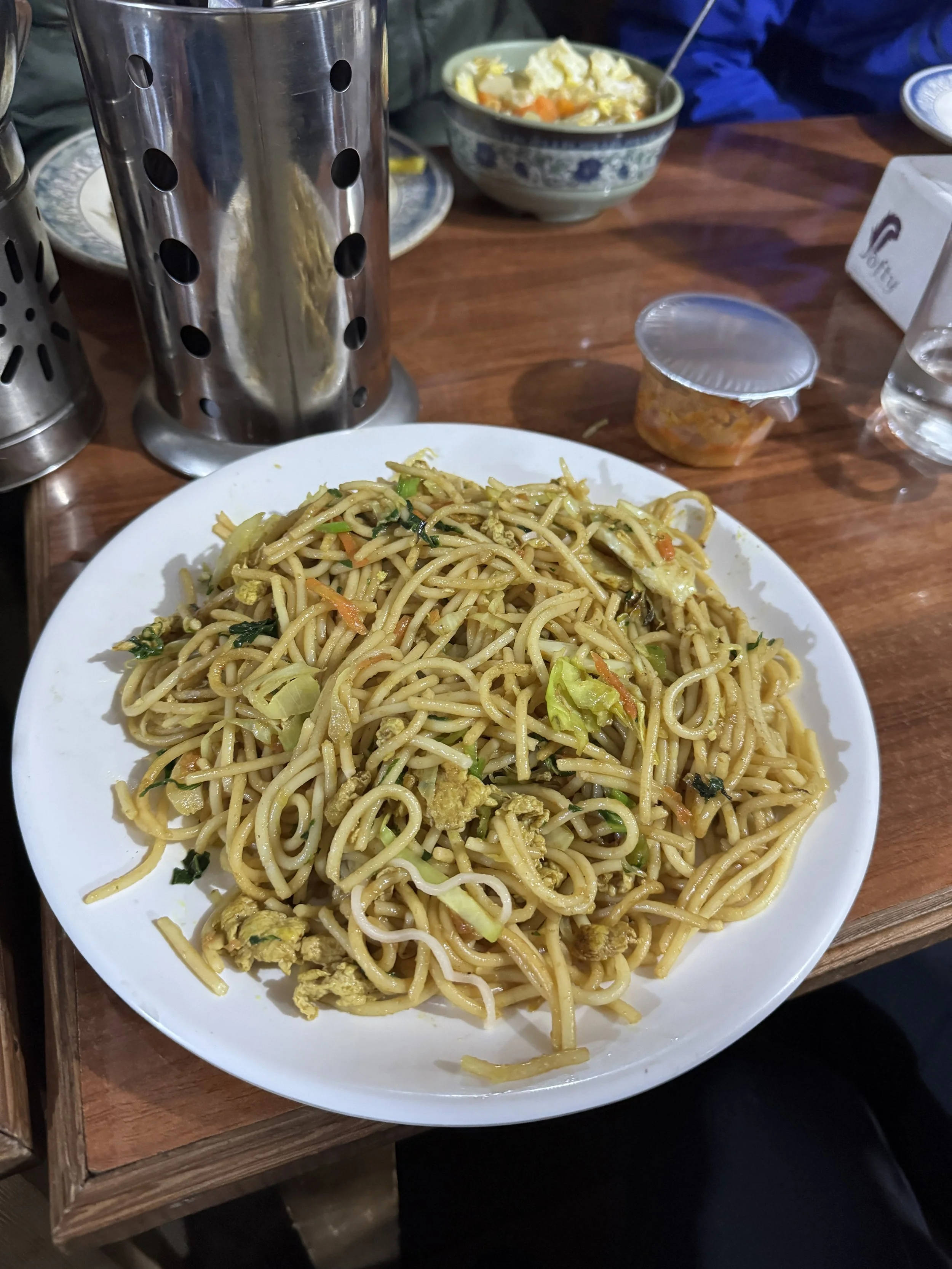
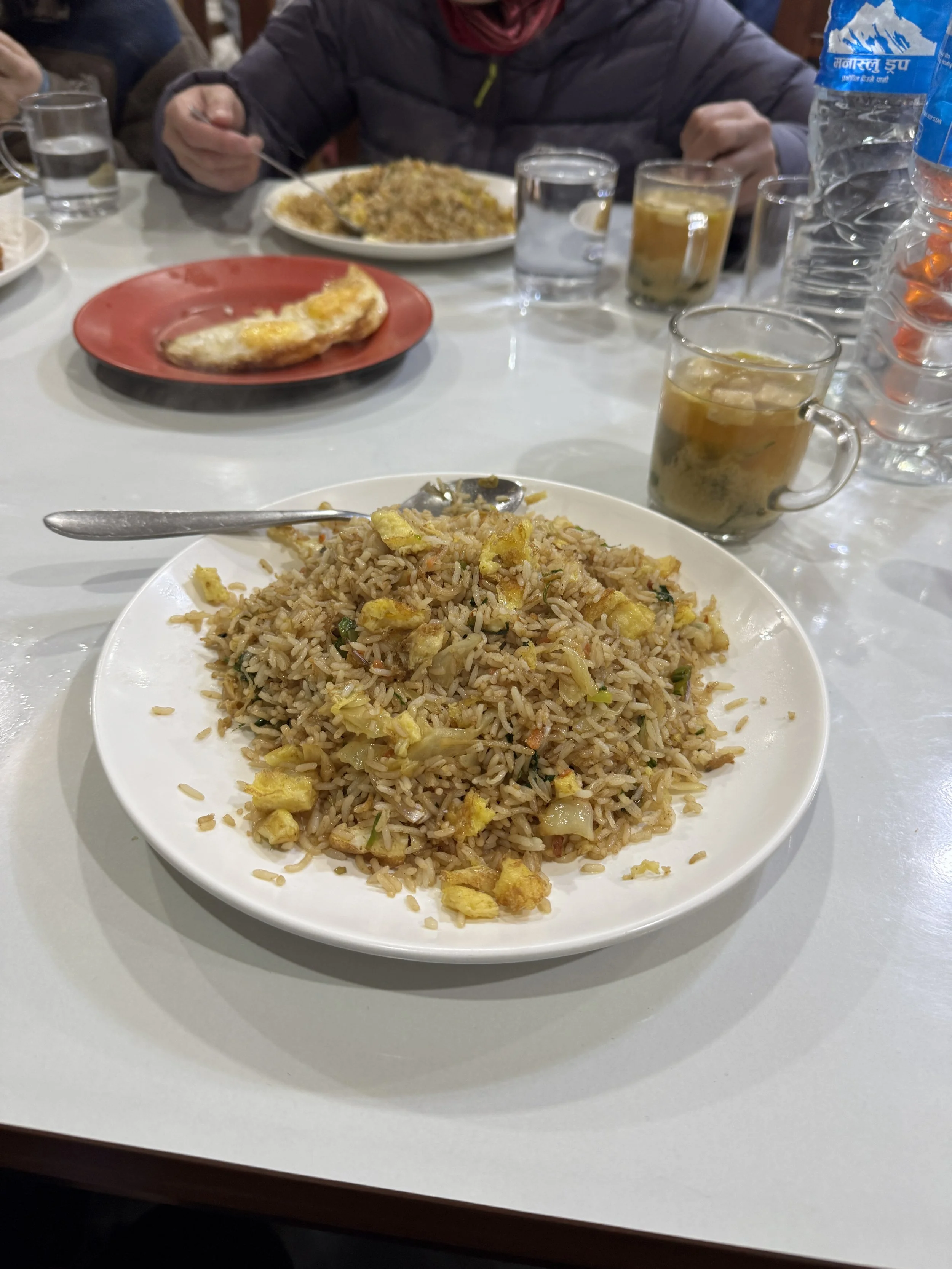
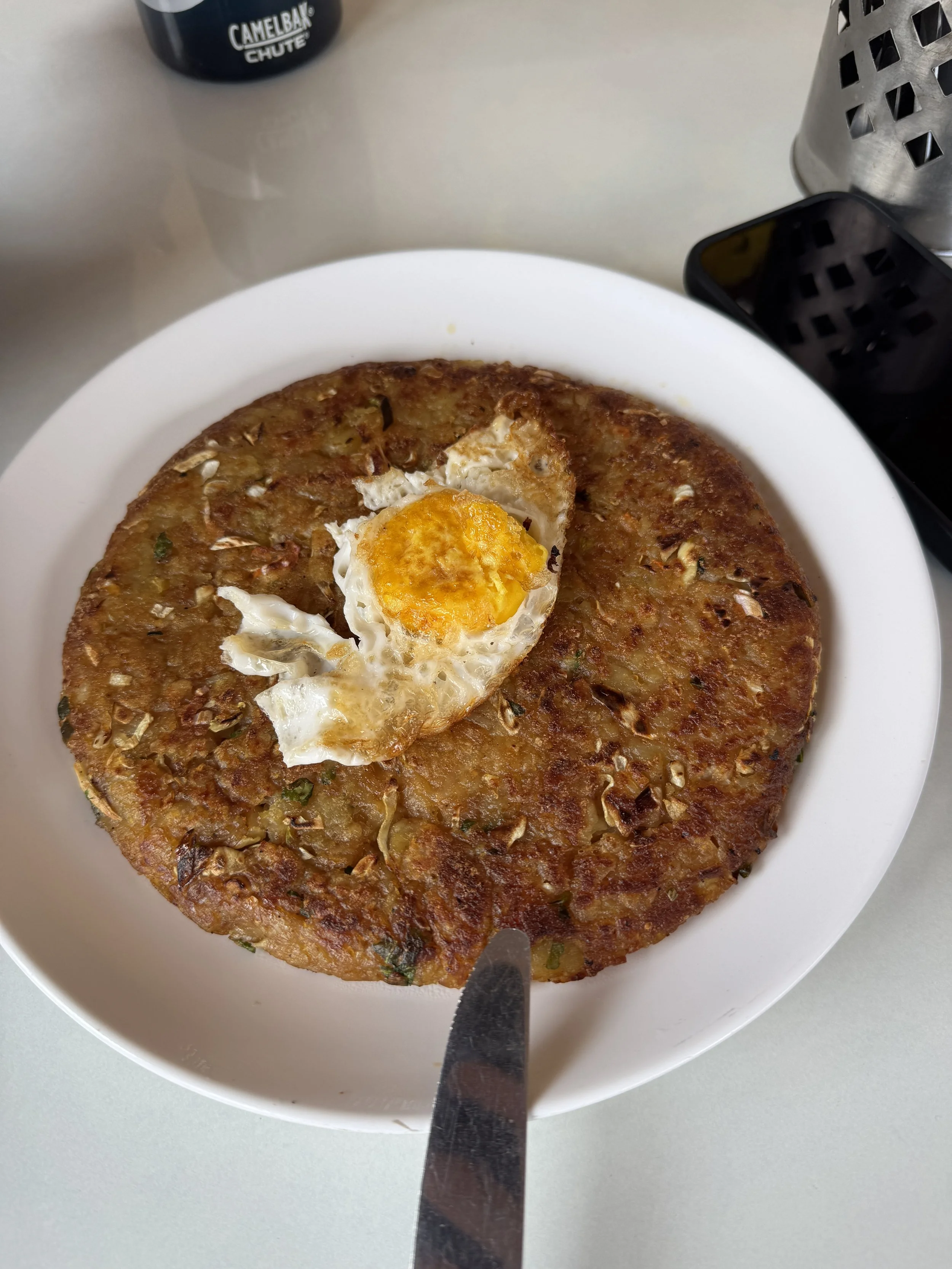
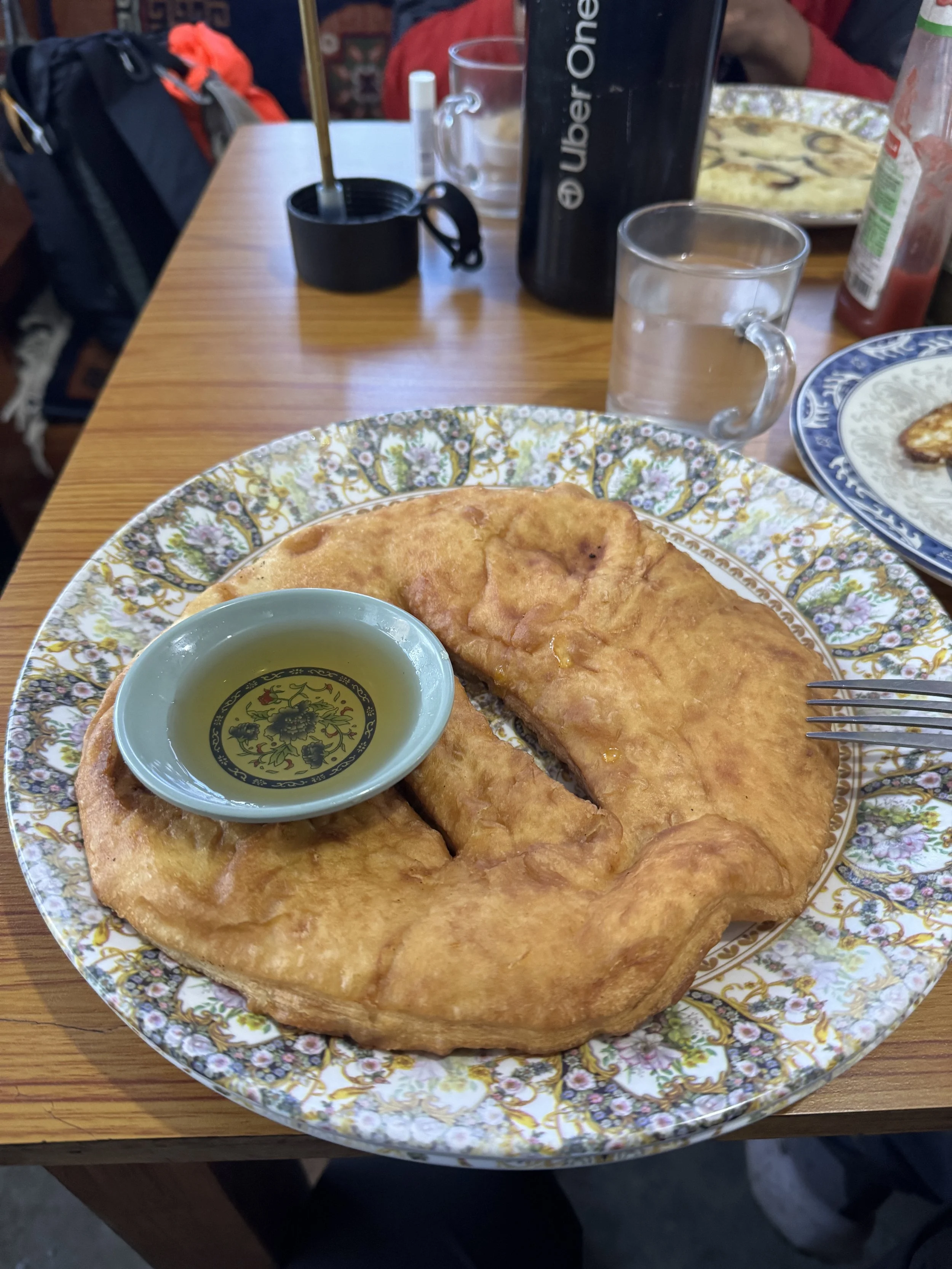
Overall, we spent around $30 to $40 USD per person, per day on food and drinks (covering breakfast, lunch, and dinner). This total also includes purchasing bottled water, boiled hot water, and hot tea along the trek.
On our last day, right after our big descent from the Larka La Pass, our guides arranged a fresh chicken feast for us, cooked the traditional Nepalese way. It was by far the freshest chicken we have ever had - our guide Sandip from Royal Holidays Adventure actually slaughtered the chicken right in front of us and cooked it up! It was one of the absolute highlights of our entire trip.
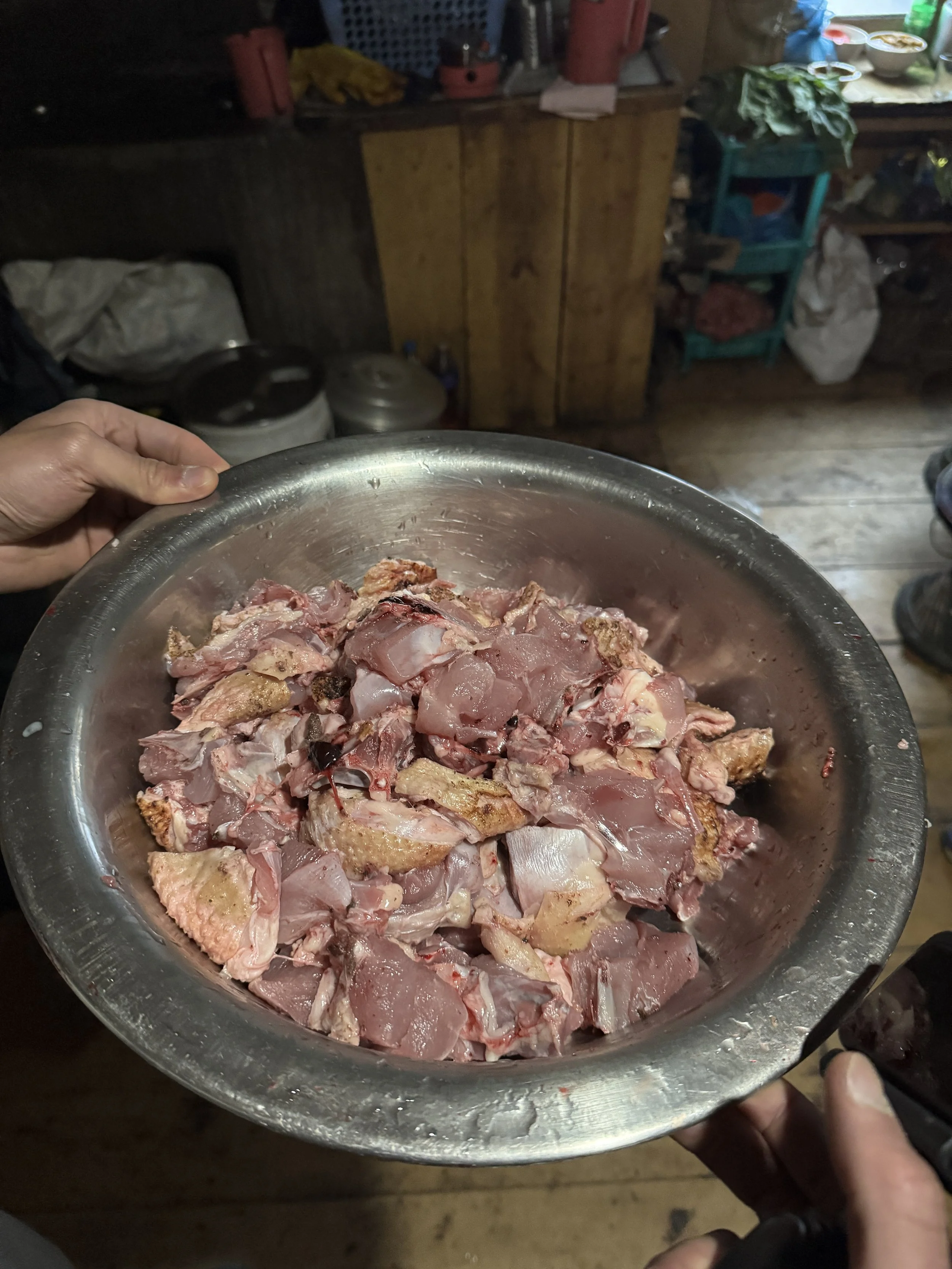
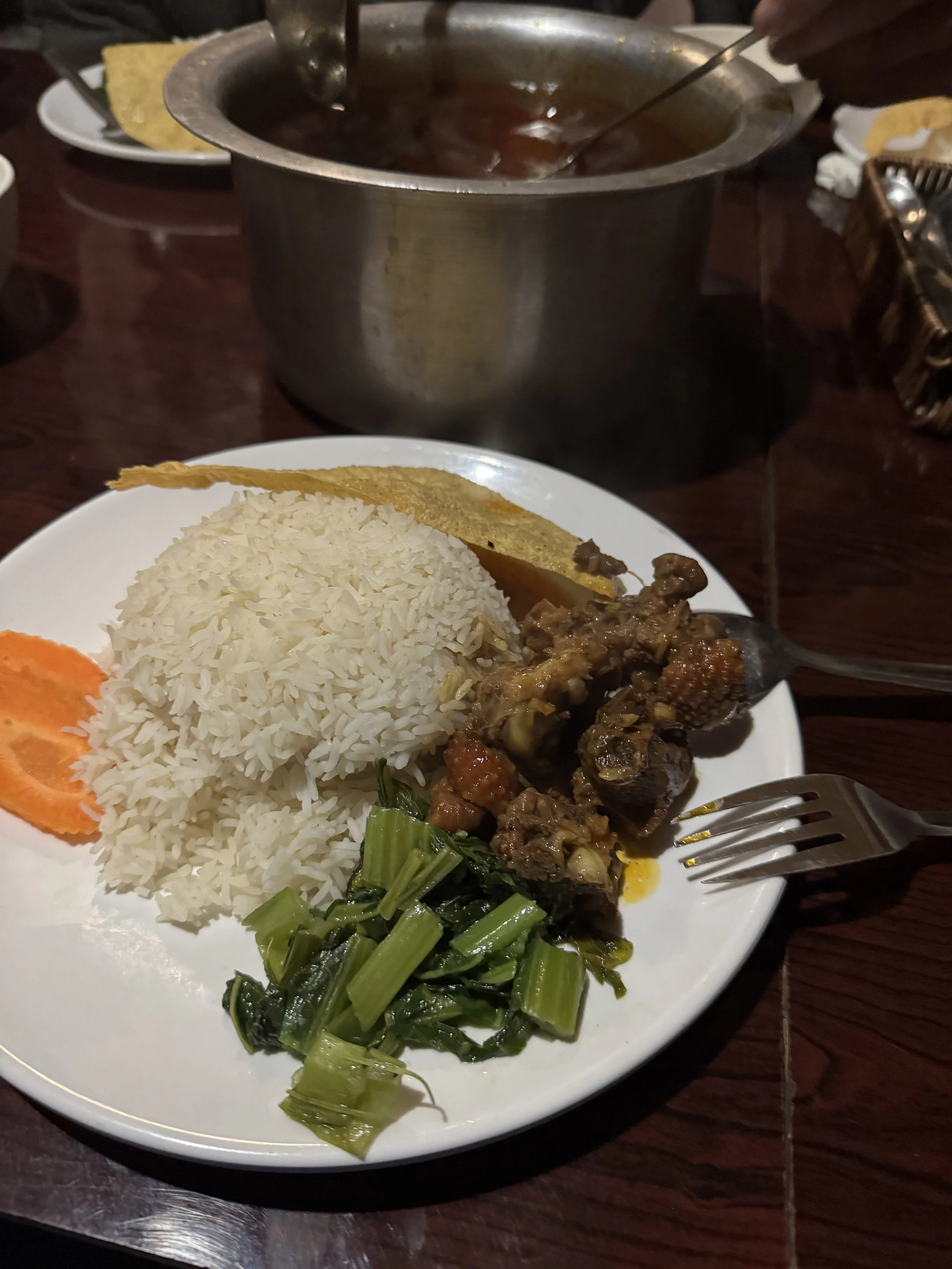
The food on the trail was definitely good. While it isn't fancy, it gave us plenty of clean energy to endure the trek. Of course, we also brought along our own protein snacks like Spam and beef jerky to get our meat fix. That said, bringing your own food is totally optional because the teahouses along the Manaslu Circuit are very well-equipped. Packing some energy bars and trail mix for the day is a great idea to consider, but you will be well-fed regardless because the portions are always incredibly generous.
12-Day Manaslu Circuit Trek Itinerary
Overview: Distance, Elevation, & Overall Difficulty
Total Trekking Distance: Approximately 130-170 km (80 - 95 miles) for the standard loop. This tracking distance can vary slightly depending on where you start the trek and whether you opt for the side trips.
Maximum Altitude :5,106 meters (16,752 feet) at the Larke La Pass.
Trek Duration: Usually takes 10 to 12 trekking days (with the full itinerary around 14–16 days when factoring in travel from Kathmandu). If you would like to do the Tsum Valley side trip, add 5 more days into your itinerary.
Expect to hike for 6 to 8 hours daily, longest day up to 12 hours, translating to roughly 12 km to 15 km each day.
The Manaslu Circuit is classified as a strenuous, high-altitude loop. While it is entirely a non-technical trek, meaning you do not need mountaineering equipment like ropes, harnesses, or ice axes, the physical (and mental) challenge stems from cumulative fatigue, massive altitude gained as well as the remote, basic tea house infrastructure.
Day 1: Kathmandu to Machhakhola (Jeep Day)
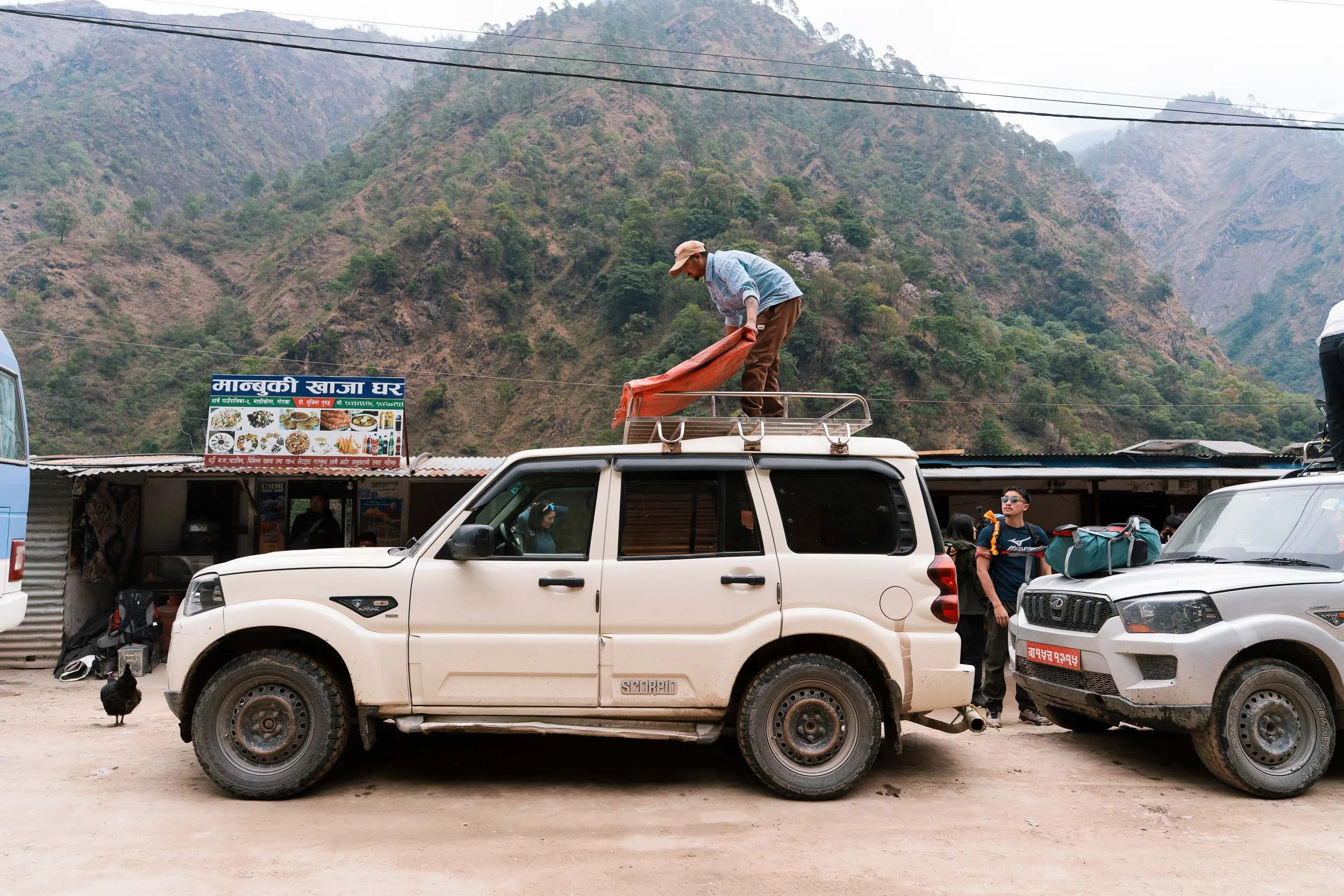
Logistics: Approx. 7–8 hours | Private Jeep or Local Bus
The journey begins with a long drive from Kathmandu to the trailhead at Machhakhola. The first half follows smooth, paved highways, but the second half transitions into exceptionally rough, dusty, and winding dirt tracks along the river gorge where motion sickness medication is highly recommended.
Day 2: Machhakhola to Jagat (1,330m)
Trail Stats: 16.8 km (~8 hours) | Elev. gain: 710m | Elev. loss: 210m
The first true trekking day features a long, steady climb tracing the Budhi Gandaki River. The trail crosses several major suspension bridges, passes the natural hot springs of Tatopani, and navigates narrow cliffside paths before reaching Jagat, where permits are checked to officially enter the restricted Manaslu region.
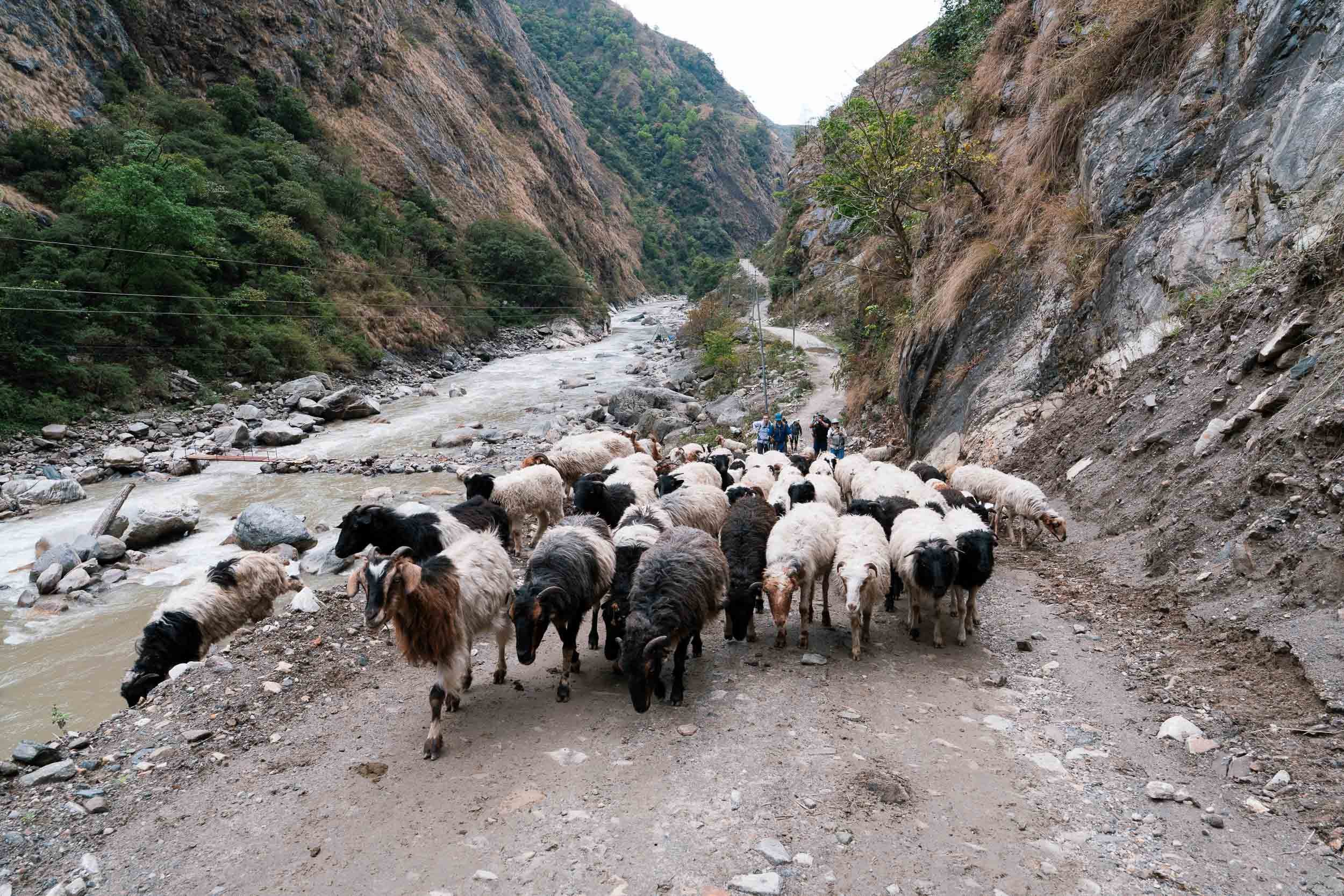
Day 3: Jagat to Deng (1,870m)
Trail Stats: 18.7 km (~9 hours) | Elev. gain: 910m | Elev. loss: 370m
This segment marks a clear environmental transition as the lower, open valley shrinks into tight, humid bamboo and pine forests. Shortly before reaching the small settlement of Deng, a yellow trail marker indicates entry into the sacred Buddhist non-violence zone where animal slaughter is legally prohibited.
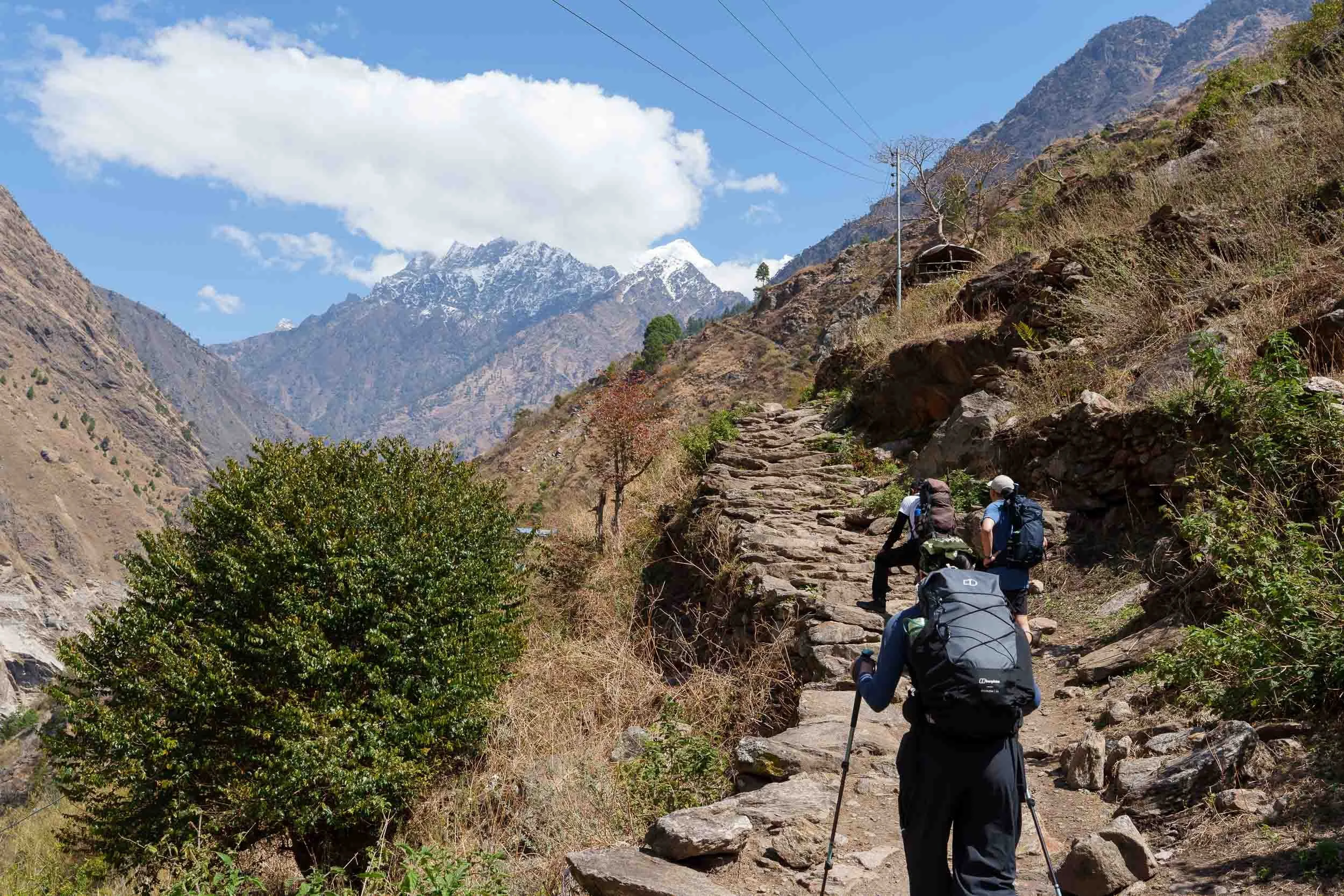
Day 4: Deng to Namrung (2,590m)
Trail Stats: 17.1 km (~9 hours) | Elev. gain: 1,140m | Elev. loss: 430m
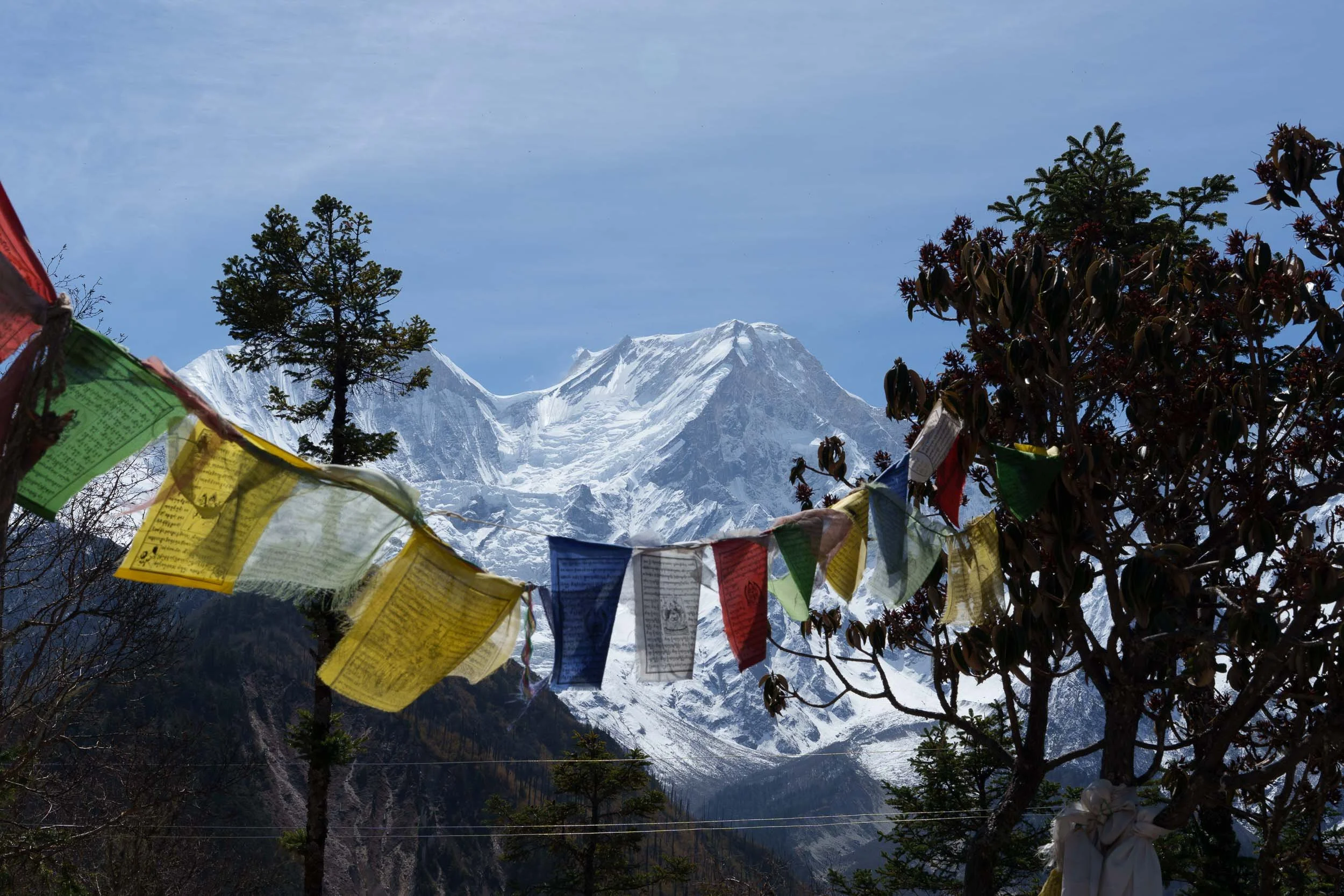
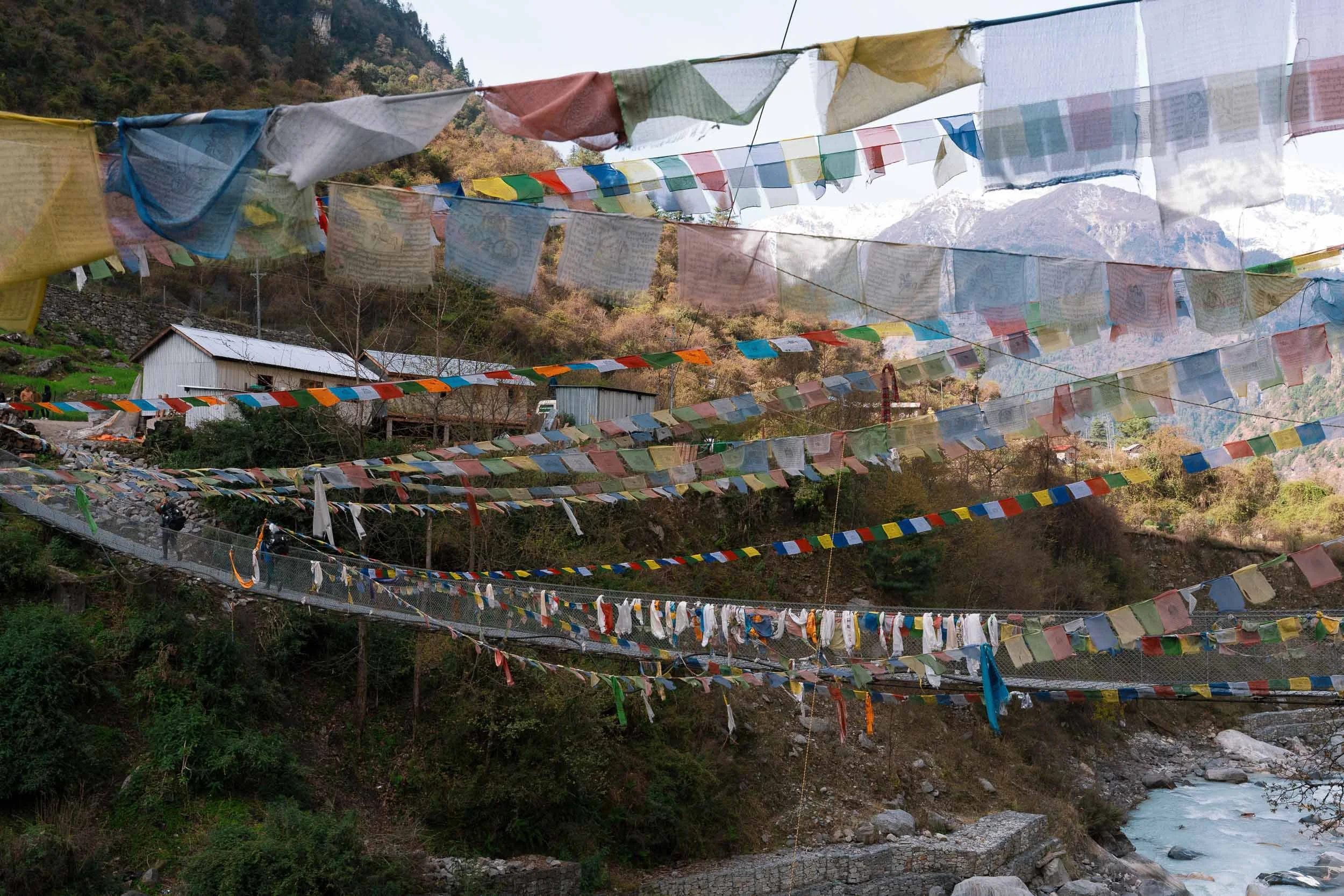
As you cross the longest suspension bridge on the circuit, the culture shifts noticeably from Hindu to Tibetan Buddhist. The trail is lined with ancient chortens, prayer wheels, and mani walls (which must always be passed on the left). Keep an eye out for grey langur monkeys on the cliffs and a local apple orchard near Namrung.
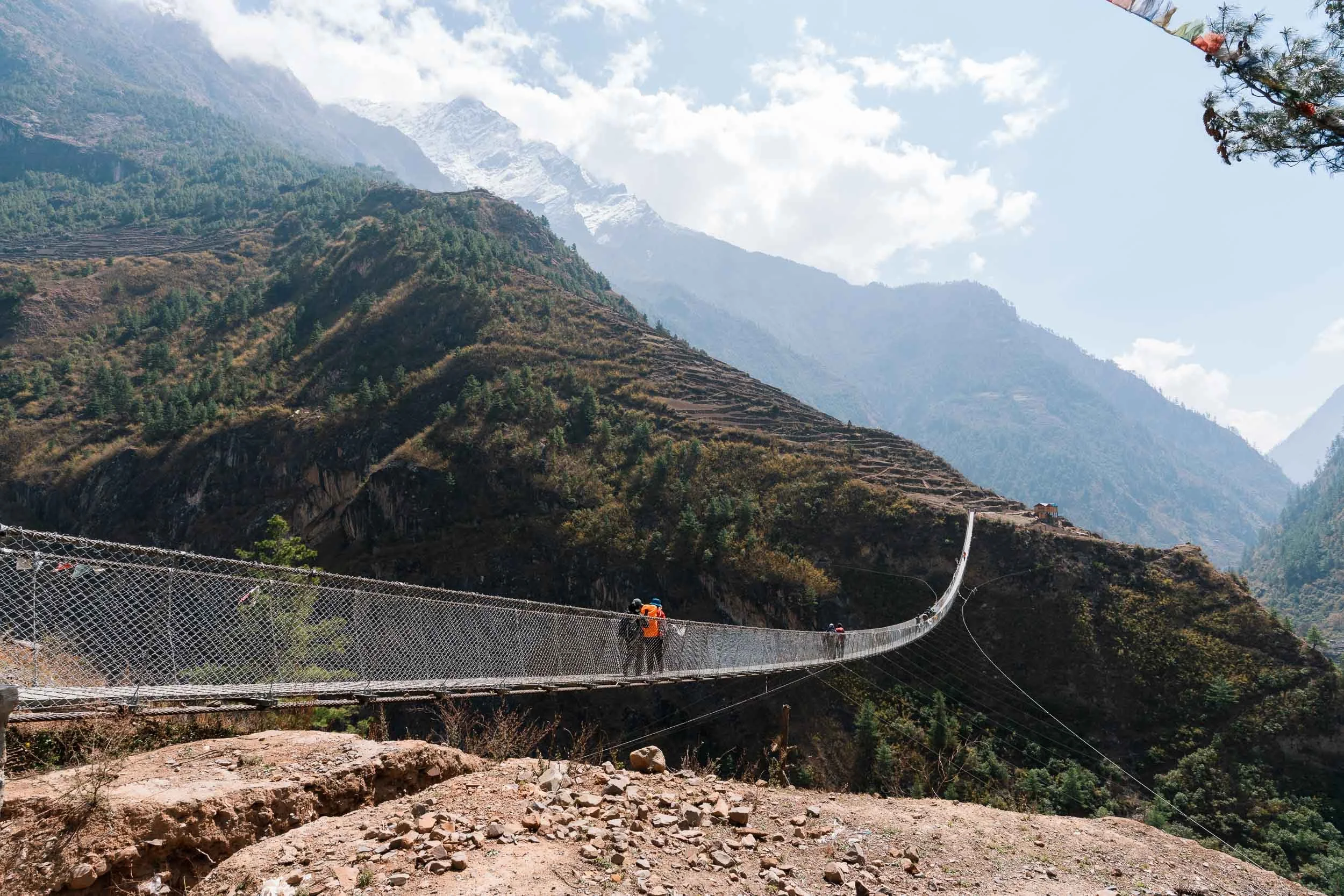
The longest suspension bridge on the Manaslu Circuit Trek
Day 5: Namrung to Shyala (3,460m)
Trail Stats: 12.9 km (~8 hours) | Elev. gain: 1,010m | Elev. loss: 140m
The route enters the upper Nubri Valley, pushing past the critical 3,000-meter mark where the air thins and temperature drops rapidly. Take a brief detour to visit the active Ribum Monastery above Lho village before tackling the final steep ascent to the panoramic, yak-filled alpine settlement of Shyala.
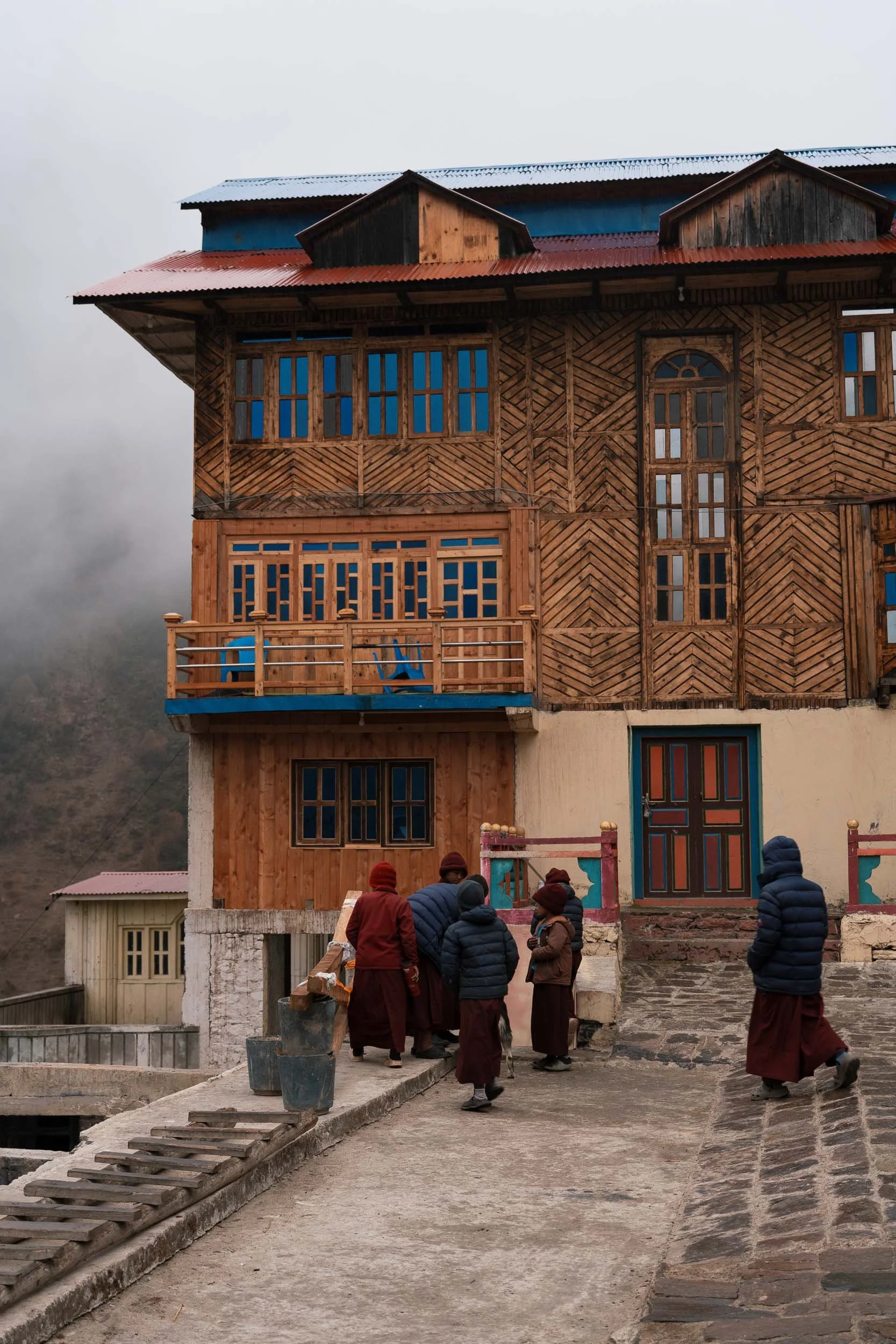
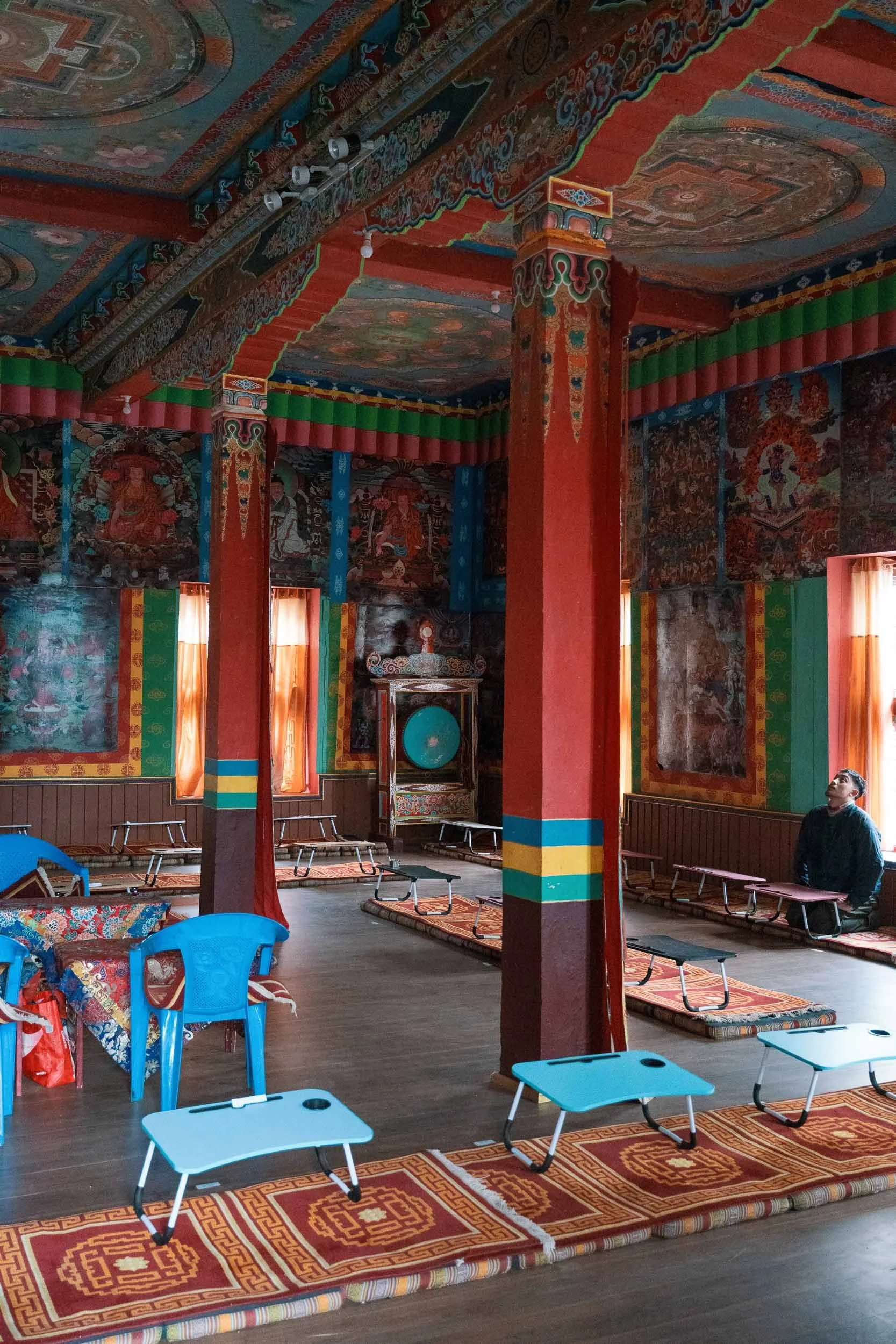
Day 6: Shyala to Samagaun (3,510m)
Trail Stats: 4 km (10.5 km with an optional side trip to Pung Gyen Monastery: ~5 hours) | Elev. gain: 690 m | Elev. loss: 100m
A deliberate, short trekking day to facilitate safe high-altitude acclimatization. The brief trail leads directly to Samagaun, the largest and most established mountain community on the circuit, which features basic shops, bakeries, schools, and access to nearby Birendra Glacial Lake.
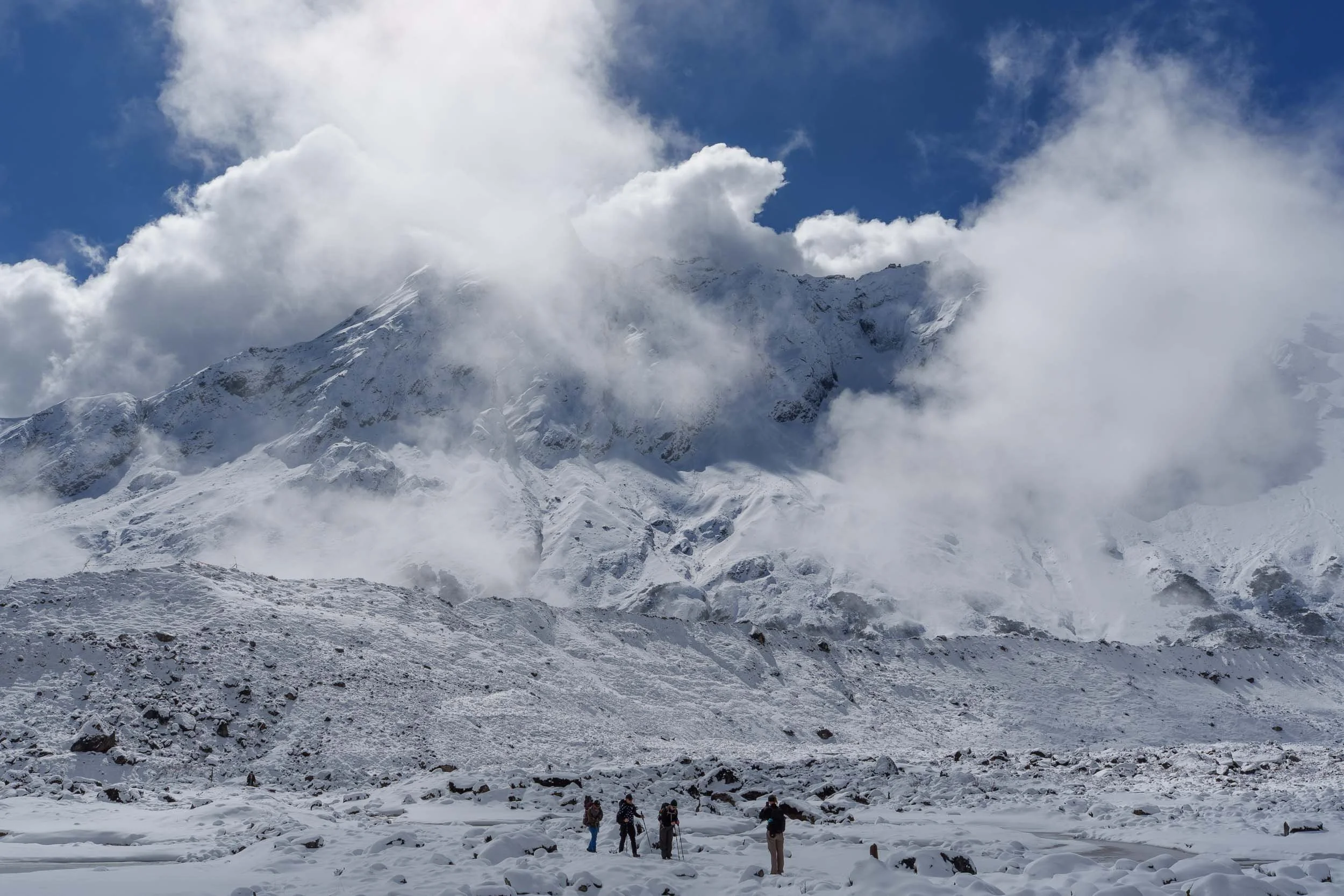
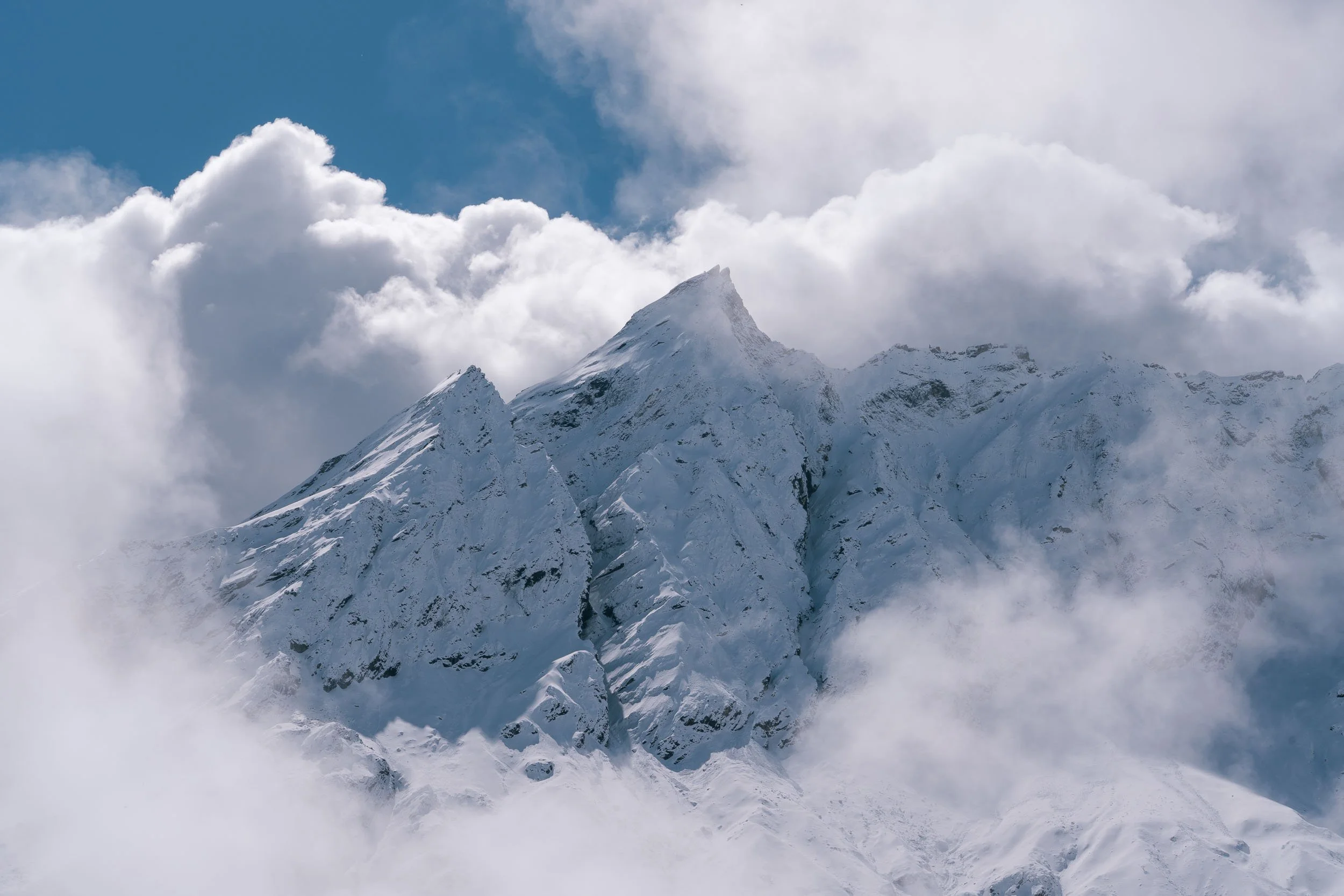
Day 7: Manaslu Base Camp (Acclimatization day)
Trail Stats: 15 km (round trip: ~9 hours) | Elev. gain: 1,310m | Elev. loss: 1,310m
An optional "climb high, sleep low" acclimatization trek up the steep ridges toward Manaslu Base Camp (8,163m mountain peak overview). Note that heavy spring snowfall frequently increases active avalanche risks, occasionally requiring groups to safely turn around at the 4,350m mark.
View from the Manaslu Base Camp
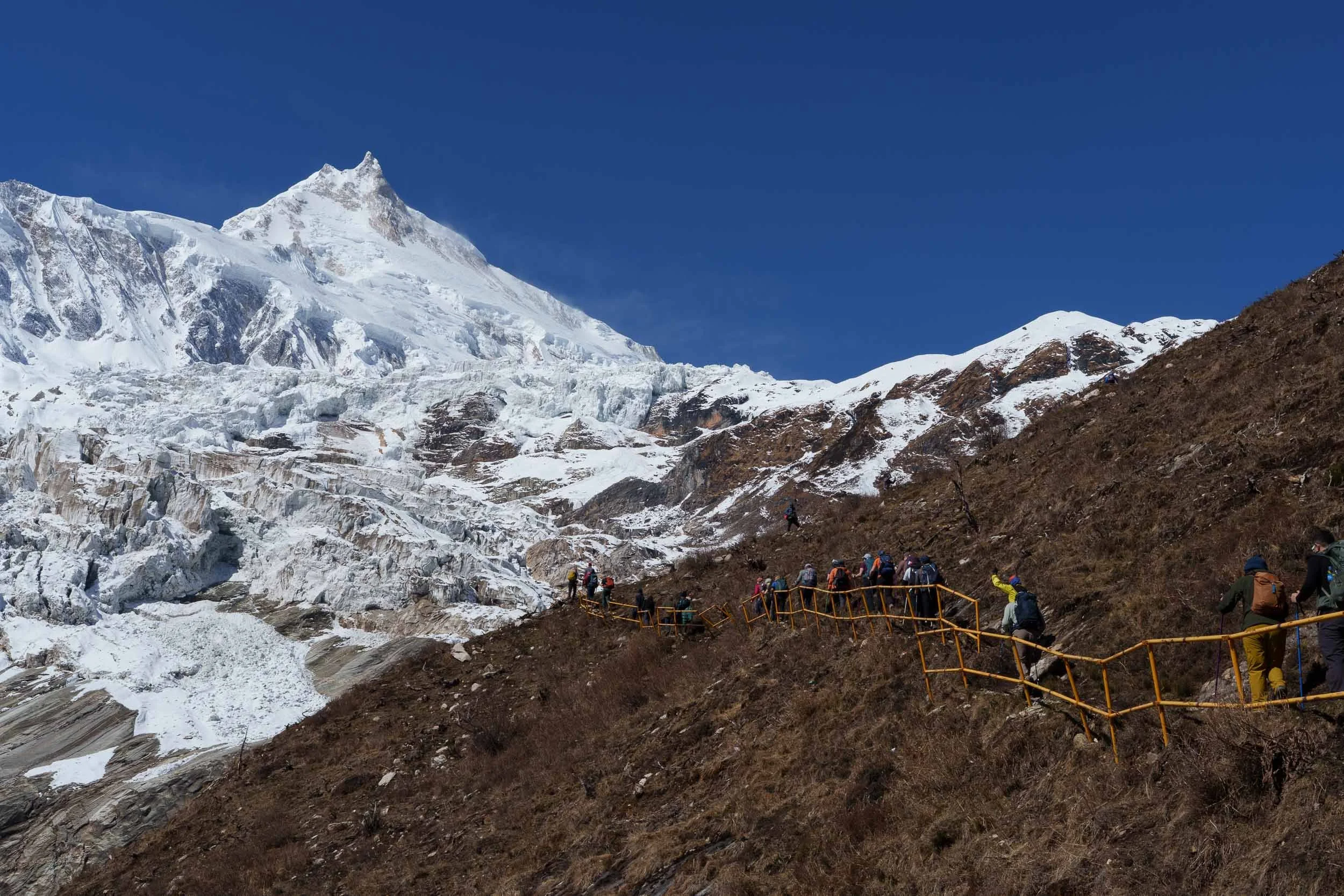
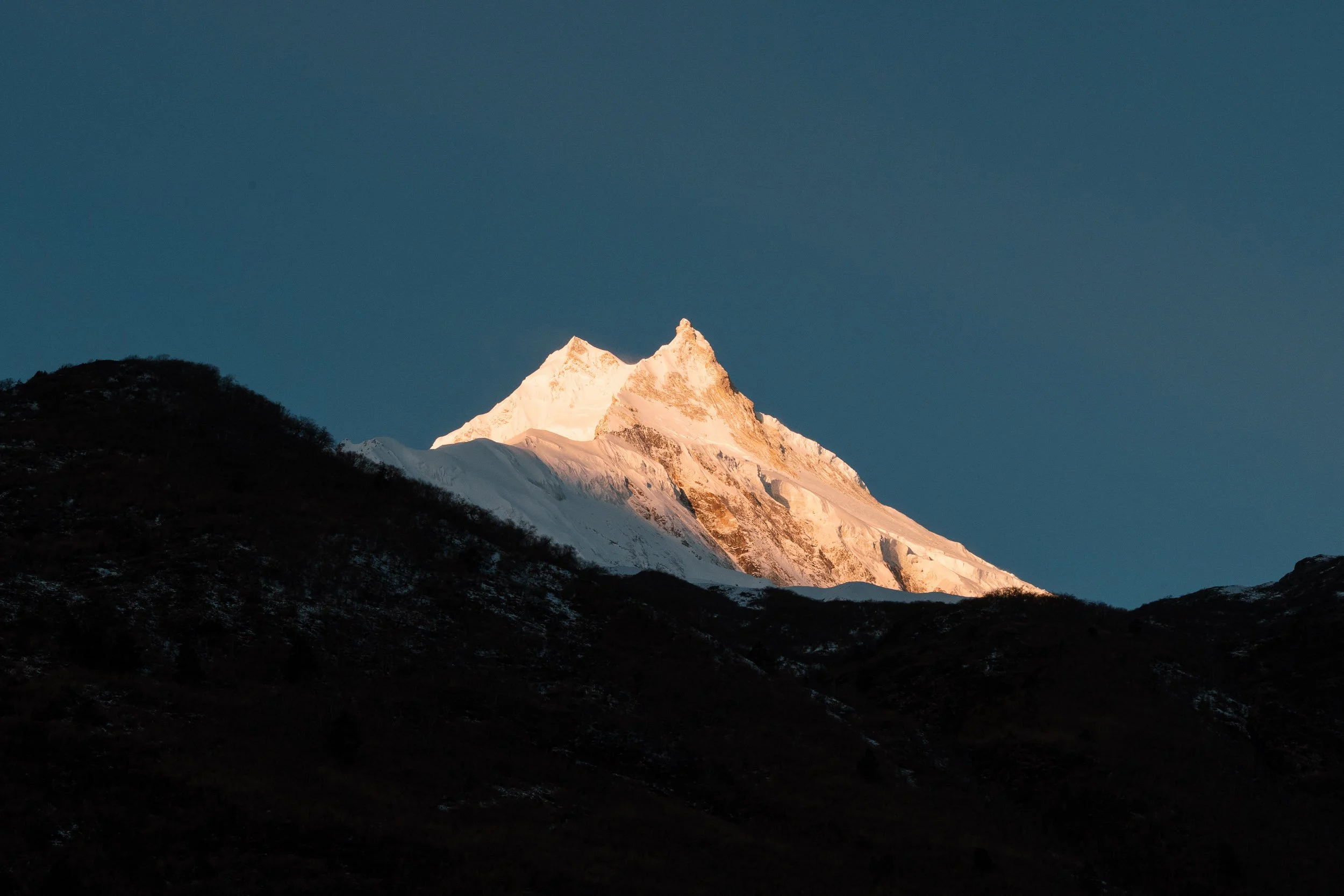
Mount Manaslu - the 8th tallest mountain in the world
Day 8: Samagaun to Samdo (3,875m)
Trail Stats: 8.3 km (~4 hours) | Elev. gain: 360m | Elev. loss: 10m
A short, steady alpine trek where trees disappear completely, replaced by exposed, high-altitude mountain tundra. Samdo is a remote village populated by Tibetan refugees; it serves as the final reliable point for satellite emergency communications and helicopter medical evacuations.
Mount Manaslu at Sunrise
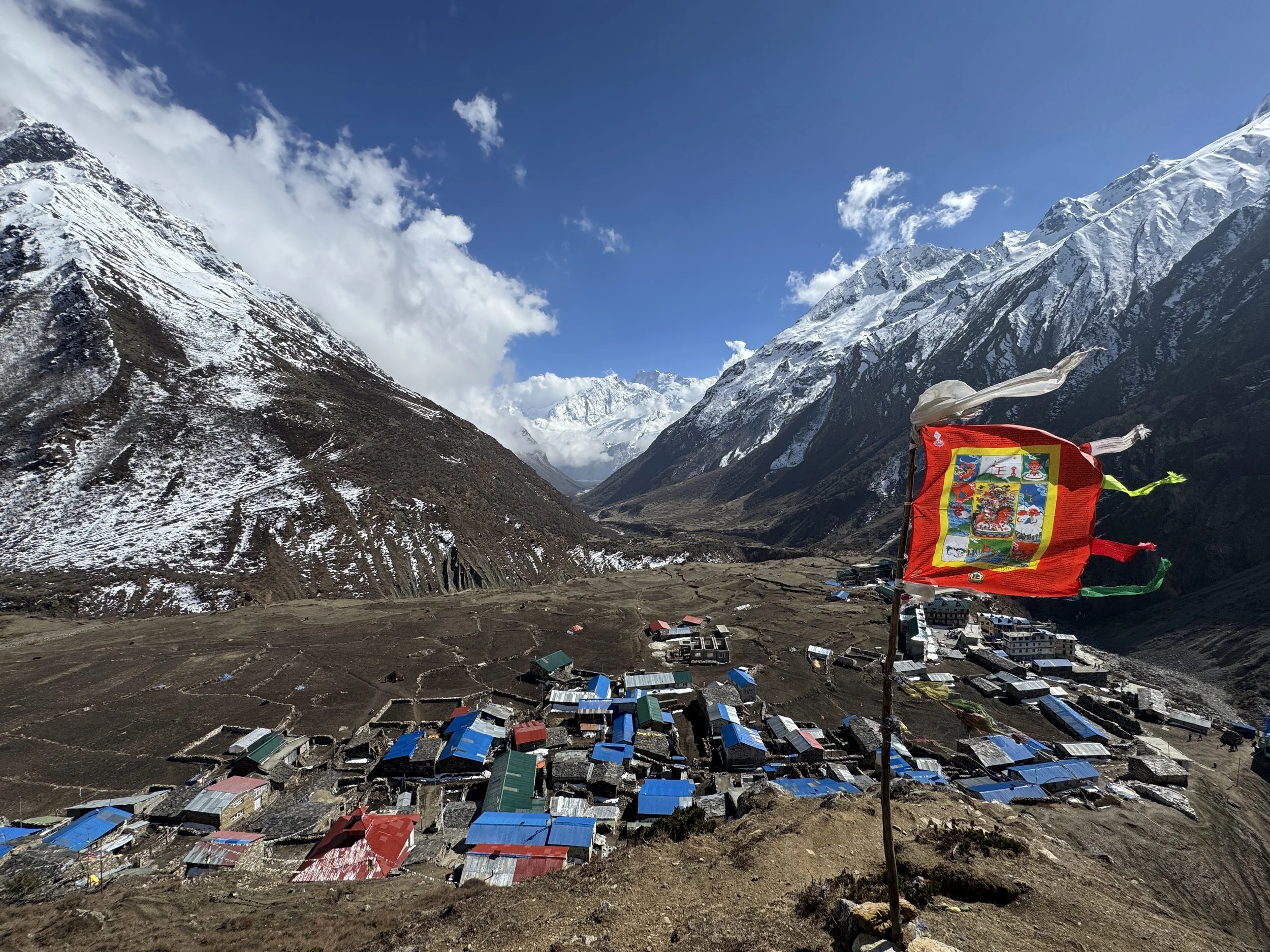
Looking down at Samdo
Day 9: Samdo to Dharamsala (4,470m)
Trail Stats: 6.1 km (~4 hours) | Elev. gain: 610m | Elev. loss: 10m
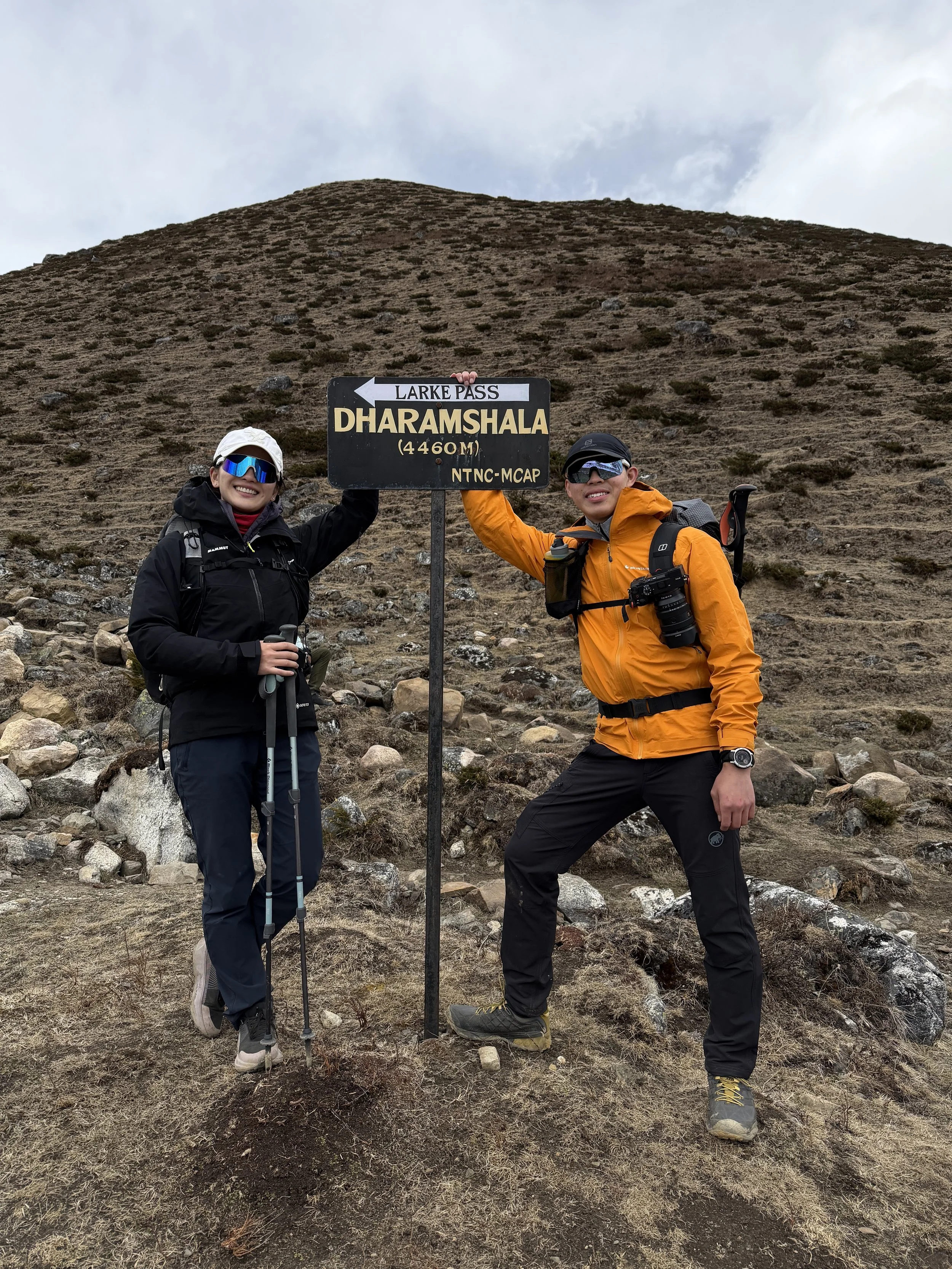
Though short on paper, the severe lack of oxygen makes this steep ascent incredibly taxing. The trail passes the historic ruins of Larke Bazaar near the Tibetan border, where you can often spot wild blue sheep. Dharamsala is a basic high-altitude staging camp with limited, unheated stone shelters and frozen water supplies.
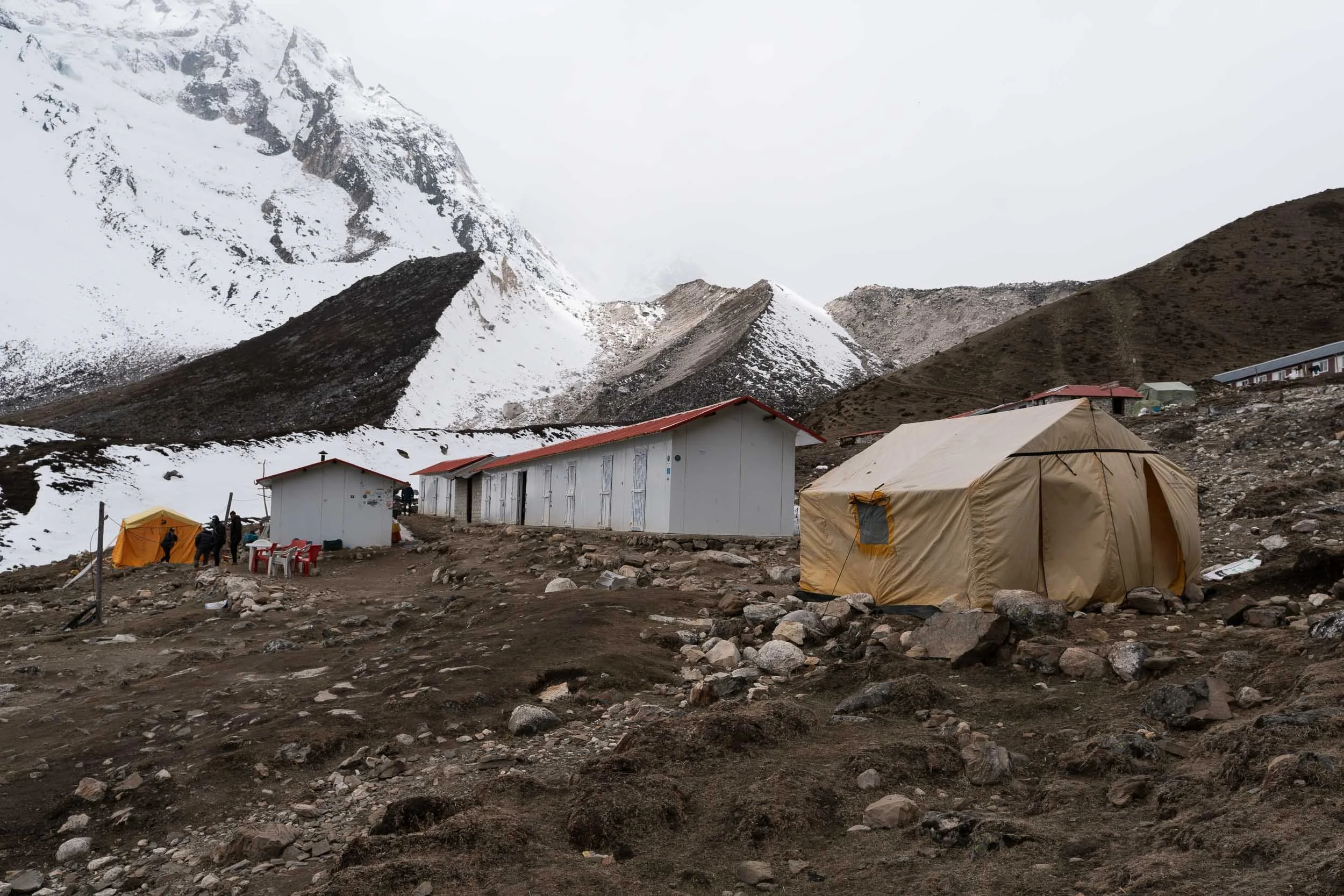
Dharamsala
Day 10: Dharamsala to Bimthang (3,710m) via Larke La Pass (5,106m)
Trail Stats: 15.4 km (~12 hours) | Elev. gain: 680m | Elev. loss: 1,440m
The ultimate technical milestone of the trek requires a 2:00 AM alpine start in sub-zero dark. Trekkers use headlamps to ascend a long, gradual moraine to the crest of the Larke La Pass (5,106m). The descent requires microspikes and trekking poles to handle steep, icy snow fields down to the valley of Bimthang.
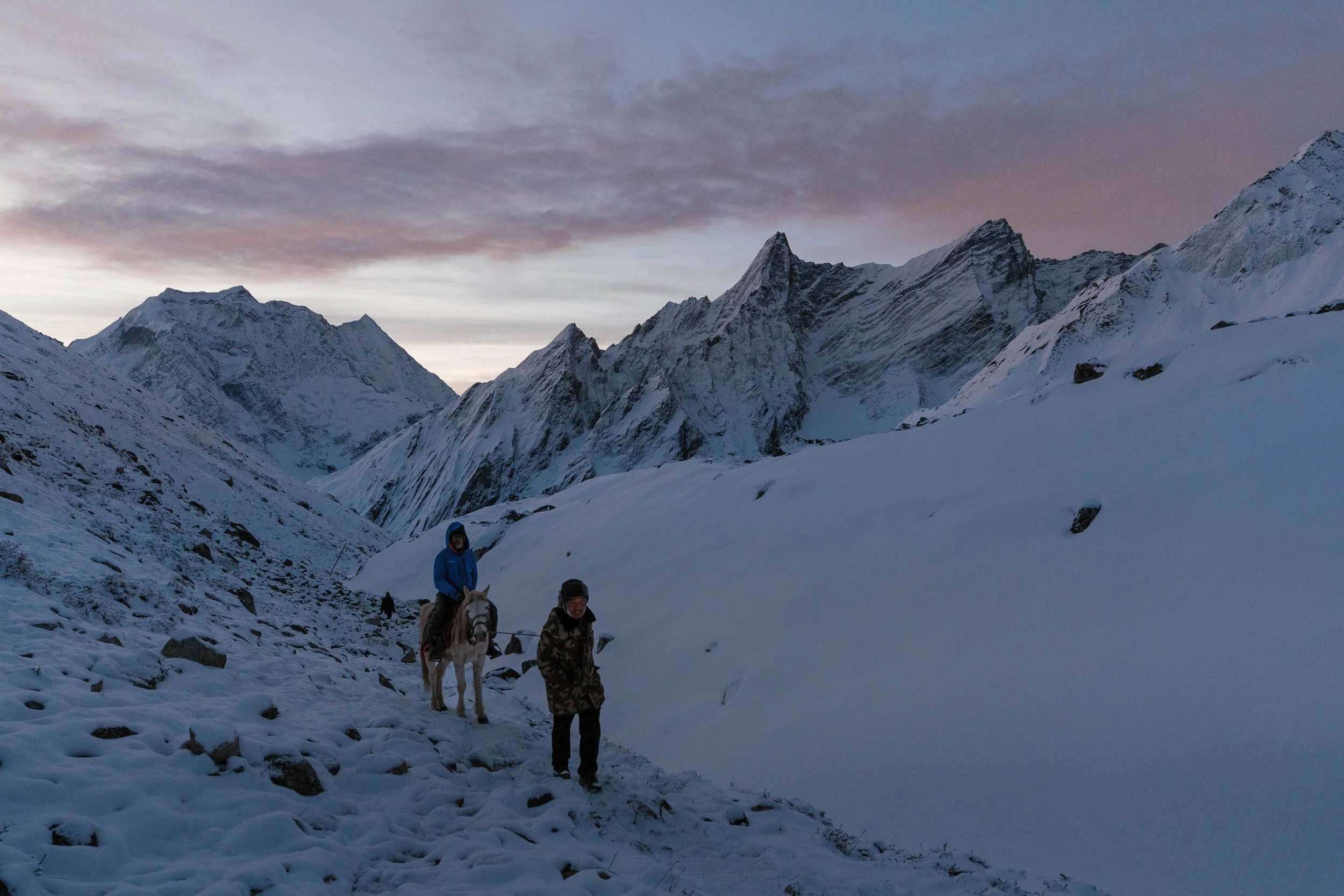
Optional donkey ride
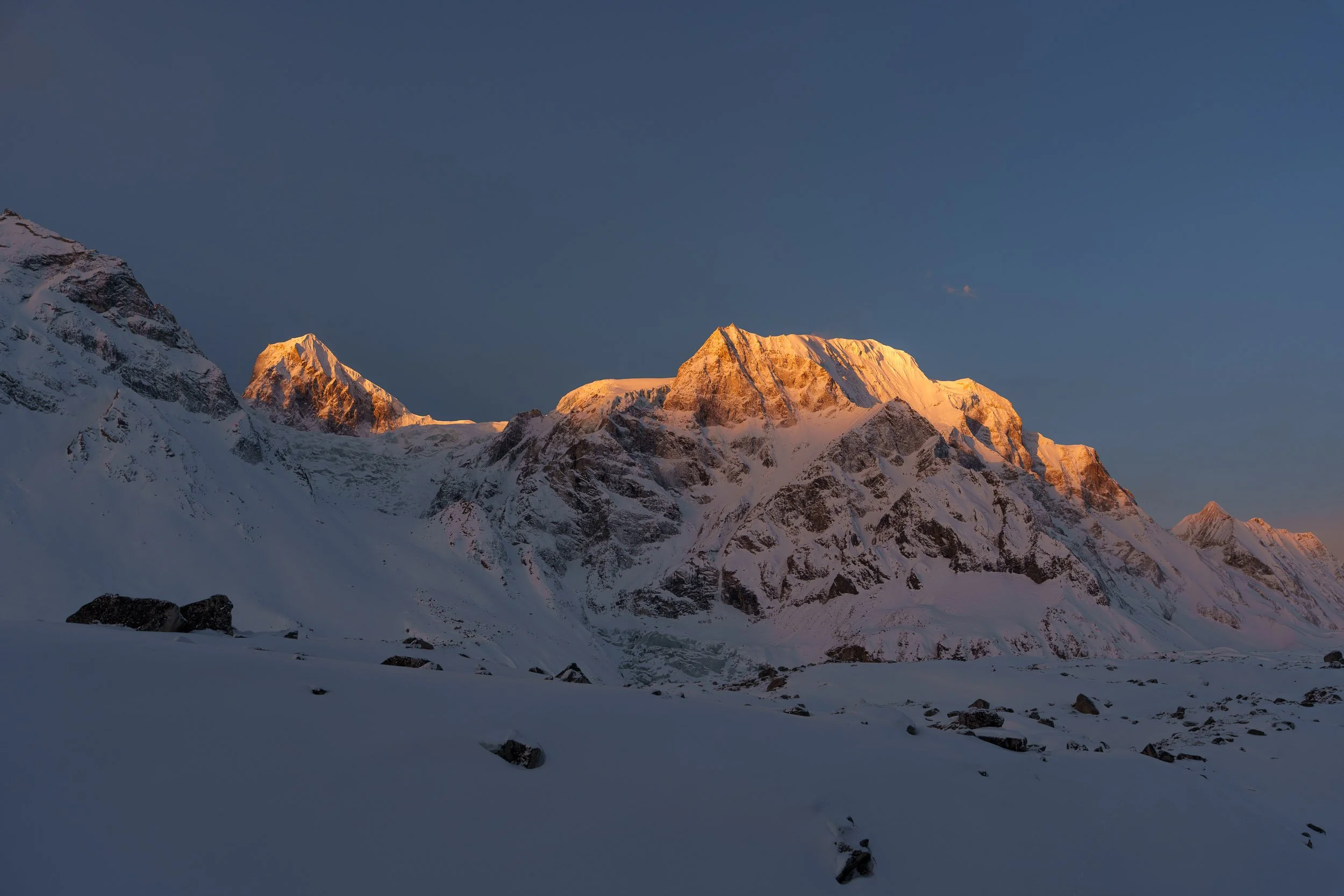
Sunrise on the way to the Larke La Pass
Day 11: Bimthang to Goa (2,530m)
Trail Stats: 13.6 km (~5 hours) | Elev. gain: 50m | Elev. loss: 1,220m
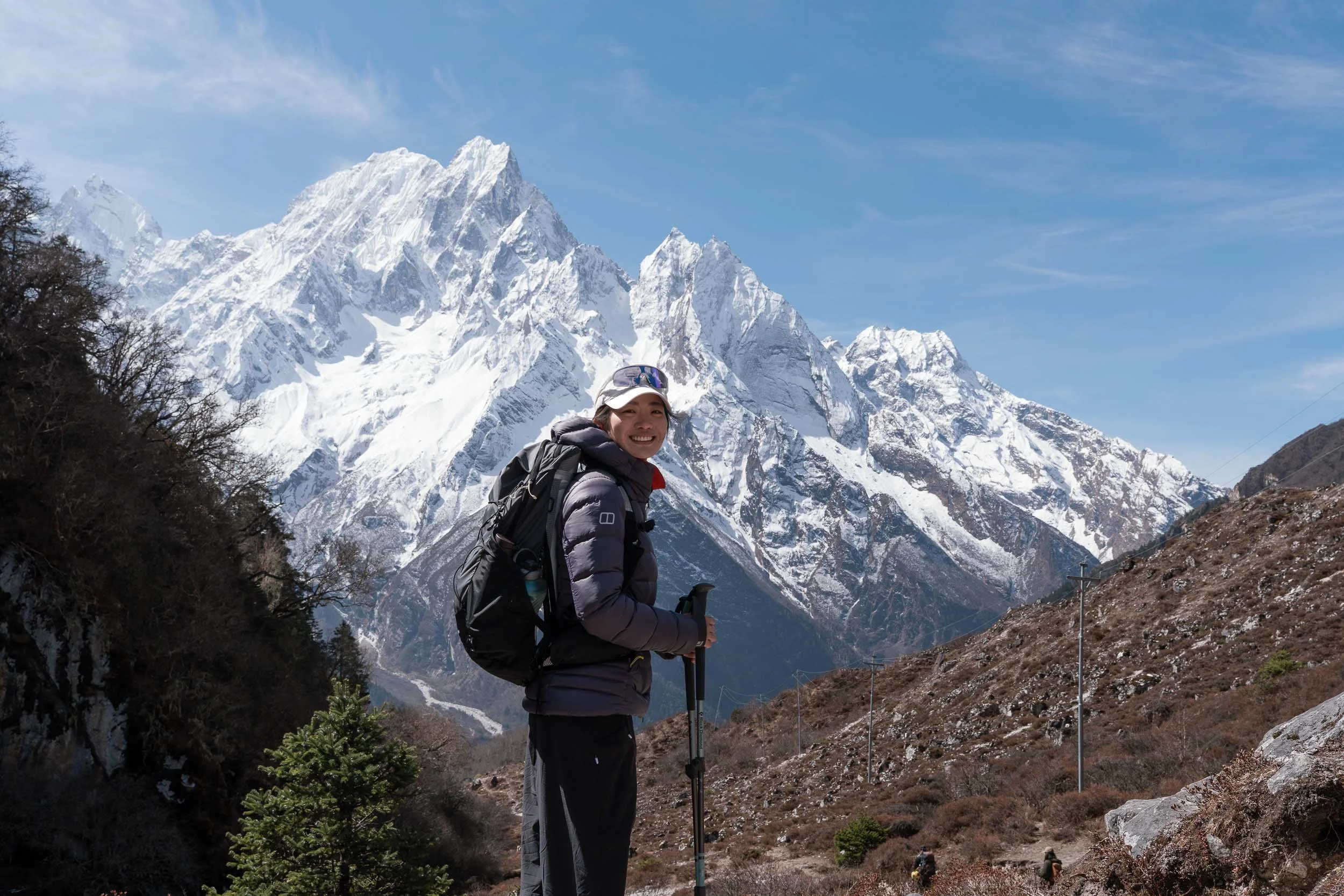
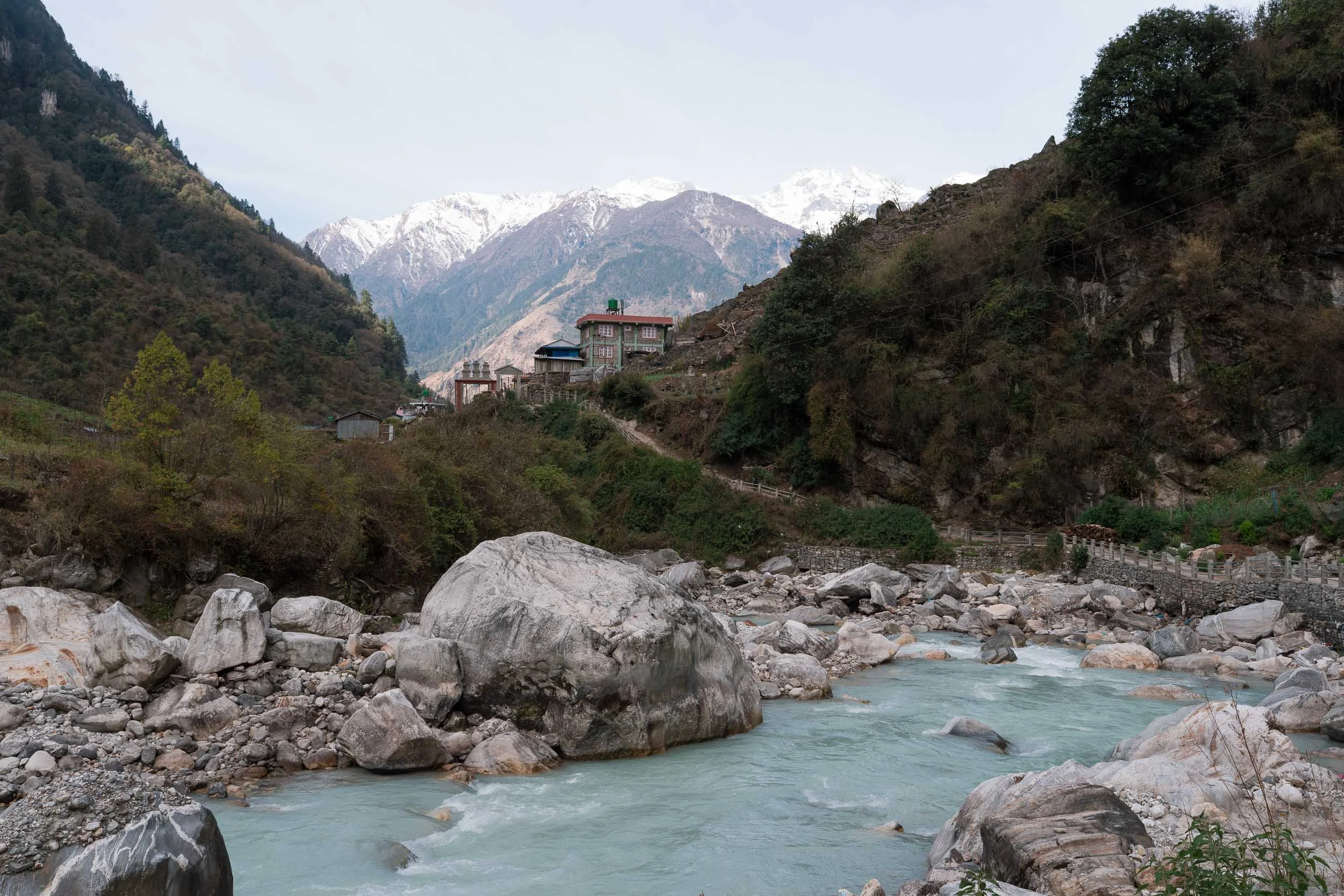
A knee-friendly, continuous descent alongside the rushing, glacial waters of the Dudh Khola River. The environment dramatically shifts back into dense, lush sub-alpine forests of pine, oak, and blooming rhododendrons, ending at the green agricultural pastures of Goa.
Day 12: Goa to Kathmandu
Logistics: 5 km trek (~1.5 hours) | ~8 hour drive back to Kathmandu
An easy, flat morning walk down to the village of Tilche marks the official end of the foot trail. From Thoche, you board a private jeep or local transport for a long, grueling, and bumpy 12-hour overland journey back through mountain highways to Kathmandu.
Our Final Thoughts on the Manaslu Circuit Trek
We absolutely enjoyed the Manaslu Circuit Trek. We would argue that it is about more than just the hike and the views, but also the people and culture you experience along the way. Having done the Everest Base Camp (EBC) trek a few years ago, which features more vast, open alpine views, the Manaslu Circuit Trek in comparison is much more immersive into the culture of the Himalayan region. We think the Manaslu Circuit Trek is actually a great option for people who want to experience reaching 5,000m for the first time. The itinerary allows you to ascend gradually, which means you are less likely to experience altitude sickness. We also loved the build-up of the scenery starting from the valleys, moving into the forests, and eventually opening up to those vast, open alpine views from the fifth hiking day onwards. It truly felt like we earned those views that we had been long awaiting!
In conclusion, we would say if you prefer a quieter trail, a relatively beginner-friendly route, and your first 5,000m pass with a rich taste of the local culture, the Manaslu Circuit Trek is for you!
If you have any more questions about the trek, feel free to message us on Instagram @vivchowvals or drop us an email at vivienandkevin11@gmail.com - we are more than happy to answer any of your questions!
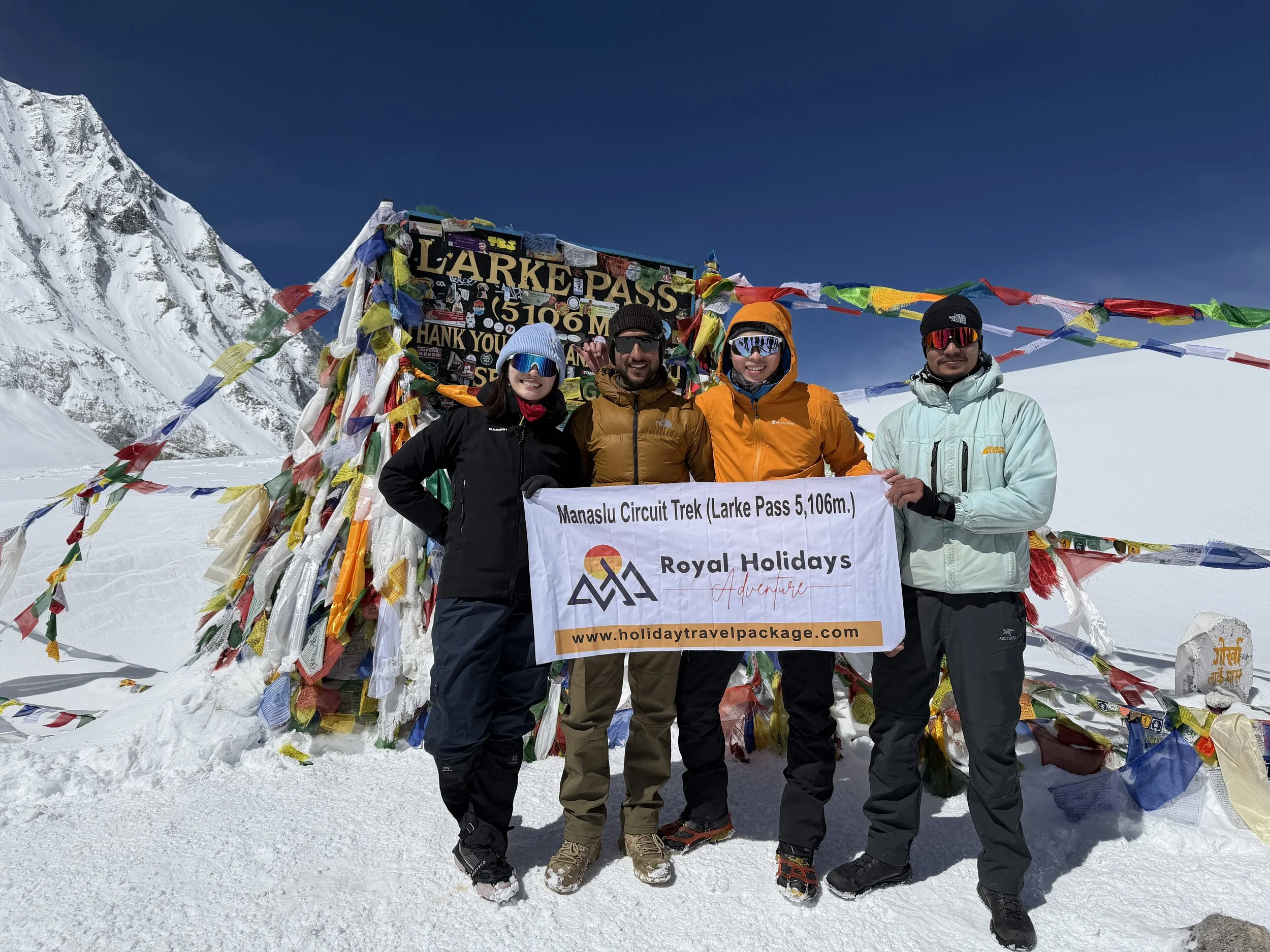
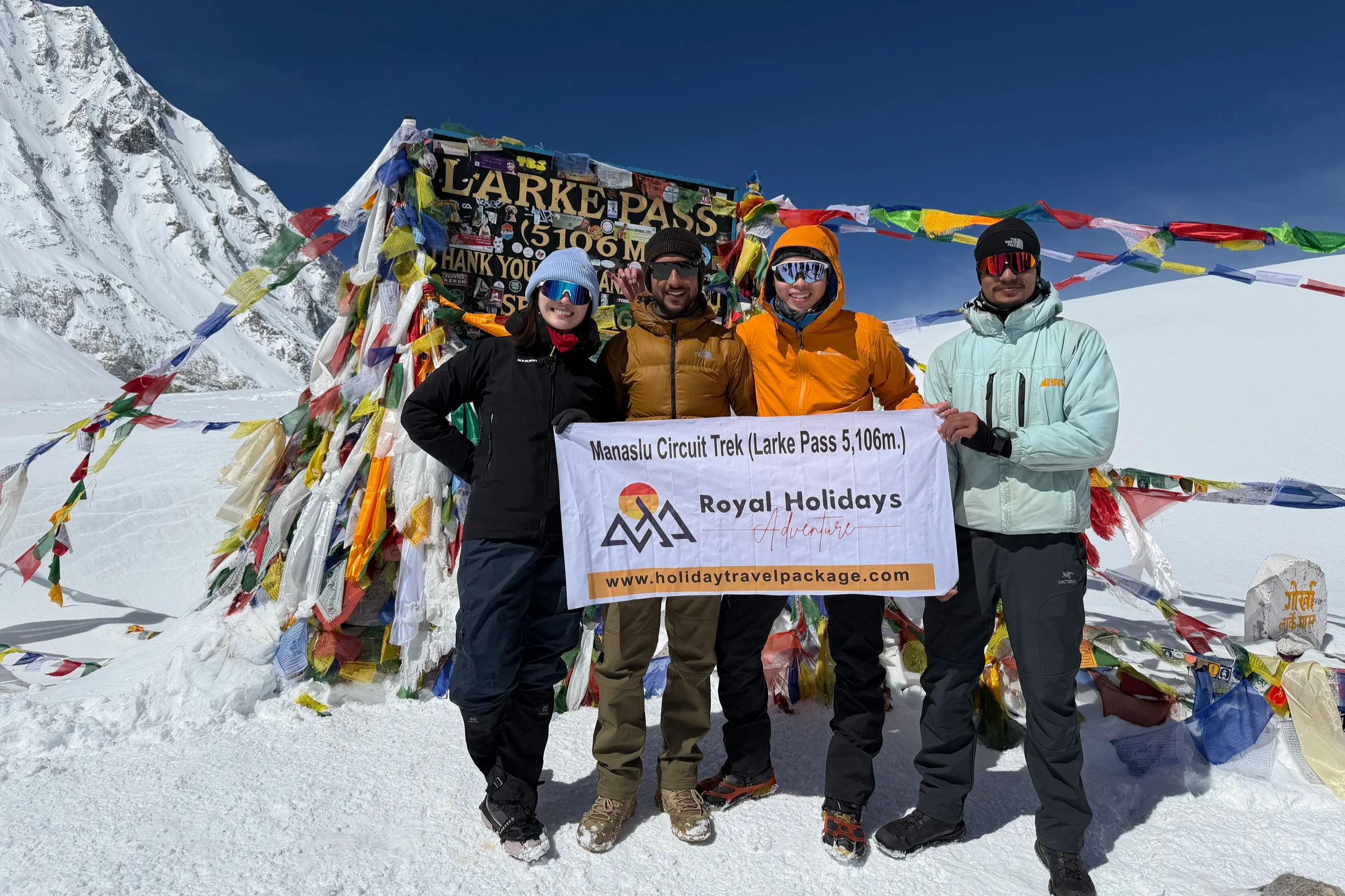
Crossing the Larke La Pass (5106m) with the Royal Holidays Adventure
Ready to experience the Himalayas yourself?
We had an incredible experience with Royal Holidays Adventure! They were super helpful in recommending the perfect trek for us and incredibly flexible with our planning. Speak to Royal Holidays today, and don't forget to use our exclusive code VIVKEV when booking to save 5% on your next adventure!
Support Our Adventures!
Hi there! If you found our guides helpful, please consider using our affiliate links below when booking your next trip. It comes at no extra cost to you, but it helps us keep creating these resources. Thank you so much for your support!
Flights & Hotels: Book your stay with Trip.com
Car Rentals: Find the best rates via Discover Cars
Alltrails: Sign up with vivchow30 here to get 30% off today!
Have a specific question about your upcoming trek? Drop us an email or send a DM to @vivchowvals we’d love to help!
If you’ve enjoyed our content, you can treat us to a ‘virtual’ coffee here.
